Chinko

Samantha Libby at New England Review:

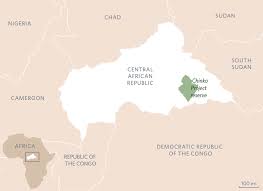
The word “Chinko” means nothing. It is the name given to a river in a place where the river gets lost in thick brush and fields of termite mounds. Chinko Park, established to protect what little is left, is called a national park, but there is nothing national in a place without the rule of law. Chinko’s only defense is a handful of well-trained rangers who spend weeks at a time in the wild, waiting for poachers or armed groups to emerge from the thick bush and attack. This is a dangerous part of the world—everyone knows at least that much.

In war-torn Africa, outsiders often feel an obligation to dissect old clichés and invent new ones. But I show up empty-handed. After ten years working in human rights and humanitarian aid around the world, I can no longer be deluded as to my own relevance. I come for a reason startlingly few want to admit: I need to work and there is often work to be had in places where nobody wants to be. 

more here.

A Warning From Europe: The Worst Is Yet to Come

Anne Applebaum in The Atlantic:

On December 31, 1999, we threw a party. It was the end of one millennium and the start of a new one; people very much wanted to celebrate, preferably somewhere exotic. Our party fulfilled that criterion. We held it at Chobielin, the manor house in northwest Poland that my husband and his parents had purchased a decade earlier, when it was a mildewed ruin. We had restored the house, very slowly. It was not exactly finished in 1999, but it did have a new roof. It also had a large, freshly painted, and completely unfurnished salon—perfect for a party.

The guests were various: journalist friends from London and Berlin, a few diplomats based in Warsaw, two friends who flew in from New York. But most of them were Poles, friends of ours and colleagues of my husband, who was then a deputy foreign minister in the Polish government. A handful of youngish Polish journalists came too—none then particularly famous—along with a few civil servants and one or two members of the government.

You could have lumped the majority of them, roughly, in the general category of what Poles call the right—the conservatives, the anti-Communists. But at that moment in history, you might also have called most of my guests liberals—free-market liberals, or classical liberals—or maybe Thatcherites. Even those who might have been less definite about economics certainly believed in democracy, in the rule of law, and in a Poland that was a member of nato and on its way to joining the European Union—an integrated part of modern Europe. In the 1990s, that was what being “on the right” meant.

More here.

Marvelous Muriel

David Pryce-Jones at The New Criterion:

The flight path of Muriel Spark is a wonder to behold. Her conviction was that the purpose of writing is to give pleasure, and in all her books she paid attention only to the innermost self that was her exclusive guide to that end. She had a poet’s instinct for the right form and a colloquial style all her own that allowed her to range the whole way from the comedy of manners up to the great unanswerable questions of the human condition. In an age when writers expect to be judged primarily by their sexual, social, and political commitments, and are therefore encouraged to be each one more shocking than the next, Muriel’s wit and independent mindset were conservative as well as revolutionary, that strange combination that surfaces when things go wrong. Since she was speaking for lots of people with hopes and fears like hers, she was successful—and deserved to be.

more here.

Alejandro Escovedo’s Return to the Border

Nick Paumgarten at The New Yorker:

Alejandro Escovedo, the singer and songwriter, likes to have a proper Mexican breakfast before a long drive. “Let’s go here,” he said. He pulled into the back lot of a restaurant called El Pueblo, across from the Tornado bus terminal on East Jefferson Boulevard, in the Oak Cliff section of Dallas. El Pueblo, he said, is where travellers arriving by bus from Mexico often go to eat and to get their bearings. He ordered in Spanish, then remarked that his Spanish was poor. The plates came quickly. Chorizo con huevos. “This is bad_ass_, man,” he said. An elderly vagrant looked in through the window and then walked in. Escovedo gave him a dollar. “When I was small, I used to be able to see the pain in people,” he said.

more here.

Finally, angry women are the solution and not a problem – but we still have far to go

Emilie Pine in The Guardian:

When I was 11, I read Little Women by Louisa May Alcott. Like every girl who wants to be a writer, I idolised Jo. Rereading it recently, I re-encountered so many things I’d loved, from Jo’s exuberant character to her ability to make an independent living from writing. But I stumbled when I came to these words from Marmee: “I am angry nearly every day of my life, Jo; but I have learned not to show it … I’ve learned to check the hasty words that rise to my lips; and when I feel that they mean to break out against my will, I just go away a minute, and give myself a little shake for being so weak and wicked.” Marmee’s advice to Jo is: repress your anger, because the cause is not the problem – it’s you.

…Rage is beginning to feel like a permanent state of being. The cultural turn towards listening to women’s anger is, obviously, a good thing. But there are times when it feels as if being vocally angry has become a requirement, rather than an option. Where once women’s emotional labour was invested in suppressing anger, now we work to display our pain for a public gaze that is often unsympathetic. Think of all the hashtags: #MeToo, #TimesUp, #WhyIStayed or #WhyIDidn’tReport. A lot is being asked of women – not only that they identify and labour to fix the problems of gender inequality, but also that they absorb the emotional and social consequences of protest. Protest is necessary. But it is also exhausting.

I thought about all these questions as I watched Hannah Gadsby’s standup show Nanette, a call to action to angry women. Gadsby reveals the damage done by the self-deprecating scripts gay women are forced into by our homophobic culture. She demands that the narrative changes – both her own, and ours – to accommodate her fury. But then, in the show’s final moments, Gadsby declares that she is wary of anger. Anger, she says, is a way to unite people, but ultimately it only serves to spread “blind hate”. It’s a double bind. We need anger to call out inequality and violence, we need anger to provoke a reaction, and we need anger to drive us towards change. But anger will scar and consume us. It’s a salutary warning. Gadsby’s invocation to tell our stories, but to resist anger, is worlds away from Marmee’s advice to Jo. No longer are women expected to shake themselves; instead, we are being asked to shake the world. But giving permission to women to be angry does not mean that we have divested ourselves entirely of 19th-century attitudes to women and power.

More here.

Zapping mutant DNA in mitochondria could treat major class of genetic disease

Mitch Leslie in Science:

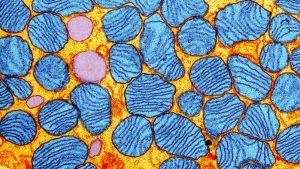
CRISPR, the genome editor celebrated as a potentially revolutionary medical tool, isn’t omnipotent. Mitochondria, the organelles that supply a cell’s energy, harbor their own mitochondrial DNA (mtDNA) and mutations there can have devastating consequences including deafness, seizures, and muscle weakness. Genome editing might be a remedy, but mitochondria appear to be off-limits to CRISPR. Now, two studies published this week in Nature Medicine reveal that two older genome-editing tools can slash the amount of defective mtDNA in mice bred to have a mitochondrial disease, counteracting the effects of the mutation. The proof-of-principle results could open the way for the first treatments for mitochondrial diseases. “These are remarkable findings that make it possible to even consider doing this in humans,” says mitochondrial biologist Martin Picard of the Columbia University Irving Medical Center, who was not involved in the work.

Turning these results into a treatment will be tricky. The genes encoding the genome editors had to be introduced by viruses, and researchers have long struggled to make similar gene therapy efforts work. But, “These are the right experiments to get ready to go into people,” says molecular geneticist Stephen Ekker of the Mayo Clinic in Rochester, Minnesota, who wasn’t connected to either study. In fact, both groups are already aiming to launch clinical trials. Descendants of ancient bacteria that took up residence inside early eukaryotic cells, mitochondria sport their own small genomes and a distinct set of proteins not encoded by genes in the nucleus. Each cell can contain thousands of these organelles, and mutations in mtDNA cause a range of illnesses. “If you take all the mitochondrial diseases together, they are one of the most common causes of genetic disease in humans,” says molecular biologist Michal Minczuk of the University of Cambridge in the United Kingdom, who led one of the research teams.

More here.

Tuesday Poem

breaklight

light keeps on breaking.
i keep knowing
the language of other nations.
i keep hearing
tree talk
water words
and i keep knowing what they mean.
and light just keeps on breaking.
last night
the fears of my mother came
knocking and when i
opened the door
they tried to explain themselves
and i understood
everything they said.
.
Lucille Clifton
from good woman: poems and memoir 1969-1980
BOA Editions 1980

Monday, September 24, 2018

“Prove that I am Wrong!” – What QAnon, Descartes, and Brains in Vats have in Common

by Guy Elgat

Recently, CNN sent their reporter to cover yet another Trump rally (in Pennsylvania), but this time reporter Gary Tuchman was assigned the more specific task of interviewing Trump supporters who were carrying signs or large cardboard cut-outs of the letter “Q” and wearing T-shirts proclaiming “We are Q”.[1] These Trump supporters were professing their belief in the existence of a person known as Q or QAnon who is supposed to be an anonymous, high-level activist who works from inside the administration with the goal of supporting Trump’s agenda by squashing “deep-state” anti-Trump forces and removing any other obstacle that might stand in the way of consummating the President’s revolutionary vision.

At one point in the interview, in his attempt to probe the beliefs of the Q-ers, as I shall call them, Gary Tuchman challenged one of them and said: “So you don’t have any proof [that Q exists] but that’s what you’re guessing”, in response to which the interviewee said “and you don’t have any proof there isn’t”. In another exchange Tuchman again tried to interrogate a Q-er about her beliefs, saying “Maybe it is not true [that Q exists] because there is no evidence of it…”, in response to which the interviewee shot back: “There hasn’t been any non-evidence yet”.

Upon hearing these retorts many might react with a baffled scoff and dismiss them as not worthy of taking seriously. But though this reaction is at the end of the day warranted – or so I shall argue – it is hard, though important, to explain exactly what is wrong with the Q-ers’ response and why Q-ers might think that it serves their purpose and is thus perfectly legitimate. As we shall see, once we start to reflect on these questions we will find ourselves pretty quickly knee-deep in philosophy, what will bring out again the importance and relevance of philosophy to our everyday lives. Read more »

Stars Above

by Samia Altaf

In the 1960s, in the sleepy little city of Sialkot, almost in no-man’s land between India and Pakistan and of little significance except for its large cantonment and its factories of surgical instruments and sports goods, there were two cinema houses, all within a mile of our house, No. 3 Kutchery Road. Well three to be exact, the third being an improvisation involving two tree trunks with a white sheet slung between them at the Services club and only on Saturday nights.

The one closest to us our house, just this side of the railway crossing, was Nishat, popularly known as Begum’s cinema with a risqué aura because it was owned and managed by the ‘Begum,’ a burqa-clad, not so young, but still beautiful woman. There was hushed talk about the Begum’s morals because she, a single woman, owned and managed a cinema house in a time when so-called ‘decent’ women rarely went to the cinema let alone own one.

The second, past the railway crossing on the other side of the ‘drumma wallah chowk,’ the main city square, was the Lalazar. Lalazar was considered to be in a class above the others partly for its sweeping marble staircase curving upwards to the gallery and partly for its owner Mr. Majeed’s newly acquired daughter-in-law Mussarat Nazir, the rustic Punjabi beauty and a leading lady of film industry. Mr. Majeed, a portly gentleman with a loud laugh, was among the city fathers, the ‘shurafa,’ of the city. Mussarat Nazeer, still in her teens, came to public attention in the movie Yakkey Wali. My father tells how he and his friends, all grown and married men, saw that movie about twenty times and every time M. Nazir appeared on screen, they along with the whole house threw coins at the screen in the age old tradition of showing one’s appreciation. M. Nazir’s untimely departure at the height of her career to lead a life of married bliss in Canada was mourned by all till she returned thirty years later, still the rustic beauty, and became a household name selling millions of audio cassettes of Punjabi wedding and folk songs. My older son, then three years old, heard her signature folk song ‘Laung gwacha,’ saw her face on the grimy cover of a much used audio cassette, fell immediately in love and vowed to marry her. His grandfather understood completely. Read more »

Thinking of Language, Love and Loss with Nina Raine’s “Tribes”

by Abigail Akavia

Would I rather go deaf or blind? Every once in a while, I come back to this question in some version or another. Say I had to choose which sense I’d lose in my old age, which would it be? I always give myself, unequivocally, the same answer: I’d rather go blind. I’d rather my world go darker than quieter. I imagine it as a choice between seeing the world and communicating with it; in this hypothetical, communication with the world is all-encompassing, its loss more devastating than the loss of sight. It is perhaps clear from the mere fact that I pose this question that I do not live with a disability involving the senses. Individuals who are vision- or hearing-impaired would have an entirely different take on this question and on the issues I raise below, but hopefully what I write here will go beyond stating my own prejudices.

To prefer sound over sight is by no means an obvious choice. One could say that a preference for sound over sight goes against millennia of Platonic thought, which prioritizes sight as giving us access to what is stable, verifiable, graspable to the mind’s eye: the idea is literally that which is seen (from id-, one of the Greek roots for to see). Sound, on the other hand, changes in time, it is fleeting, untrustworthy, and hence inferior.

But poetry and myth have offered an alternative way of thought. Ancient myth is populated by sage blind men like the prophet Tiresias and Oedipus (after, of course, he learns the truth about his identity). Their lack of physical sight is not only a counterpart to their exceptional insight into the way of the world but, to an extent, the very source of their intellectual and spiritual advantage. In the case of both, what they lack in perception they make up for in a remarkable facility with language. Tiresias’ advantage over his seeing adversaries is perhaps the better-known example, as he delivers truthful but irritatingly cryptic prophetic messages to Oedipus (in Sophocles’ Oedipus the King) and Creon (in Antigone). Managing to confuse and manipulate them, Tiresias has the rhetorical upper hand, and the audience always already knows that he is in the right. In Oedipus at Colonus, the last play Sophocles wrote, the old Oedipus turns up as a similarly prophetic, wrathful speaker of harsh truths, with a sharp ability to pick out the dissimulators from the honest ones around him by virtue of what they say. Neither man’s ability to communicate is lessened by their blindness; in fact, it allows them to recognize and speak the truth more easily. Read more »

Can Corporations be ‘Good Citizens’?

by Thomas R. Wells

The idea of ‘good corporate citizenship’ has become popular recently among business ethicists and corporate leaders. You may have noticed its appearance on corporate websites and CEO speeches. But what does it mean and does it matter? Is it any more than a new species of public relations flimflam to set beside terms like ‘corporate social responsibility’ and the ‘triple bottom line’? Is it just a metaphor?

The history of the term does not promise much. It does indeed seem to have evolved out of corporate speak – how corporations represent themselves rather than how they view themselves – selected, perhaps, for sounding reassuring but vague. Its popularity has far preceded its definition; ‘corporate citizenship’ is still evolving, looking for a place to settle.

But what it is about is important. For it represents a political turn to the old question, Who are corporations for and how is their power to be managed? Are corporations bound to serve society’s interest, or are they free to follow their own? Are they public institutions, part of the governance of our society and publicly accountable to us for their actions, or are they private associations accountable only to their managers and owners?

For around a hundred years this question had an institutional answer in the form of ‘managed capitalism’, with governments playing a central role in corporate decision-making. They were outright owners of many businesses; they directed negotiations with labour – itself institutionally empowered by the state as a countervailing power to the large corporation; and they used the wide discretionary authority of the state to cajole and coerce company directors to serve what they saw as the public interest. Read more »

The Unmeasurable Value of General Education

by Emrys Westacott

Learning Objectives. Measurable Outcomes. These are among the buzziest of buzz words in current debates about education. And that discordant groaning noise you can hear around many academic departments is the sound of recalcitrant faculty, following orders from on high, unenthusiastically inserting learning objectives (henceforth LOs) and measurable outcomes (hereafter MOs) into already bloated syllabi or program assessment instruments.

But why do they moan and groan? Administrators, accreditors, and politicians see no problem. Nor do many teachers in STEM subjects and other technical fields. And prima facie they have a good case. Isn’t it obviously a good idea to have LOs for any course you teach? And shouldn’t you know what they are, be able to articulate them, and let your students know what you want them to achieve? How could any reasonable person think otherwise?

Ditto for MOs. Don’t you want to know if your LOs have been achieved? Why on earth wouldn’t you want to know? This, surely, is how we improve on what we do. We set goals. We see how well we are meeting them. We then tinker, tweak, or revamp wholesale in light of our findings, in a never-ending process of improvement.

It all sounds so sensible.

But what is sound practice in some contexts makes much less sense in others. Even those who have drunk the LO-MO Kool-Aid might balk at the idea of couples specifying in their pre-nuptial agreements a well-defined set of marital objectives linked to measurable outcomes. When it comes to college courses, the emphasis on LOs and MOs may sometimes be reasonable, particularly in courses that form an integrated and progressive program of study in technical subjects that lend themselves to exact modes of assessment. But I suspect they are of dubious value in at least one common and important kind of course–namely, the general education course where most of the students are receiving their only college-level exposure to an academic field. Read more »

Choose the Axiom III

by Carl Pierer

In the first part of this essay, the axiom of choice was introduced and a rather counterintuitive consequence was shown: the Banach-Tarski Paradox. To recapitulate: the axiom of choice states that, given any collection of non-empty sets, it is possible to choose exactly one element from each of them. This is uncontroversial in the case where the collection is finite. Simply list all the sets and then pick an element from each. Yet, as soon as we consider infinite collections, matters get more complicated. We cannot explicitly write down which element to pick, so we need to give a principled method of choosing. In some cases, this might be straightforward. For example, take an infinite collection of non-empty subsets of the natural numbers. Any such set will contain a least element. Thus, if we pick the least element from each of these sets, we have given a principled method. However, with an infinite collection of non-empty subsets of the real numbers, this particular method does not work. Moreover, there is no obvious alternative principled method. The axiom of choice then states that nonetheless such a method exists, although we do not know it. The axiom of choice entails the Banach-Tarski Paradox, which states that we can break up a ball into 8 pieces, take 4 of them, rotate them around and put them back together to get back the original ball. We can do the same thing with the remaining 4 pieces and get another ball of exactly the same size. This allows us to duplicate the ball.

The second part of this essay demonstrated a useful consequence (or indeed, an equivalent) of the axiom of choice, known as Zorn’s Lemma and looked at a few applications of this Lemma. Two positions have been mapped out in the course of this essay. On the one hand, the axiom has very counterintuitive consequences, so much so that they’ve received the name of a paradox. On the other hand, the axiom proves to be very useful in deducing mathematical propositions. These considerations lead back to the question that had already been raised at the end of the first part: how are we to decide on the status of an axiom, on whether to accept it or reject it?

In this third and final part of the essay, we will take a more philosophical approach to this problem. In particular, we will look at a possible resolution offered by Penelope Maddy in her Defending the Axioms. The solution offered would lead onto further questions about the nature of mathematics: what is mathematics actually about? At the same time, Maddy’s view is based on a certain conception of proof that does not really reflect mathematical practice. The essay, due to limitations, only hints at a different perspective offered by looking at what mathematicians actually do and what role proofs play for them. Read more »

Clatsop County, Part Two: Kevin

by Tamuira Reid

It’s nearing lunchtime when I make it over to Kevin’s, and beautiful out, but his window shades are still drawn closed, outside light on. I notice the porch slopes ever so slightly to the right, where a few forgotten footballs and beer bottles have now collected. I knock. Wait. Hear some movement and bustling. Then silence. I knock again. Silver masking tape covers large rips in the screen door, big enough for a head to push through. More movement. Finally Kevin emerges, a cigarette hanging from his lips.

He doesn’t say hi, but rather ushers me in, a quick gesture of his skinny body, a bony hand-to-back motion that says hurry.

I am used to this with Kevin. The hurry up and go of it all. When you’ve made the conscious decision to hangout with crystal meth addicts, life becomes a constant hurry-up-and- go, even if you’re only going to the bathroom.

I like Kevin. He’s thoughtful and smart and ridiculously resourceful. He’s also one of the worst addicts I’ve come across during my time in Clatsop County – or in my personal life – which is saying a lot. He will likely never get clean. He might commit more than a few crimes. And he will probably die too young. His life is already pedal to the metal, as he’d tell you. Pedal to the fucking metal. Read more »

Sunday, September 23, 2018

A censorship less visible

Kenan Malik in Pandaemonium:

One of the problems in discussing censorship is that we often don’t recognize censorship for what it is. There is no longer the Lord Chamberlain marking scripts and cutting out the unacceptable. Instead, we, in effect, ourselves mark them. And that, ironically, makes censorship not more, but less, visible.

In all my years campaigning for free speech, I’ve rarely heard anyone say ‘I’m for censorship’. Rather what many say is ‘I’m for free speech. But…’ I’m for free speech… but speech must be used responsibly. I’m for free speech… but speech should not offend. I’m for free speech… but don’t appropriate from other cultures. And so on. What was once recognized as straightforward censorship has now become a combination of moral obligation and social etiquette.

Even those who openly call for censorship often dress it up in moral terms. Thirty years ago, back in the midst of the Rushdie affair, Shabbir Akhtar, spokesman for the Bradford Council of Mosques, insisted that the real debate was not about ‘freedom of speech versus censorship’ but about ‘legitimate criticism versus obscenity and slander’. Exactly the same point has been made by every opponent of offnsove talk, from those who shut down Gurpreet Kaur Bhatti’s Behzti to those who would have shut down Caryl Churchill’s Seven Jewish Children.

But who makes that judgment call? Who decides what is legitimate criticism and what is obscenity and slander? Half a century ago, the answer was: the Lord Chamberlain. Today, the answer is each of us.

More here.

A 558-Million-Year-Old Mystery Has Been Solved

Ed Yong in The Atlantic:

Around 558 million years ago, a strange … something dies on the floor of an ancient ocean. Its body, if you could call it that, is a two-inch-long oval with symmetric ribs running from its midline to its fringes. It is quickly buried in sediment, and gradually turns into a fossil.
While it sits in place, petrifying, waiting, the world around it changes. The Earth’s landmasses merge into a single supercontinent before going their separate ways. In the ocean, animal life explodes; for the first time, the world is home to eyes, shells, and mouths. Living things invade the land, coating it first in thin films of moss and lichens, and then covering it in huge forests. Insects rise, into existence, and then into the skies. A dinosaur empire rises and falls. Mammals finally take over, and one of them—a human by the name of Ilya Bobrovskiy—finally unearths the fossilized ribbed oval from its resting place.

All of which is to say: Five hundred fifty-eight million years is an incredibly long time.

But despite that almost unimaginable time span, and everything that happened within it, many of the simple molecules that once existed in the oval creature’s cells still persist. Bobrovskiy, a geochemist at Australian National University, has isolated, identified, and measured them. And they provide conclusive evidence that the creature, despite all appearances, is an animal. More specifically, it is the oldest animal ever discovered. It’s called Dickinsonia.

More here.

Why Growth Can’t Be Green

Jason Hickel in Foreign Policy:

Warnings about ecological breakdown have become ubiquitous. Over the past few years, major newspapers, including the Guardian and the New York Times, have carried alarming stories on soil depletion, deforestation, and the collapse of fish stocks and insect populations. These crises are being driven by global economic growth, and its accompanying consumption, which is destroying the Earth’s biosphere and blowing past key planetary boundaries that scientists say must be respected to avoid triggering collapse.

Many policymakers have responded by pushing for what has come to be called “green growth.” All we need to do, they argue, is invest in more efficient technology and introduce the right incentives, and we’ll be able to keep growing while simultaneously reducing our impact on the natural world, which is already at an unsustainable level. In technical terms, the goal is to achieve “absolute decoupling” of GDP from the total use of natural resources, according to the U.N. definition.

It sounds like an elegant solution to an otherwise catastrophic problem. There’s just one hitch: New evidence suggests that green growth isn’t the panacea everyone has been hoping for. In fact, it isn’t even possible.

More here.

America, Land of Brutal Binaries

Andrew Sullivan in New York Magazine:

It was entirely a coincidence that I found myself reading Jonathan Haidt and Greg Lukianoff’s The Coddling of the American Mind in the same week that Brett Kavanaugh was credibly accused of sexual assault in his teens, and Ian Buruma lost his job as editor of The New York Review of Books, after publishing an essay by a man credibly accused of 23 separate instances of sexual abuse, but cleared of all criminal charges. And the book does not, of course, address the specifics of either case. But it’s a sharp analysis of the toxic atmosphere in which our current debates take place, a reminder that it is close to impossible, in this polarized climate, to deal with the specifics and complexities of each scandal from a non-tribal perspective.

And so it seems that Kavanaugh is either a perfect exemplar of judicial expertise and impeccable moral conduct, or he is a lying rapist determined to destroy and control the lives of all women. Ghomeshi is evil, and granting any space for such a monster to defend or account for himself is itself an act of oppression, which must be shamed and punished. Those appear to be our choices, ladies and gentlemen, in this particular polarization cycle. There is little nuance in these battles and absolutely no mercy for anyone unlucky enough to get caught up in their swirling vortex.

More here.