Edd Gent in Singularity Hub:
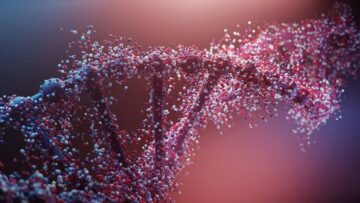 Vast swathes of the human genome remain a mystery to science. A new AI from Google DeepMind is helping researchers understand how these stretches of DNA impact the activity of other genes. While the Human Genome Project produced a complete map of our DNA, we still know surprisingly little about what most of it does. Roughly 2 percent of the human genome encodes specific proteins, but the purpose of the other 98 percent is much less clear.
Historically, scientists called this part of the genome “junk DNA.” But there’s growing recognition these so-called “non-coding” regions play a critical role in regulating the expression of genes elsewhere in the genome. Teasing out these interactions is a complicated business. But now a new Google DeepMind model called AlphaGenome can take long stretches of DNA and make predictions about how different genetic variants will affect gene expression, as well as a host of other important properties. “We have, for the first time, created a single model that unifies many different challenges that come with understanding the genome,” Pushmeet Kohli, a vice president for research at DeepMind, told MIT Technology Review.
More here.
Enjoying the content on 3QD? Help keep us going by donating now.

 On June 5, 1975, on the seedy stage of CBGB on the Lower East Side of Manhattan, a band named Talking Heads took the stage for the first time. Unlike the Ramones, for whom they were opening, they weren’t sporting black leather jackets or edgy haircuts. David Byrne and Chris Frantz had met at art school a few years before, and the bassist, Tina Weymouth, had only learned to play her instrument six months prior. But within a few weeks, Talking Heads would be plastered on the cover of The Village Voice, well on their way to utterly transforming the downtown New York music scene. After Jerry Harrison joined Talking Heads in 1977, the band would go on to radically alter rock music’s relationship to avant-garde art and performance. In his new book, Burning Down the House, Jonathan Gould tells the story of how Talking Heads experimented their way to a singular musical style over the course of eight studio albums and one incredible concert film, Stop Making Sense, and he discusses their enduring influence despite having disbanded more than 30 years ago.
 Dissenting — again — on the last day of the Supreme Court’s term, in its most high-profile case, Justice Ketanji Brown Jackson did not mince words. She had for months plainly criticized the opinions of her conservative colleagues, trading the staid legalese typical of justices’ decisions for impassioned arguments against what she has described as their acquiescence to President Donald Trump. She returned to that theme again in the final case, ripping the court for limiting nationwide injunctions.
 I was intrigued to read about a
  Employers are drowning in AI-generated job applications, with LinkedIn now processing 11,000 submissions per minute—a 45 percent surge from last year, according to new data
  A few months ago, on the New York subway, I looked up at the woman sitting opposite me, and found my eyes drawn to her cap: “I don’t give a F**K,” read big white letters stitched into navy blue cotton.
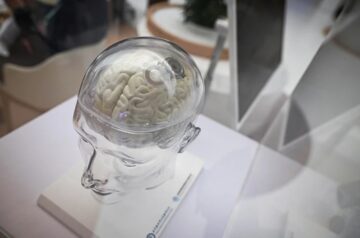 A deep brain device that allowed a man with no limbs to play computer games is one of an increasing number of
  Moments before I hop into my first Waymo in Austin, Texas, the driverless car is already locked in a standoff with a human rival. I’ve hailed the car in a tricky triangular parking lot in the middle of a big intersection, hoping to hitch a ride downtown. After about six minutes of waiting, I see it approaching: a hulking white all-electric Jaguar SUV with whirring sensors on all sides, conjuring a rhinoceros with hummingbird wings. But when the Waymo enters the lot, it takes far too wide of a turn, and finds itself nose-to-nose with a pickup truck driver trying to exit. The driver glares at the Waymo, but sees nobody through the front windshield. For a second, man and machine face off in a very mundane version of The Terminator.