
Lynne Peeples in Nature:
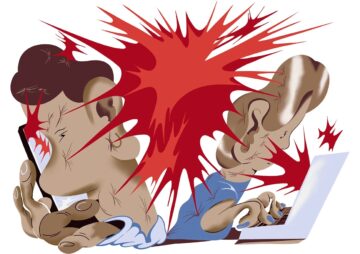 George Slavich recalls the final hours he spent with his father. It was a laughter-packed day. His father even broke into the song ‘You Are My Sunshine’ over dinner. “His deep, booming, joyful voice filled the entire restaurant,” says Slavich. “I was semi-mortified, as always, while my daughter relished the serenade.”
Then, about 45 minutes after saying goodbye outside the restaurant, Slavich got a call: his father had died. “I fell to the ground in a puddle of shock and disbelief,” he says. Slavich recognized the mental and emotional trauma he was feeling — and could imagine how it would affect his health. He studies stress for a living, after all. Yet even after he brought up his concerns, his health-care provider didn’t evaluate his stress. “If stress isn’t assessed, then it isn’t addressed,” says Slavich, a clinical psychologist at the University of California, Los Angeles. “The experience highlighted a paradox between what I know stress is doing to the brain and body, and how little attention it gets in clinical care.”
Decades of research have shown that, although short bursts of stress can be healthy, unrelenting stress contributes to heart disease, cancer, stroke, respiratory disorders, suicide1 and other leading causes of death. In some cases, prolonged stress drives the onset of a health problem. In others, it accelerates a disease — or induces unhealthy coping behaviours that contribute to chronic conditions2.
More here.
Enjoying the content on 3QD? Help keep us going by donating now.
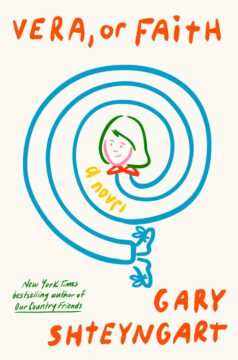
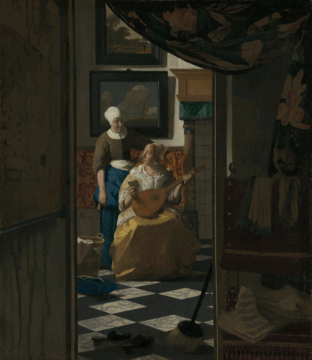 Does anyone write love letters anymore? We send emails. Or worse, texts, emoji. Fast, short, disposable. Once, love letters were slow to make and slower to arrive. They were keepsakes, confessions, feelings made physical. They had form. They were a genre unto themselves: often florid, achingly raw, very private. I’ve written them. Maybe you have, too. Now they’ve all but vanished — and with them, a particular architecture of emotion.
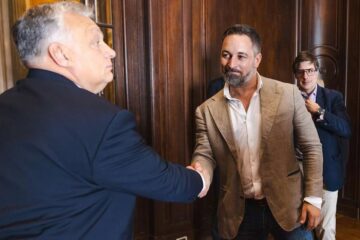 Scholarship on populism has dominated the last two decades but is now retreating in the face of a new concept that seems better equipped to capture the current transformations in our society: that of illiberalism. Illiberalism emerged first in the transition studies field (one may recall Fareed Zakaria’s famous “
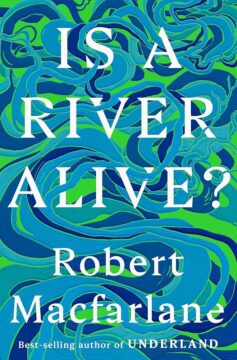 Nature writer Robert Macfarlane will need little introduction, having authored a string of successful books on people, landscape, and language. I was impressed by his 2019 book
  When he was France’s finance minister in the 1960s, former French President Valéry Giscard d’Estaing famously complained about the “exorbitant privilege” that the dollar’s position as the world’s leading reserve currency conferred on the United States. This meant, essentially, that the US could borrow at low interest rates, run persistently large trade deficits, and print money to finance its budget deficits. He never could have imagined that the US would end up letting these advantages slip through its fingers.
 M
M From the Christian perspective, the hyphen is a sign of Jewish translatability; but the same sign, read, we might say, from right to left, also points to a more confrontational reality, that of Jewish resistance to being translated (elevated) into a (higher) Christian register. The Jewish insistence on reading “the Bible” in Hebrew every week, in synagogue, to congregations whose first language was (and is) probably not the language of the patriarchs but the language of their non-Jewish neighbors, is a performance of otherness. We can see what is at stake in this attachment to the original when we appreciate the difference between reading Hebrew texts in Greek—from right to left—and reading the Bible as a Greek text, from left to right. From the perspective of the former, the Alexandrian translation of
 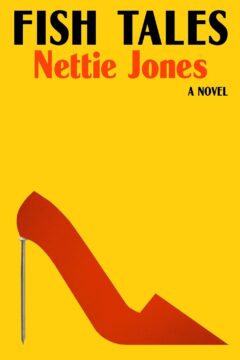 Fish Tales, released this spring in a new edition and still pioneering decades after its first run, slices into the flesh of the novel of ideas with events and characters who loom so large they leave no room for indulgent ideological abstractions; they are busy being sluts and disasters at the exact moment you might expect more recognizable or coherent archetypes to buckle begrudgingly into the routines of adult life and surrender to them for the sake of reputation, supposed stability, or ego. Transgressive to the point of exhilarating, Nettie Jones’s prose avoids etiquette or the impulse to virtue signal: this perspective of a girl molested by her schoolteacher, whose life subsequently becomes so centered on male approval she pretends she’s sexually liberated instead of a victim of circumstance and tragic hero, makes no excuses for the procession of orgies and nervous breakdowns that becomes the novel’s plot. Hedonism grows banal as we’re trapped in bed with the protagonist, her demons, and the doom disguised as suitors, flatterers, and one husband, Woody, who after a brief attempt at real union becomes Lewis’s overseer and benefactor, allowing her to hire prostitutes or travel to New York to meet with lovers while he takes his own new girlfriend. All the while he sustains Lewis, “his favorite woman,” with an allowance and a roof over her head.
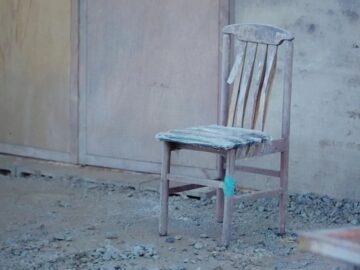 In the recent K-Drama Our Unwritten Seoul, a simple wooden chair emerges as the iconic stand-in (or sit-in) for a young farmer’s late grandfather, whose favorite chair it had once been. Broken and mended multiple times, patched together with tape, glue, and hastily hammered braces, the chair, on its last legs, gets tossed out by an over-zealous new employee. The young farmer is devastated.
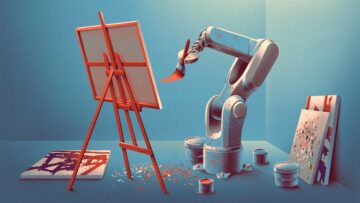 To generate images,
  T
T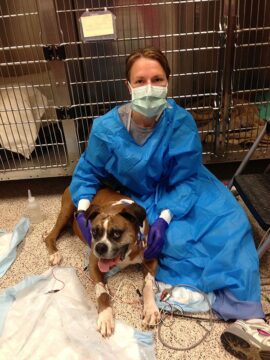 After a train carrying chemicals derailed and caught fire in East Palestine, Ohio, in 2023, residents were exposed to carcinogens such as vinyl chloride, acrolein and dioxin. Since tumors are typically slow to develop, it could take decades to know what that did to the locals’ cancer risk, but there may be a quicker route to an answer: The residents’ dogs were also exposed, and dogs develop cancer more quickly.