
Nathan J. Robinson in Current Affairs:
 Sometimes my experiences with the Postal Service are almost enough to turn me into a right-wing libertarian. For instance: They offer a special discounted rate for sending magazines through the post. Which is good—I run a magazine that is sent through the post! In order to get the rate, however, you have to meticulously obey every single instruction in the 56 pages of Handbook DM-204, which governs Periodicals Mailing Privileges. There is an incredibly complicated application, and a $700 fee, and a seemingly endless set of potential pitfalls. I couldn’t figure out how to finish the application, so I hired someone to do it. That person eventually gave up in frustration. It ultimately took us a year to get the permit. Shortly afterward, the postal service threatened to revoke our permit (and send us back to step 1) because we had failed to print the contents of Form 3510-M in our magazine.
For every bad experience I’ve had with the post office, though, I’ve also had a good one. There are two post offices within a few blocks of Current Affairs HQ. At one, the staff are consistently ornery and chide you for doing something wrong. (I play a game with myself: “What have I done wrong this time?” in which I try to guess what I am going to be told I have done wrong. The last time I went in it was “failing to fold the priority envelope along the crease when sealing it.”) At the other post office, the staff are absolutely lovely. They apologize to you, they find fun stamps for you, they give you king cake during Carnival Season. I adore them.
On the left, we often talk about the importance of making things publicly owned and operated. But the structure and character of those institutions matters just as much as their being “public” versus “private.” There’s a reason why “Do you want your healthcare to be run like the post office and the DMV?” is a very effective conservative talking point against greater federal involvement in financing medical care.
More here.
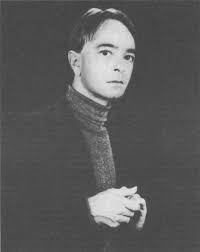 In his columns, Indiana skewered the art world’s bloated egos and grotesque superficiality, but he was interested, above all, in scrutinizing who held power and how it was deployed. In a particularly trenchant essay on Richard Serra’s lawsuit against the General Services Administration—the government agency that had commissioned his 1981 public sculpture Tilted Arc for the plaza outside the Jacob K. Javits Federal Building in Manhattan and, at the urging of the people who worked there, now planned to remove it against the artist’s wishes—Indiana chides Serra and his defenders for their naivete: “Who on earth did these people think they were dealing with in the first place?” he asks. “If you are so enamored of [power] that you regularly ornament its dinner tables, ride cackling through the night in its limousines, and sign worthless contracts with it, it is no problem of mine or anyone else’s if power decides, one bored afternoon, to add you to the menu instead of inviting you to eat.”
 Omnipresent social media places a claim on our elapsed time, our fractured lives. We’re all sad in our very own way. As there are no lulls or quiet moments anymore, the result is fatigue, depletion and loss of energy. We’re becoming obsessed with waiting. How long have you been forgotten by your love ones? Time, meticulously measured on every app, tells us right to our face. Chronos hurts. Should I post something to attract attention and show I’m still here? Nobody likes me anymore. As the random messages keep relentlessly piling in, there’s no way to halt them, to take a moment and think it all through.
 The title of Ferruccio Busoni’s 1907 manifesto Sketch of a New Aesthetic of Music might suggest that the Italian pianist-composer would be looking to the future, yet many of its philosophical passages find him lingering in the past. Writing out “of convictions long held and slowly matured” (he was 41 at the time), Busoni extolled the virtues of the Baroque and classical ages, Bach and Beethoven being the exemplars—in “spirit and emotion they will probably remain unexcelled.” Busoni’s embrace of the past, however, was no rejection of modernity. “Among both ‘modern’ and ‘old’ works,” he wrote, “we find good and bad, genuine and spurious. There is nothing properly modern—only things which have come into being earlier or later; longer in bloom, or sooner withered. The Modern and the Old have always been.” Past and present, tradition and experiment—all could happily coexist in art. Thus, in more or less the same breath, Busoni could praise the elegance of Mozartian classicism while pondering some avant-garde technique, such as microtonal harmony. What mattered most of all were spirit and emotion; “he who mounts to their uttermost heights,” the musician wrote, “will always tower above the crowd.”
 Neuroscientists have for the first time discovered differences between the ‘software’ of humans and monkey brains, using a technique that tracks single neurons. They found that human brains trade off ‘robustness’ — a measure of how synchronized neuron signals are — for greater efficiency in information processing. The researchers hypothesize that the results might help to explain humans’ unique intelligence, as well as their susceptibility to psychiatric disorders. The findings were published in Cell
 I wrote the first draft of this post on my typewriter. Like much of my other writing, this piece began as handwritten notes and drafts typed on a nice little portable typewriter, which is a little younger than I am and which I expect to use for the rest of my life.
 Although we know bias and racism exists in most societies, when put into coherent terms in the form of research the impact is stark and exposes just how much a part of life racism is for so many people. Booth and Mohdin’s (The Guardian 2018) article ‘Revealed: the stark evidence of everyday bias in Britain’ setting out the findings of a poll on the levels of negative experience, more often associated with racism, by Black, Asian and minority and ethnic groups in the United Kingdom(UK) does just that. Thus, for example, from amongst its many findings the survey revealed that 43% of those from a minority background had been overlooked for work promotion in the last five years in comparison with only 18% of white people who reported the same experience. Likewise, 38% of people from ethnic minorities said they had been wrongly suspected of shop lifting in the last five years, in comparison with 14% of white people. Significantly, 53% of people from a minority background believed they had been treated differently because of their hair, clothes and appearance, in comparison with 29% of white people. In the work-place also 57% of minorities said they felt they had to work harder to succeed in Britain because of their ethnicity, and 40% said they earned less.
 In the immortal words of Prince Rogers Nelson’s party gem from 1982: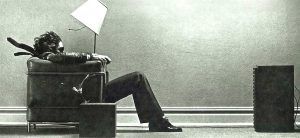
 Simple questions often yield complex answers. For instance: what is the difference between a language and a dialect? If you ask this of a linguist, get comfortable. Despite the simplicity of the query, there are a lot of possible answers.
 If you can believe it, Japanese novelist, talking cat enthusiast, and weird ear chronicler Haruki Murakami turned 70 years old this weekend. 70! But I suppose we should believe it, despite the youthful gaiety and creative magic of his prose: the internationally bestselling writer has 14 novels and a handful of short stories under his belt, and it’s safe to say he’s one of the most famous contemporary writers in the world. To celebrate his birthday, and as a gift to those of you who hope to be the kind of writer Murakami is when you turn 70, I’ve collected some of his best writing advice below.
 Nobel laureate