
Michelle Alexander in The New York Times:
 Bahia Amawi, an American speech pathologist of Palestinian descent, was recently terminated for refusing to sign a contract that contains an anti-boycott pledge stating that she does not, and will not, participate in boycotting the State of Israel. In November, Marc Lamont Hill was fired from CNN for giving a speech in support of Palestinian rights that was grossly misinterpreted as expressing support for violence. Canary Mission continues to pose a serious threat to student activists. And just over a week ago, the Birmingham Civil Rights Institute in Alabama, apparently under pressure mainly from segments of the Jewish community and others, rescinded an honor it bestowed upon the civil rights icon Angela Davis, who has been a vocal critic of Israel’s treatment of Palestinians and supports B.D.S.
But that attack backfired. Within 48 hours, academics and activists had mobilized in response. The mayor of Birmingham, Randall Woodfin, as well as the Birmingham School Board and the City Council, expressed outrage at the institute’s decision. The council unanimously passed a resolution in Davis’ honor, and an alternative event is being organized to celebrate her decades-long commitment to liberation for all. I cannot say for certain that King would applaud Birmingham for its zealous defense of Angela Davis’s solidarity with Palestinian people. But I do. In this new year, I aim to speak with greater courage and conviction about injustices beyond our borders, particularly those that are funded by our government, and stand in solidarity with struggles for democracy and freedom. My conscience leaves me no other choice.
More here.
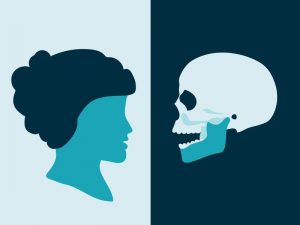 On the morning of June 10, 1898, Alice Lee marched into the all-male Anatomical Society meeting at Trinity College in Dublin and pulled out a measuring instrument. She then began to take stock of all 35 of the consenting society members’ heads. Lee ranked their skulls from largest to smallest to find that—lo and behold—some of the most well-regarded intellects in their field turned out to possess rather small, unremarkable skulls. This posed a problem, since these anatomists believed that cranial capacity determined intelligence. There were two possibilities: Either these men weren’t as smart as they thought they were, or the size of their skulls had nothing to do with their intelligence.
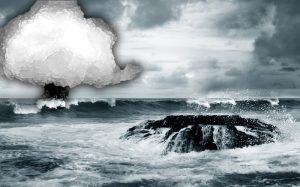 Global warming has heated the oceans by the equivalent of one atomic bomb explosion per second for the past 150 years, according to analysis of new research.
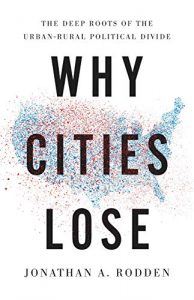 Over the last decade, I’ve been asking myself a couple of closely related questions. First, what explains the incredible growth in what we might call urban-rural polarization? What explains the fact that voting behavior has become so highly correlated with population density over time? This is something that’s happened not just in the United States, but also in a number of other industrialized countries. Secondly, what are the implications of this polarization for who wins and loses and whose policy agenda gets put into place?
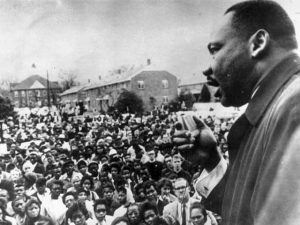 King was not the empty symbol Reagan and others claimed he was. He was a revolutionary, if one committed to nonviolence. But nonviolence does not exhaust his philosophy. As political theorist Brandon M. Terry puts it, King was not only an icon, but “a vital political thinker.” A half a century ago, Terry argues, King theorized the foundations of racism in a way that vastly surpasses the fashionable contemporary ideologies that “treat racism as near-immutable and overstate its explanatory effects.” As Terry points out, King understood that the racial question was overdetermined by wage stagnation, the declining power of organized labor, and the expulsion of workers from employment by automation. King had come to believe that transforming this structural injustice could only be achieved through mass civil disobedience.
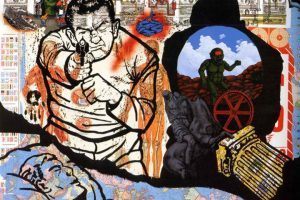 David Wojnarowicz did not write dark fantasy. He wrote real life. In The Waterfront Journals he brilliantly captures electric tales from the mouths of strangers, those he described as “junkies, prostitutes, male hustlers, truck drivers, hobos, young outlaws, runaway kids, criminal types”, whose lives echo his own ostracized existence. He was thirteen when he was first paid for sex and sixteen when he started “turning tricks” regularly. His mother kicked him out of the house. By the time Wojnarowicz came out to friends in New York, he was in his early twenties. He was on the cusp of finding his voice as a writer and his confidence as an artist. It was the mid-1970s.
  When a sentence isn’t right, I feel it immediately in my back. I’ve said this before. Sometimes I can’t type fast enough to keep up with my thoughts and a specific word disappears from my train of thought forever. Sometimes my body has enough energy to take me to a translation workshop at a friend’s home and my translation is changed for it. Sometimes my body is tired from my day job and I work half as quickly as I used to. Sometimes my body catches cold and my brain muddles words on the page. Once I had a translation deadline to meet but I had just had my tonsils removed and could barely make out the page through the muck of medication. I realized shortly after that I had wound up with something that was half truth and half lie.
 By her own account, writing wasn’t easy for Francine du Plessix Gray, who died last Sunday at the age of eighty-eight. As she told Regina Weinreich in her 1987
  How did I know my anxiety had gotten the better of me? When I found myself taking meticulous notes on a forthcoming book by Erica Feldmann called HAUSMAGICK: Transform Your Home With Witchcraft (HarperOne, $25.99, available in March). The year 2018 hadn’t been so great, what with the death of a husband and, possibly, a republic. Maybe 2019 would be better if I bought certain purifying elements for my home. The right crystals, sage sticks and — salt? Apparently, you can sprinkle salt around the house after a person with “toxic energy” visits. Attention future dates: If you see me reaching for the shaker as you’re leaving, you know things haven’t gone well. If my nerves are frayed, I take cold comfort in knowing I’m not alone. Whether it’s our political situation, the jangling distractions of everyday life or the not-irrational sense that mankind’s need to find another planet isn’t just a sci-fi plotline, we seem to be in the midst of one massive freakout.
 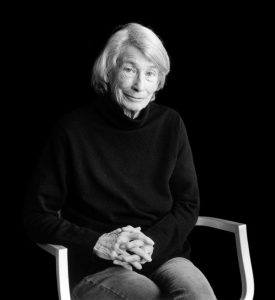 “Wild Geese” was trending on Twitter on Thursday, and poetry lovers — not naturalists or ornithologists — were responsible. Mary Oliver, arguably America’s most beloved best-selling poet, had died earlier in the day, at the age of 83. Her poem “Wild Geese,” from her 1986 collection
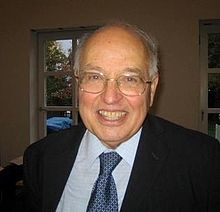 While away on vacation, I heard last week the sad news of the death last week of Michael Atiyah, at the age of 89. Atiyah was both a truly great mathematician and a wonderful human being. In his mathematical work he simultaneously covered a wide range of different fields, often making deep connections between them and providing continual new evidence of the unity of mathematics. This unifying vision also encompassed physics, and the entire field of topological quantum field theory was one result.
 A FEW DAYS before the 2016 election, journalist Andrew Sullivan wrote this about Donald Trump: “He has no concept of a nonzero-sum engagement, in which a deal can be beneficial for both sides. A win-win scenario is intolerable to him, because mastery of others is the only moment when he is psychically at peace.”
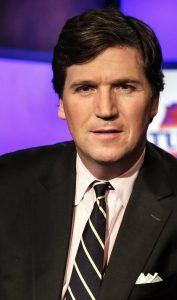 Last Wednesday, the conservative talk show host Tucker Carlson started a fire on the right after airing a prolonged
  The first literary anniversary of 2019 will be one of the biggest: Jan. 1 marks the centenary of J.D. Salinger. (To mark the occasion, his four books are being