
Maggie Doherty in Harper’s Magazine:
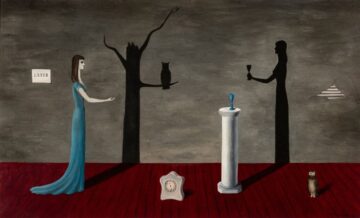 On the morning of February 2, 2023, I exited the subway at 57th Street to find the air growing colder. It had been a warm winter. But the first proper cold front was moving in, and I already felt underdressed. I propelled myself toward the warmth of the Midtown Hilton, where the American Psychoanalytic Association (APsA, as it’s styled) was gathering for its winter meeting.
APsA has long been the institutional center of psychoanalysis in the United States. Founded in Baltimore in 1911 by, among others, Ernest Jones, Freud’s first biographer, its goals were to consolidate the profession and to standardize both training and treatment. Since then, the organization has overseen virtually every aspect of mainstream psychoanalysis in this country—research, education, and practice—and has resisted changes to many of its standards, casting a suspicious eye on analysts who proposed new ideas. In Psychoanalysis: The Impossible Profession, Janet Malcolm described APsA as having an “iron hold” over psychoanalysis in the United States.
More here.
Enjoying the content on 3QD? Help keep us going by donating now.
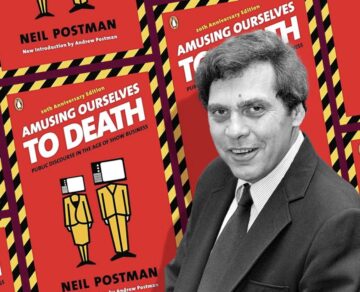 Every so often an eye-opening work of social criticism becomes a surprise bestseller. In 1979, everyone was talking about Christopher Lasch’s The Culture of Narcissism, and in 1987, it was Allan Bloom’s The Closing of the American Mind. Last year, Jonathan Haidt’s The Anxious Generation raised the alarm, encouraging readers outside the parenting-book world to consider what the teenage mental health crisis might mean for the culture at large. Typically the work of a professor with an aptitude for speaking to a general readership, this sort of book hits just as popular anxiety about a new technology or ideology—smartphones, the self-actualization movement, multiculturalism—is cresting. Ideas that may have been simmering away in academia suddenly burst into the common conversation. However, the very qualities that make these books feel tremendously relevant at a particular historical moment also tend to make them fade into obscurity when that moment passes. The blockbuster cultural criticism book tends to speak to its time—then become a curio as the culture changes around it.
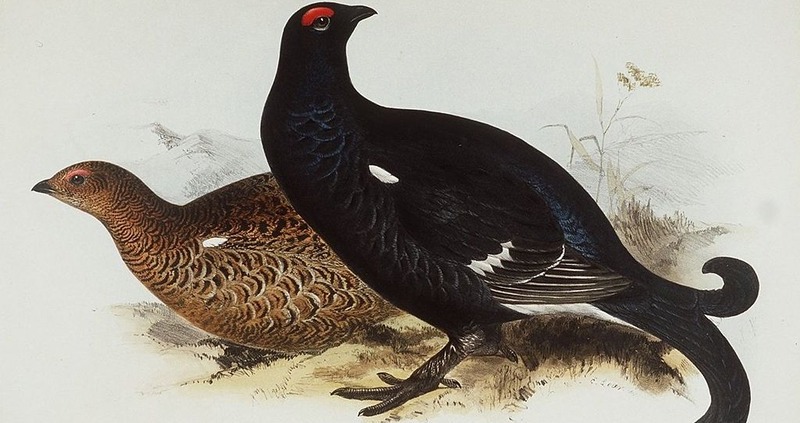 In all animals mating is a deal: one sex donates a few million sperm, the other a handful of eggs, the merger between which—unless a predator intervenes—will result in a brood of young. Win-win for the parents, genetically speaking. But there are few creatures that behave as if sex is a dull, simple or even mutually beneficial transaction and many that behave as if it is an event of transcendent emotional and aesthetic salience to be treated with reverence, suspicion, angst and quite a bit of violence.
 With roughly
 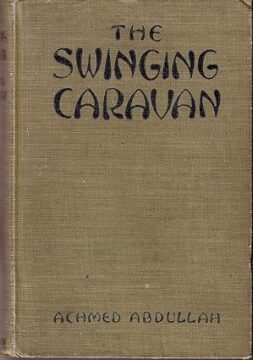 ACHMED ABDULLAH was, during the early decades of the previous century, a playwright with successes on Broadway and the West End, an Oscar-nominated screenwriter, an author of dozens of books, and a writer of adventure and fantasy stories for the pulps, including Argosy, The All-Story, Munsey’s, and Blue Book. The gossip columns reported his comings and goings as a man about town.
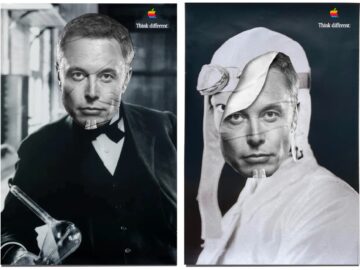 As Isaacson surveyed the landscape in search of a new genius, one name kept coming up: Elon Musk. He was, without a doubt, a man with grand vision — electric cars, space travel, telepathy. He was unyielding in this vision, too, sometimes belligerently so.
 I
I
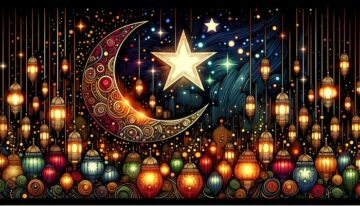 The origins of Eid can be traced back to the time of the Prophet Muhammad in the 7th century. Eid al-Fitr, which translates to the “Festival of Breaking the Fast,” is celebrated at the end of Ramadan, the month of fasting. The significance of this festival lies in the completion of a month-long spiritual journey of self-discipline, reflection, and devotion to Allah. It is a time for Muslims to express gratitude for the strength and patience shown during Ramadan. The celebration of Eid al-Fitr is not only a personal milestone but also a communal event that reinforces the bonds of brotherhood and sisterhood among Muslims.

 “People give estimates of what they think we’re making, and it’s always way low,” he told me from the plush interior of his Rolls-Royce, which was still scented with a synthetic new-purchase aroma. “Our watch hours on YouTube [in December] were, like, 5.7 million hours. And there’s a commercial every 10 minutes.”
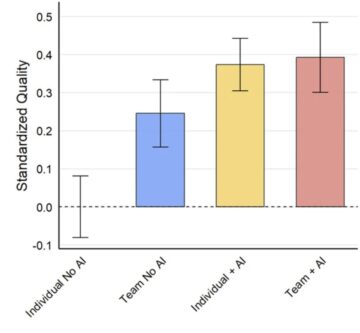 Over the past couple years, we have learned that AI can boost the productivity of individual knowledge workers ranging from