
Peter Brooks at The Paris Review:
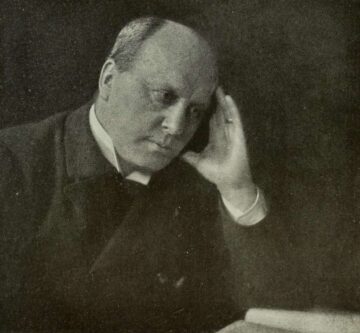 When Henry James decided to come to America in 1904 and 1905, his elder brother, William James, was not immediately pleased. William said that while his wife, Alice, would welcome his visit (she and Henry had a firm bond), he felt “more keenly a good many of the désagréments to which you inevitably will be subjected, and imagine the sort of physical loathing with which many features of our national life will inspire you.” There follows an account of how traveling Americans ate their boiled eggs, presumably in hotels and on trains, “bro’t to them, broken by a negro, two in a cup, and eaten with butter.” As a source of physical loathing, this seems a bit excessive: one might linger over William’s attempts to keep Henry’s visit at bay. William’s letter seems more to the point when he notes: “The vocalization of our countrymen is really, and not conventionally, so ignobly awful … It is simply incredibly loathsome.”
William’s discouragement provoked from Henry a declaration of his determination not to be deterred from coming. “You are very dissuasive,” he wrote to William.
more here.
Enjoying the content on 3QD? Help keep us going by donating now.
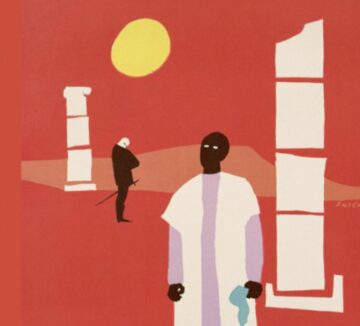 In general, we view sexual jealousy as bad. Jealousy creates distrust and destroys harmony. It does not always cause the kind of outright physical violence it does in Othello, but it certainly does violence to one’s peace of mind and to one’s sense of security and comfort. Sexual jealousy can cause an otherwise dignified individual to become a snooping, creeping, paranoid obsessive. Jealous souls, as Shakespeare writes, “are not ever jealous for the cause, / But jealous for they’re jealous. It is a monster / Begot upon itself, born on itself.” It can lead to hatred, manipulation, control, and cruelty. In Othello, it leads directly to despair and to death. And yet its absence and the void it has left behind herald something more sinister and colder than the terror and grandeur produced by the hot-blooded, violent stirring of the human heart. Instead of a thunderstorm that frightens and awes, we are left with the dreariness of a gray drizzle that chills to the bone. Sexual jealousy is the proof of sexual love. It is the evidence of a love for another that is so total that to imagine another enjoying even a part of one’s beloved drives one to a crisis of meaning that turns toward rage and despair.
 A near-perfect simulation of the human brain would have profound implications for humanity. It could offer a pathway for us to transcend the biological limitations that have constrained human potential, and enable unimaginable new forms of intelligence, creativity, and exploration. This represents the next phase in human evolution, freeing our cognition and memory from the limits of our organic structure.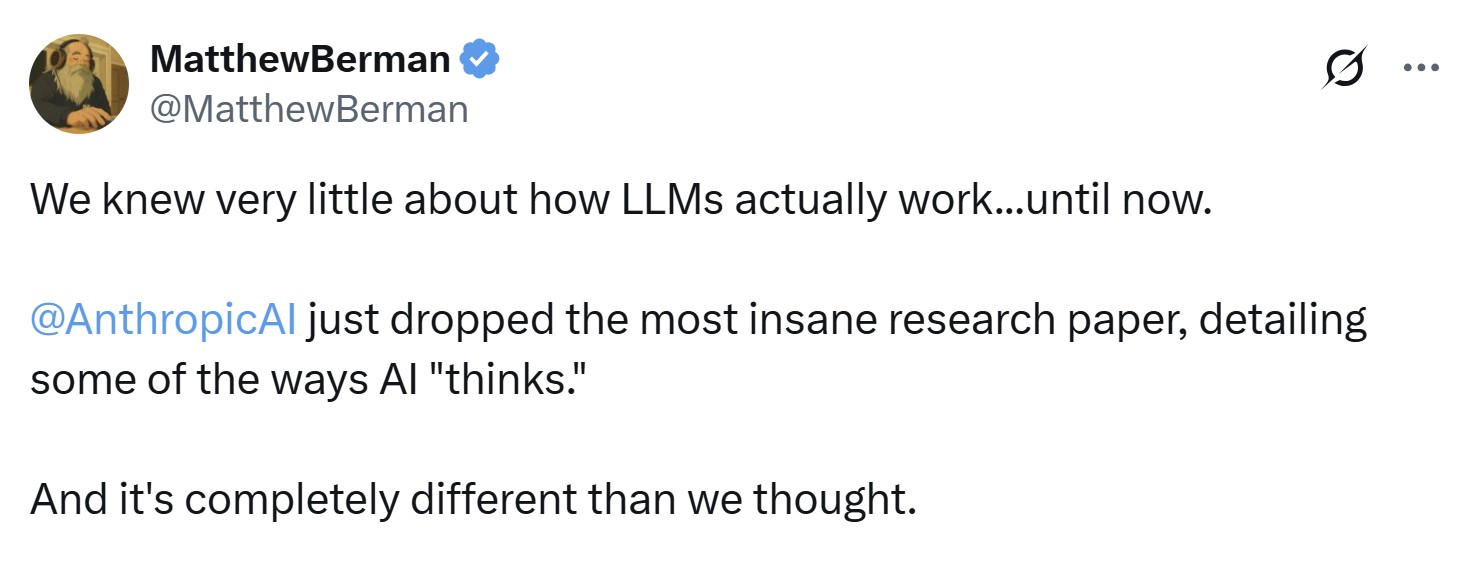
 It’s no secret that “driving while black” is a real phenomenon. Study after study has shown that minority drivers are ticketed at a higher rate, and data from speed cameras suggests that it’s not because they commit traffic violations more frequently. But this leaves open the question of why. Bias is an obvious answer, but it’s hard to eliminate an alternative explanation: Minority groups may engage in more unsafe driving, and the police are trying to deter that.
 Wilhelm Rumpf is a naughty boy, and Schoolmaster Heinzerling isn’t having it. When Dr. Heinzerling walks into his classroom one morning to find Rumpf holding forth in an uncanny imitation of his own peculiar manner of address, he sentences him to three days in the school jail, or
 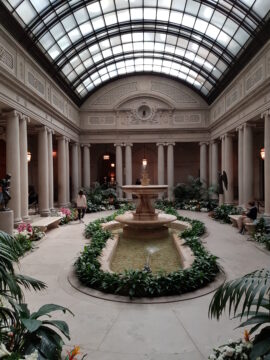 Square foot for square foot, the Frick has the densest concentration of masterpieces in America, installed alongside decorative objects in gloriously stuffy interiors. The art historian Bernard Berenson once sniffed that the Frick, founded by the morally compromised robber-baron philanthropist Henry Clay Frick, was just a “mausoleum.” Not true! Since Frick’s 1919 death, this stupendous museum has added countless gifts and acquisitions. A Watteau entered the collection in 1991. At the entrance is a wild Murillo self-portrait painted on a trompe l’oeil stone block that was added in 2014. At the Frick, we commune with the ages.
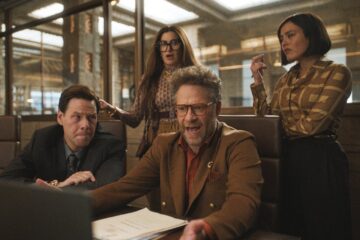 What does it mean for a television show to be cinematic? It certainly doesn’t have to mean that the series in question is about the movie business, though that happens to be the case with The Studio, the new Apple TV+ comedy starring Seth Rogen and co-created by Rogen and his longtime creative partner Evan Goldberg (Superbad, Pineapple Express, Neighbors 2). In the first episode, Rogen’s Matt Remick becomes the new president of the venerable century-old Continental Studios when its previous head, industry legend and Matt’s onetime mentor Patty Leigh (Catherine O’Hara), is forced out of the job. Matt got into the business out of a love for classic cinema—he’s forever dropping references to everything from Goodfellas to Fight Club to I Am Cuba. But the realities of the 21st-century box office mean that his workdays revolve around meetings about acquiring the rights to the Kool-Aid brand name for a franchise that will star Ice Cube as the voice of an animated pitcher of red liquid.
 I was an English major in college, and my favorite poet was the first-generation Romantic William Wordsworth. For one thing, there’s the name, the best example of
 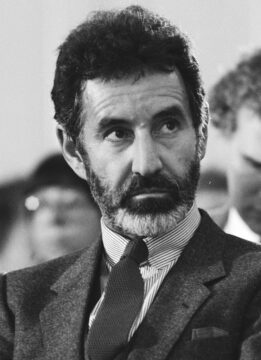 At the start of the last class, Breyten took a magnum of red wine out of a tote bag and plonked it on the table among our normal-sized bottles. It was a Bordeaux, I like to think. The bottle was hilariously large, as if it had priapism, and he shared it round in paper cups, then went into full-on raconteur mode. He’d been kicking back for at least half an hour and was talking about his cottage in Catalonia, near Girona, when I interjected something about the Barri Gòtic in Barcelona, trying to assert that I also knew a lot about the locale. Breyten’s eyes slid over me. He gave the merest nod and continued his ramifying digression.
 The Dream Hotel is Laila Lalami’s fifth novel – earlier works received nominations for the Booker, Pulitzer and National book awards – and has been longlisted for the Women’s prize. Her 2020 nonfiction book, Conditional Citizens, draws on her experiences as a Moroccan American to think about her adopted country’s two-tier system: how rights and freedoms are, in practice, exercised very differently across race, class, gender and national origin. Lalami’s fiction has explored the way these differences play out across a range of times and places: from Hope and Other Dangerous Pursuits (2005), on migrant experiences in modern Morocco, to
  If you watch clips of his last appearance as Ziggy, at his infamous concert at the Hammersmith Odeon, you can see these rapid- fire changes in action. As Bowie starts “Ziggy Stardust,” he’s wearing a black diamond-shaped jumpsuit with shots of blue and red, his feet planted about a meter apart. Two pairs of hands materialize out of the darkness and deftly yank its sleeves, revealing the famously short white satin kimono, which is positively luminescent under the stage lights. He does the same thing again later with two more outfits by Kansai Yamamoto: the white cape revealing the marvelous, multicolored jumpsuit. At one point, Bowie goes offstage to change into his sculpted-shoulder two-piece, another number by Burretti, which he wears with the boots. You can tell how tight it is because he grimaces as it goes up his legs. He smooths out each of his sleeves so that they sit just so. He must have looked something like a red, blue, and silver mirage, a sensory assault on your eyes and ears that made them explode with color and sound. Exhilarating doesn’t even begin to describe it. This was nothing short of earth-shattering.
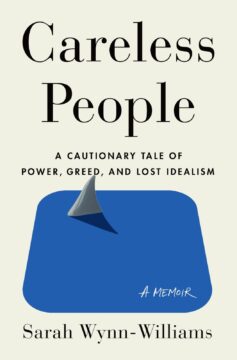 Meta’s governmental strategy and influence is now clearer than ever, thanks to Sarah Wynn Williams’s recently published memoir,
 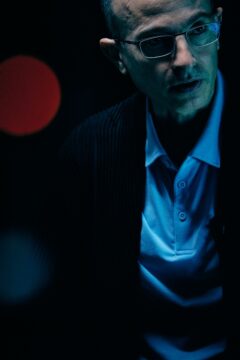 WIRED: In the late ’90s, when the internet began to spread, there was a discourse that this would bring about world peace. It was thought that with more information reaching more people, everyone would know the truth, mutual understanding would be born, and humanity would become wiser. WIRED, which has been a voice of change and hope in the digital age, was part of that thinking at the time. In your new book, Nexus, you write that such a view of information is too naive. Can you explain this?