
by Thomas O’Dwyer
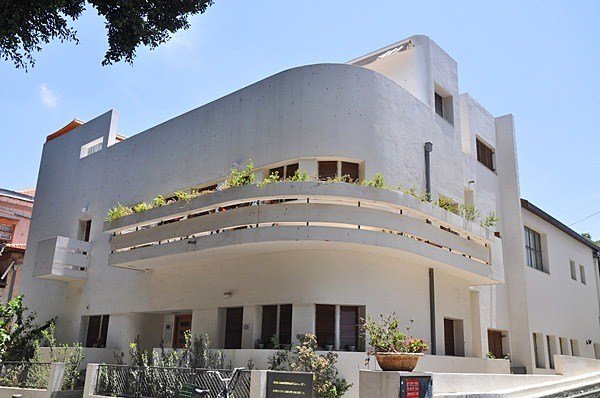
On April 1, one hundred years ago, Walter Gropius established the Bauhaus school of design in Weimar, central Germany. It lasted a mere 14 years — exactly the same time as the Weimar Republic. In 1933, the Nazis destroyed both. Short life or not, Bauhaus opened up a modern way of thinking about arts and crafts, the marriage of form and function, education, and the growth of cities. Its ideas have had an impact well beyond the school, its locations and its era. And there have been some resurrections. Sleepy Weimar has regained its pleasant obscurity and the recovery of Bauhaus has been a little uneven, but robust and international. Nazi thuggery was dealt a satisfying poke in the eye by one living monument to Bauhaus, the White City of Tel Aviv in Israel — a UNESCO World Heritage site.
Gropius’ revolutionary school of art and design was an achievement of modernism itself. It began as the Thuringian state Bauhaus in Weimar, moved as a school of design to Dessau, and finally as a private institute to Berlin. Its themes grew from an active arts and crafts movement and when the Nazis crushed it, these ideas flooded out of Germany with thousands of emigrants. The influence of Bauhaus has been immense, especially in the United States, where many artists moved before and during World War II. As well as Tel Aviv, built by Jewish German refugees, there are World Heritage Bauhaus sites in a dozen states around the world. The 100th anniversary this year is being marked by exhibitions, theatre, music and modern dance events. A flood of books has appeared, most destined to languish unread on post-Bauhaus bookshelves.
What the term Bauhaus means to the wider public today is hard to pin down. Read more »
 I was struck by a sentence in Susan Orlean’s The Library Book: “If nothing lasts, nothing matters.” This line was part of a discussion of memory, the fear of being forgotten, and the value of passing things on to future generations. I share a passion for the idea of continuity between generations (and I highly recommend Orlean’s book), but ultimately I don’t think that something has to last to matter. Alan Watts, in his book This Is It, says that “This—the immediate, everyday, and present experience—is IT, the entire and ultimate point for the existence of a universe.” It’s not about connecting with anything but what’s here in front of me now. (Easier said than done, of course.)
 I teach two kinds of group exercise classes, and part of the certification processes for both disciplines devoted no small amount of attention to how to speak to your minions, uh, students.
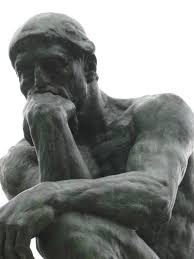 “…And now to introduce our second panelist: Martha. Martha does believe that academic philosophy is worth pursuing, and she has – of course – written a book about it. Martha, can you briefly summarize your argument?”
 My answering machine whirrs. From an echoing room, the chainsaw-voice shouts into a speaker phone:
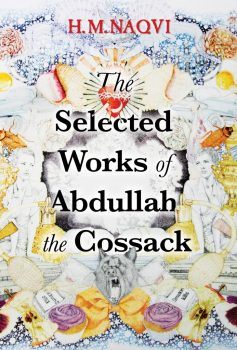 Abdullah, the delightful septuagenarian protagonist of Hussain M. Naqvi’s latest novel The Selected Works of Abdullah the Cossack, might be a ‘Cossack’ (having successfully imbibed his way to earning that name), but Naqvi himself is nothing short of a veritable Vaslav Nijinsky when it comes to negotiating the balletics of Pakistani Anglophone writing. Erudite yet entertaining, the Cossack’s story, in spite of his literally heavyweight frame and metaphorically heavyweight influence, gracefully pirouettes its way through the landscape of both Abdullah’s witty mind as well as the geographical terrain of Karachi in general, and Garden East in particular.
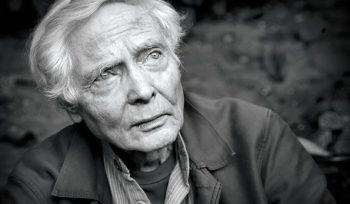 As a student at Princeton, Merwin studied under John Berryman and R. P. Blackmur. After graduating in 1948, his travels would take him through Europe before he landed in the south of France. Michael Wiegers
  When Laila Lalami’s 2014 novel The Moor’s Account was short-listed for a Pulitzer Prize, jurors called its tale of a 16th century Spanish expedition to Florida “compassionately imagined out of the gaps and silences of history.” Five years on, Lalami turns that same compassion to the silences of the present. In her timely fourth novel, The Other Americans, she follows an investigation into the death of an elderly Moroccan immigrant in an apparent hit-and-run and its impact on a California desert town.
 In 1995, if you had told
  Identity politics is one of the defining – and one of the most divisive – issues of our age. And no identity is more contested or fought over than white identity. For some it is a means of giving voice to a group whose identity has previously been denied. For others it is simply as an expression of racism.
 WHAT A STRANGE
 As a general rule it is true that if you eat vastly fewer calories than you burn, you’ll get slimmer (and if you consume far more, you’ll get fatter). But the myriad faddy diets flogged to us each year belie the simplicity of the formula that Camacho was given. The calorie as a scientific measurement is not in dispute. But calculating the exact calorific content of food is far harder than the confidently precise numbers displayed on food packets suggest. Two items of food with identical calorific values may be digested in very different ways. Each body processes calories differently. Even for a single individual, the time of day that you eat matters. The more we probe, the more we realise that tallying calories will do little to help us control our weight or even maintain a healthy diet: the beguiling simplicity of counting calories in and calories out is dangerously flawed. The calorie is ubiquitous in daily life. It takes top billing on the information label of most packaged food and drinks. Ever more restaurants list the number of calories in each dish on their menus. Counting the calories we expend has become just as standard. Gym equipment, fitness devices around our wrists, even our phones tell us how many calories we have supposedly burned in a single exercise session or over the course of a day.
 Last April, in the famous Faraday Theatre at the Royal Institution in London, Carlo Rovelli gave an hour-long lecture on the nature of time. A red thread spanned the stage, a metaphor for the Italian theoretical physicist’s subject. “Time is a long line,” he said. To the left lies the past—the dinosaurs, the big bang—and to the right, the future—the unknown. “We’re sort of here,” he said, hanging a carabiner on it, as a marker for the present. Then he flipped the script. “I’m going to tell you that time is not like that,” he explained.
 The pub is warm and beery. Grog glasses—drained, foam stained—scatter sticky veneer. Red-wine lips, hoppy breath, a slurry of slurring; laughter like gunfire, craic-ing off the wood panels, mirror walls and ranks of whiskey bottles. Bar talk is of theology and adultery, literature and death, soap and sausages. Everything and nothing, discussed or daydreamed over a quick cheese sandwich. A nothing old day. But the stuff of life—infinitesimal yet essential—all the same . . .
 One of the key misconceptions about solar geoengineering — putting aerosols into the atmosphere to reflect sunlight and reduce global warming — is that it could be used as a fix-all to reverse global warming trends and bring temperature back to pre-industrial levels.