
Delia Falconer in the Sydney Review of Books:
 In ancient Rome, priests and officials called augurs would look for omens of the future in the weather, the movement of animals (especially animals encountered out of place), or the flights of birds. These days, we’re scrutinising the same things to tell the future, not as signs of the gods’ will but our own actions.
Were the gale-force winds last November simply unseasonal, I heard people asking in the playground, or evidence of global warming? Where are the summer cicadas, my mother asks — she can’t remember hearing any on Sydney’s north shore for years—and why have brush turkeys and rabbits started appearing in her garden?
Scientists are pursuing these questions with more rigour: modern augurs, staring at birds’ intestines, they are trying read both the accumulated past and the future.
More here.
 It’s not a survey essay, or a popularization based on hand-wavy analogies. We’re going to dig down deep so you understand the details of quantum computing. Along the way, we’ll also learn the basic principles of quantum mechanics, since those are required to understand quantum computation.
 It is reasonable that we would want to cast such an attack outside the realm of rationality, to tell ourselves that expressions of evil are random and unpredictable; it’s the same impulse many had when faced with the brutality and terror of the Islamic State and other jihadi extremists. To rationalize evil as something irrational makes it easier to take on horrifying news. But to do that here would be a mistake.
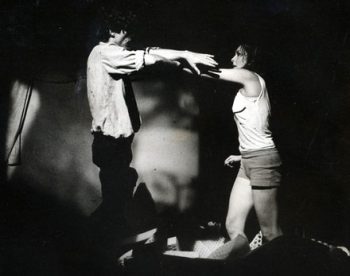 Schneemann: We would go mushroom hunting with him. And Higgins made these incredible mushroom dinners, right? They made you poop like crazy, but they were delicious. And John was very close with Tenney. Tenney produced Cage’s concerts early on, while nobody was supporting us or helping us. He was forming a group called Tone Roads at the time with Malcolm Goldstein and Philip Corner, and Phil Glass and Steve Reich were participants. I always cherished time with Jim and John talking about sound and natural formulations, but we were divisive on politics. John didn’t want to have conflict, it was his defining position. He didn’t discourage us from going to anti-Vietnam war marches, but he wouldn’t join in any way. We loved him. He was generous, spirited, engaging.
 O
O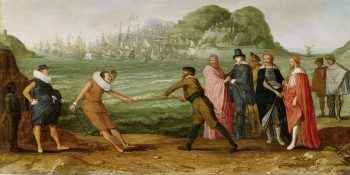 Giano’s killing was one episode in the larger story of international trade and its accompanying rivalries in the later European Middle Ages. The so-called Dark Ages were never as dark as their name would imply; hucksters, peddlers, chapmen, and other minor players had always plied Europe’s roads and dealt their goods. But it was in the fourteenth and fifteenth centuries that high-volume international trading seriously resumed, with trade in wool one of its major drivers. In those centuries, the Port of London alone handled almost a thousand arriving and departing trading vessels a year, and numerous other English ports (including the newly active ports of Dover and Southampton) were claiming a role. Half this activity was devoted to wool, and it generated immense wealth for the realm, conferring fortunes on a small and monopolistic group of men. These successful profiteers were not the sheepherders and shearers of the provinces, nor the merchant sailors who braved the seas, but the entrepreneurial middlemen who collected revenues on exported wool. A close-knit group of at most several hundred men, they formed allegiances and confederations throughout the mercantile establishment that dominated the leading guilds and ran the city of London.
 Outside the window of Tim Mackintosh-Smith’s home in Sana’a, the Yemeni capital, are reminders of the long sweep of Arab history – child soldiers mourning martyrs of the country’s ongoing war, rocket salvoes,
 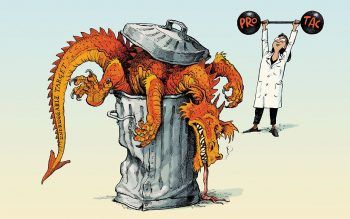 When Craig Crews first managed to make proteins disappear on command with a bizarre new compound, the biochemist says that he considered it a “parlour trick”, a “cute chemical curiosity”. Today, that cute trick is driving billions of US dollars in investment from pharmaceutical companies such as Roche, Pfizer, Merck, Novartis and GlaxoSmithKline. “I think you can infer that pretty much every company has programmes in this area,” says Raymond Deshaies, senior vice-president of global research at Amgen in Thousand Oaks, California, and one of Crews’s early collaborators. The drug strategy, called targeted protein degradation, capitalizes on the cell’s natural system for clearing unwanted or damaged proteins. These protein degraders take many forms, but the type that is heading for clinical trials this year is one that Crews, based at Yale University in New Haven, Connecticut, has spent more than 20 years developing: proteolysis-targeting chimaeras, or PROTACs.
 I stopped listening to music and watching TV in my 20s. It sounds extreme, but I did it because I thought they would just distract me from thinking about software. That blackout period lasted only about five years, and these days I’m a huge fan of TV shows like Narcos and listen to a lot of U2, Willie Nelson, and the Beatles.
 In February, Time Out Dubai ecstatically
  Despite the spread of secularism in the West, rising levels of religious belief in the world as a whole have become incontrovertible. Three-quarters of humanity profess a faith; the figure is projected to reach 80 per cent by 2050 – not just because believers tend to have more children, but also through the spread of democracy. Significant, too, is the growing prominence of post-secular thinking in several disciplines. Things looked very different as recently as the 1980s. Influential commentators assumed that mainstream religion would fade away within a few generations; anglophone theologians, to name only one group, were often intellectually insecure. The turning of the tide is a significant chapter in the history of ideas meriting a full-length study of its own. Its main conclusions are worth outlining. The scales of debate on whether religion does more harm than good will tilt a bit if the theistic picture looks more coherent on closer inspection than many had previously thought, and naturalism – the thesis that everything is ultimately explicable in the language of natural science – less plausible as a consequence.
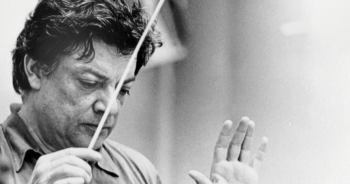 No composer exerted a greater influence on the music that came after him than Johann Sebastian Bach, who was born on this date in 1685. As we celebrate his birthday, let us consider one distinctive way in which composers have paid homage to the master: by using Bach’s name itself as a musical motif. In German nomenclature, the note (and key of) B flat is represented by the letter B; B natural is represented by the letter H. A and C are just as they are, so to spell out Bach’s surname in musical form yields a four-note motif consisting of B flat, A, C, and B. Bach himself used the motif (a kind of autograph stamp, sometimes surreptitious, sometimes not), and many others followed his lead: Robert Schumann, Franz Liszt, Max Reger, Arnold Schoenberg, Francis Poulenc, Anton Webern, Arvo Pärt, Krzysztof Penderecki, and Alfred Schnittke among them. One of the most imaginative uses of the motif came from a composer who is too often overlooked by music critics but who happened to be one of the most innovative and arresting voices in 20th-century music, Bruno Maderna.
 Okwui’s art world looked more like the world itself. But this was no occasion for self-congratulation, much less for exercises in the sterile American rhetoric of ‘inclusion’, which he disdained. His project was to decolonise the art world: not to make it more ‘diverse’ but to redistribute power inside it.
 Every
Every  It is a commonplace that we live in a time of political polarization and culture war, but if culture is considered not in terms of left and right but as a set of attitudes toward the arts, then, at least among people who pay attention to the arts, we live in an era that cherishes consensus. The first consensus is that ours is an age of plenty. There is so much to watch, to hear, to see, to read, that we should count ourselves lucky. We are cursed only by too many options and too little time to consume all the wonderful things on offer. The cultural consumer (Alex or Wendy) is therefore best served by entities that point them to the right products. Find the right products, and you can undergo an experience you can share with your friends, even the thousands of them you’ve never met. Of course, individual people have preferences and interests, so filters, digital or human, will be required. Everyone will have favorites. What’s superfluous is the negative opinion. The negative opinion wastes Alex and Wendy’s time.