
Larry Cahill in Quillette:
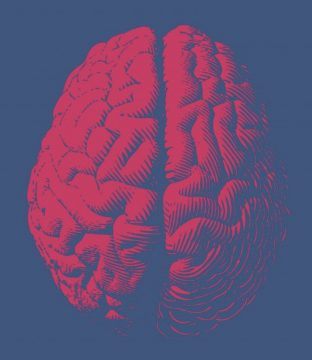 Imagine your response to picking up a copy of the leading scientific journal Nature and reading the headline: “The myth that evolution applies to humans.” Anyone even vaguely familiar with the advances in neuroscience over the past 15–20 years regarding sex influences on brain function might have a similar response to a recent headline in Nature: “Neurosexism: the myth that men and women have different brains” subtitled “the hunt for male and female distinctions inside the skull is a lesson in bad research practice.”
Turns out that yet another book, this one with a fawning review in Nature, claims to “shatter” myths about sex differences in the brain while in fact perpetuating the largest one. Editors at Nature decided to give this book their imprimatur. Ironically, within a couple of days of the Nature review being published came a news alert from the American Association for the Advancement of Science titled, “Researchers discover clues to brain differences between males and females,” and a new editorial in Lancet Neurology titled “A spotlight on sex differences in neurological disorders,” both of which contradict the book’s core thesis. So what in the name of good science is going on here?
More here.
 Boeing executives are offering a simple explanation for why the company’s best-selling plane in the world, the 737 MAX 8, crashed twice in the past several months, leaving Jakarta, Indonesia, in October and then Addis Ababa, Ethiopia, in March. Executives claimed Wednesday, March 27, that the cause was a software problem — and that a new software upgrade fixes it.
 In 1886, Clark B
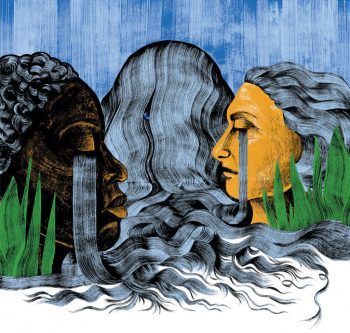 Something is happening in African literature: The women are coming. For decades now, a river of original and important writing by female authors has been flowing out of that continent — books by writers such as Marlene van Niekerk, of whose second novel Liesl Schillinger wrote in these pages, “books like ‘Agaat’ … are the reason people read novels”; Tsitsi Dangarembga (“Nervous Conditions”); and, of course, Chimamanda Ngozi Adichie. Now that river has burst its banks and become a flood. Namwali Serpell’s extraordinary, ambitious, evocative first novel, “The Old Drift,” contributes powerfully to this new wave.
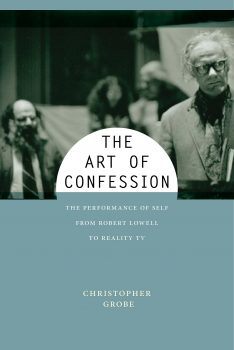 Is confessional poetry still interesting in our age of oversharing? Is it even confessional? If my students are any indication, readers immersed in multiple platforms of never-ending self-disclosure might not find the poetry of Robert Lowell or Anne Sexton particularly exhibitionist. Lowell’s Life Studies is personal, certainly, but not nearly as personal as your average Instagram story, not as revealing as the anecdotes my students are apt to volunteer in and after class, maybe not as real as the Real Housewives. Lowell famously described his turn toward the personal as a movement away from a rarefied and bloodless commitment to craft, “a breakthrough back into life” that promised to reenergize the writers of an entire generation. A half-century on, the subversions of their self-exposure can be harder to recognize. In the full thrall of TMI, it might be that the strangeness of confessional poetry has more to do these days with its being poetry than its being confessional. This development is not necessarily a bad thing. Indeed, I often try to highlight something like this dynamic by playing for my classes a recording of Sylvia Plath reading “Daddy” a few months before her death. It is an electrifying performance that completely reconfigures the way my students approach her poems. Plath brings to the text a theatrical intensity far flung from the rhetoric of therapeutic unburdening that the “confessional” label seems to suggest. As Plath declaims it, “Daddy” sounds more like the soliloquy of an Elizabethan villain than a straightforward exercise in self-expression. It is not so clear that such words unearth any sort of inner truth about the speaker, but they are certainly dramatic.
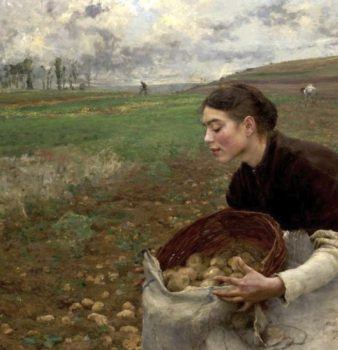 All 4,500 named varieties of potatoes trace their ancestry to the Americas. Wild potatoes grow along the American cordillera, the mountains that run from the Andes to Alaska. People living on its slopes have been eating potatoes for time out of mind. Stone tools and preserved potato peels show that wild potatoes were being prepared for food in southern Utah and south-central Chile nearly 13,000 years ago; similar evidence dates their domestication from at least 7800 BCE on the northern coast of Peru. They formed an important part of the diet of many of the cultures inhabiting the 9000 kilometers between Utah and Chile.
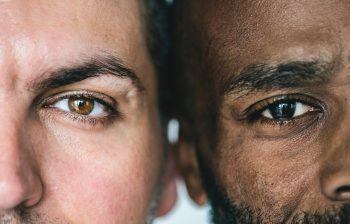 Amid the uproar over the Ralph Northam blackface photograph, a Washington Post
 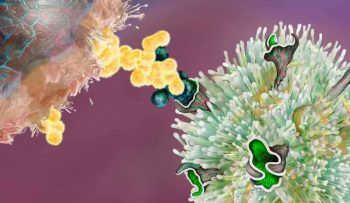 Medicine has great hopes for personalised cancer immunotherapy. The idea is to have a vaccine prompt the immune system to fight a tumour. Scientists at ETH Zurich have developed a method that allows them to determine which molecules are suited to patient-specific immunisation. Cells belonging to the body’s own
 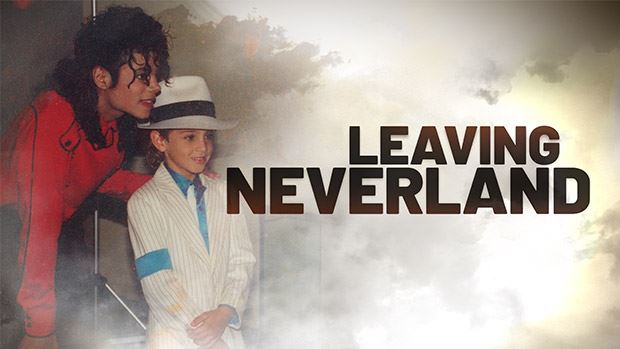 “What the hell is wrong with Michael?” Chris Rock
 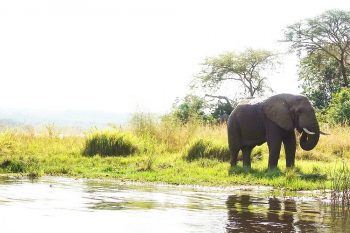 Elephants have bigger brains than humans, so why aren’t they smarter than we are?
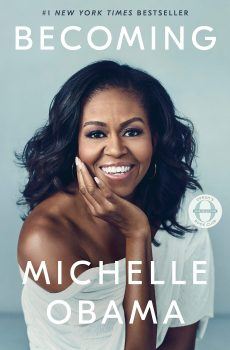 In Becoming, Obama describes the value of telling one’s story this way: “Even when it’s not pretty or perfect. Even when it’s more real than you want it to be. Your story is what you have, what you will always have. It is something to own.” For Obama, a person’s story is an affirmation of their space in the world, the right to be and belong. “In sharing my story,” she says, “I hope to help create space for other stories and other voices, to widen the pathway for who belongs and why. . . . Let’s invite one another in. Maybe then we can begin to fear less, to make fewer wrong assumptions, to let go of biases and stereotypes that unnecessarily divide us.” The root of discrimination, Obama implies, including the ugly discrimination she faced as first lady, is misunderstanding. Sharing personal narratives, then, offers a way for people to fully see each other and to overcome our differences.
 Death is a recurring theme in Jaeggy’s work. When the narrator of the story ‘I Am the Brother of XX’ says, ‘I want to die when I grow up’, it’s not meant to shock but to remind us of the death drive that sleeps next to our own child selves, buried inside us. Another important motif is cold: a necessary condition for feeling, thinking, expressing yourself. In Sweet Days, one of the protagonist’s happiest memories is of a night she spent in her friend’s bare, freezing room. The friend burns some alcohol in a saucepan on the floor, and when the flame dies the cold returns, biting into their bones as they stand by the window watching the dawn. This is not hardship but ‘a spiritual or aesthetic exercise’. Being cold, physically and emotionally, brings you closer to that perfect state, nothingness, which shouldn’t be confused with emptiness, for ‘what we do not possess belongs to us’.
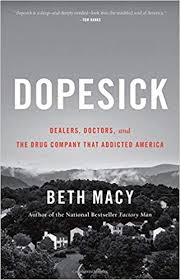 The horror of a video showing a toddler tugging at her mother’s unconscious form in a supermarket conveys more easily the horror of the corruption, avarice, poverty and stupidity that created the problem in the first place. How this happened – how the number of deaths from opiate overdoses increased by a factor of six in the US between 1999 and 2017 – is the subject of several recent books. Dopesick, by Beth Macy, describes the effects of opiate use in Appalachia, where she worked as a newspaper reporter. Dreamland, by Sam Quinones, describes the rise of a super-efficient network of dealers of Mexican black tar heroin in the US and its effects on one particular town in Ohio. American Overdose, by Chris McGreal, a correspondent for the Guardian, offers a more detailed view of the corruption that enabled the spread of opiates to go unchecked by the healthcare industry, government or law enforcement.
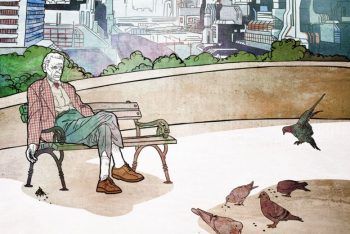 A review of books on ageing is inevitably filtered through the age, health and optimism quotient of the reviewer. Thirty years ago I wrote an essay for the New York Times, cheerfully titled “Old Age Is Not What It Used To Be”, full of encouraging news from the newly burgeoning field of gerontology. In those days, “old age” usually referred to people in their sixties and seventies, with some outliers in their eighties and even a few in their nineties. (Bernice Neugarten and other gerontologists had recently begun to speak of the “young old”, who are healthy and mentally competent, and the “old old”, who aren’t.) My essay was populated with thriving old people who were as witty, active, happy, sexually active and intellectually engaged as they had ever been, and by researchers assuring us that we won’t “lose it” so long as we remain witty, active, happy, sexually active and intellectually engaged. All very nice, cynics muttered, but how are we supposed to retain those satisfactions when every joint aches, we have lost a life partner and too many close friends, mental sharpness blurs, hearing declines, the grown-up children have decamped to foreign lands, the identities that provided meaning are gone, and we start to feel like a bump on the log of life?