
Stephanie Merritt at The Guardian:
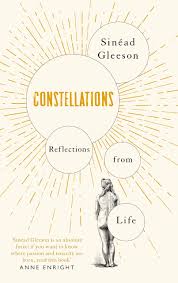 At 13, Sinéad Gleeson began to experience pain in her hip joints: “The bones ground together, literally turning to dust.” Hospital stays became frequent, then rounds of traction, surgery, biopsies, before an eventual diagnosis of monoarticular arthritis, leading to a major operation to fuse the hip joint together with metal plates. Her teenage years were shaped by suffering, by clinical intervention, by the betrayals of her body. At 28, six months to the day after her wedding, she was diagnosed with leukaemia.
But Constellations, Gleeson’s first essay collection, is not a book about illness, though it deserves to take its place among recent literary accounts of physical pain by writers such as Hilary Mantel and Sarah Perry. Rather, it’s a collection of personal, cultural and political reflections from which the fact of living in a body – especially one that requires frequent medical intervention – cannot be separated.
more here.
 María Sonia Cristoff has often recounted one of her formative reading experiences. Hired to translate the diaries of Thomas Bridges—a nineteenth-century Anglican missionary in Argentina—she traveled from Buenos Aires to his family’s farm outside of Ushaia, which sits at the southern edge of Patagonia in the Tierra del Fuego province. There she was given a room with a window overlooking the Beagle Channel and a stack of papers with a pencil mark indicating where she should begin. She lacked any access to the rest of the diary since Bridges’ heirs, insisting on a neutral voice for the new rendering of his work, replaced translators every two months, assigning each one a single section of the work.
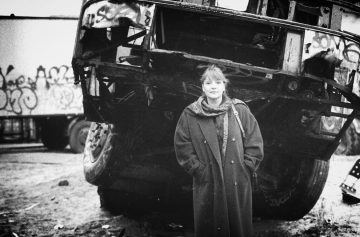 I’ve chosen the fox as a symbolic representation of a writer. The fox is rich with meaning. In the Western cultural tradition, the fox is mainly a male creature. In Eastern cultures, the fox is mostly a female creature. In Slavic folk culture, the fox is also predominantly female. The fox is not a superior creature: she is a loser and a loner, wild and vulnerable. The fox is one of the most popular hunting targets: her skin, her fur, has a commercial value, a detail which makes the fox a deeply tragic figure. The fox is betrayed more often then it betrays. Representations of the fox differ from culture to culture. I was raised on the fox’s representation in Aesop’s fables and Western European medieval novels. In Chinese, Korean, and Japanese mythology, the fox is a semi-divine creature, a god’s messenger, a demonic shape-shifter that passes the borders between realms—human, animal, demonic. The fox is also seen as a cheap entertainer, a liar, a cheater, a little thief with a risky appetite for the “metaphysical bite,” a thief with a constant desire to grab a “heavenly chicken.”
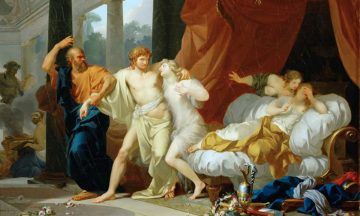 Sources from late antiquity, such as the 5th-century CE Christian writers Theodoret of Cyrrhus and Cyril of Alexandria, state that Socrates was, at least as a younger man, a lover of both sexes. They corroborate occasional glimpses of an earthy Socrates in Plato’s own writings, such as in the dialogue Charmides where Socrates claims to be intensely aroused by the sight of a young man’s bare chest. However, the only partner of Socrates’ whom Plato names is Xanthippe; but since she was carrying a baby in her arms when Socrates was aged 70, it is unlikely they met more than a decade or so earlier, when Socrates was already in his 50s. Plato’s failure to mention the earlier aristocratic wife Myrto might be an attempt to minimise any perception that Socrates came from a relatively wealthy background with connections to high-ranking members of his community; it was largely because Socrates was believed to be associated with the antidemocratic aristocrats who took power in Athens that he was put on trial and executed in 399 BCE.
 “Lost and Wanted” is a novel of female friendship without the furious intimacy of, say, Elena Ferrante’s Neapolitan novels. It’s a novel about female friendship begun in America in the 1990s, when women didn’t talk about sexual harassment and friends didn’t talk about race. When women (and especially women of color) were trying to build careers for themselves and no one was acknowledging how much harder it would be for them than it would be for white men in their position, and trying to do so while having children, either with partners or on their own, and trying to balance all of that striving without ever giving anyone reason to believe that they were more emotional or less stable than any of their peers.
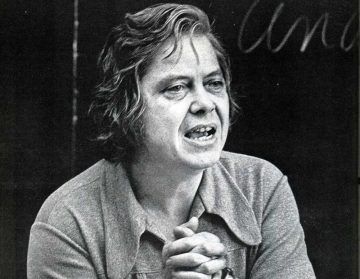 In some late month of 1995, William H. Gass attempted a flight from New York to Saint Louis but was stalled by fog at the flight boards. He repaired to a small table at an airport bar, his socks pulped and moaning, and spent the night with a galley of Robert Musil’s The Man without Qualities. Gass ordered a glass of rosé, began reading, and observed the ways that the characters in the novel seemed to come and go like people in an airport bar. Time passes, and eventually civil servants and industrialists of 1913 Vienna wander into the bar itself, right alongside the airport castaways—or so Gass tells us in the essay he went on to write about Musil.
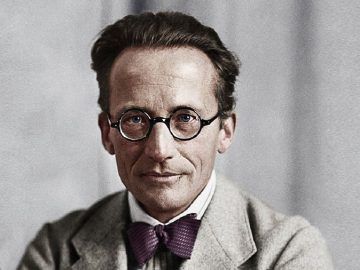 Despite devising both the defining equation and the defining thought experiment of quantum physics, Erwin Schrödinger was never comfortable with what he helped to create. His “Schrödinger’s Cat” paradox, published in 1935, was an attempt to expose the flaws in the physics that flowed from his eponymous equation. And yet, that cat – both dead and alive – has become an icon of quantum physics rather than a warning against its shortcomings.
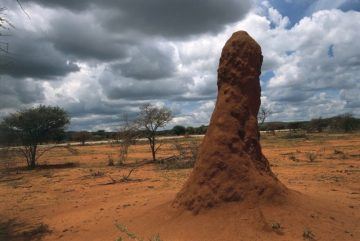 Visit the African savannas in Zimbabwe or Namibia, and you might notice large, towering termite mounds dotted about the landscape—nature’s skyscrapers, if you will. And nature is quite the engineer: those mounds are self-cooling, self-ventilating, and self-draining. New 3D X-ray images
 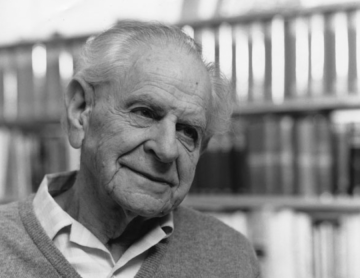 In the past few years, when far-right nationalists are banned from social media, violent extremists face boycotts, or institutions refuse to give a platform to racists, a faux-outraged moan has gone up: “So much for the tolerant left!” “So much for liberal tolerance!” The complaint became so hackneyed it turned into an already-hackneyed
 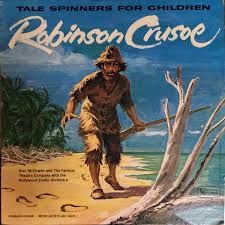 So what was it that made Robinson Crusoe different from previous English fiction? First, Defoe was the first major writer in English literature who did not take a plot from mythology, history, legend or prior literature. The next was to be Samuel Richardson (1689-1761) whose immensely important novel Pamela(1740) it will be relevant to mention a little later. In the plots of these two writers we see the difference, for example, from Chaucer, Spenser, Shakespeare and Milton. Second, Defoe was the first to convey the reality of time, to portray a life in the bigger picture of a historical process, and in terms of day-to-day thoughts and activities. Although his timings are inconsistent, his narrative convinces us that the action is occurring at a particular time. Third, Defoe was the first to produce a whole narrative as if it took place in a physical environment to which a character was attached by means of vivid detail: the description of objects, for example, such as clothing and implements. Previously and traditionally, place was treated in a vague and generalised way, with only incidental physical description. Fourth, the use of figurative language, previously a prominent feature of romances, was noticeably reduced; it was much rarer in Defoe and Richardson than in any writer before.
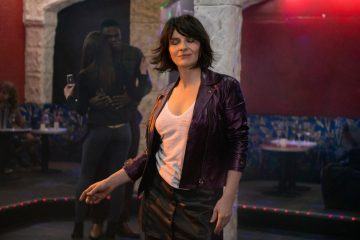 Before I knew who Claire Denis was, she taught me how to dance. When I was eighteen, it was easier to stay in with a movie than to go to a party and be surrounded by strangers. One night, I watched Denis’s film “Beau Travail,” from 1999. Afterward, I couldn’t sleep. I kept replaying the ending, transfixed by a man with a battered face, Galoup. For ninety minutes, Galoup (Denis Lavant) is small and hunched, a military officer who, after being ejected from the French Foreign Legion, can’t find meaning in civilian life. In a closing scene, he makes his bed, carefully tucking in the corners, and lies down, clasping a gun. Then we hear the pulse of Corona’s disco hit “The Rhythm of the Night.” We cut to Galoup smoking in a night club, leaning against a panelled mirror. He bobs his head to the music, tracing loose arcs in the air with his cigarette. He snarls. He spins in a tight circle, smoke trailing him like a cape. Then, at the chorus, unsmiling and intent, he lets himself go, flying into the air, fingers splayed like a gecko’s. I can’t describe what it felt like watching him for the first time, more blur than human. But I remember what it did to me. I got up and I began to wave my hands above my head, alone in the dark.
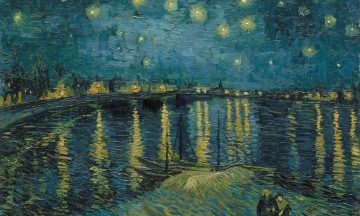 As Vincent van Gogh’s Starry Night Over the Rhône goes on show at
  Cancer immunotherapy drugs, which spur the body’s own immune system to attack tumors, hold great promise but still fail many patients.

 The modern world is full of technology, and also with anxiety about technology. We worry about robot uprisings and artificial intelligence taking over, and we contemplate what it would mean for a computer to be conscious or truly human. It should probably come as no surprise that these ideas aren’t new to modern society — they go way back, at least to the stories and mythologies of ancient Greece. Today’s guest, Adrienne Mayor, is a folklorist and historian of science, whose recent work has been on robots and artificial humans in ancient mythology. From the bronze warrior Talos to the evil fembot Pandora, mythology is rife with stories of artificial beings. It’s both fun and useful to think about our contemporary concerns in light of these ancient tales.
 I recently stumbled across a statue in Baltimore that celebrates the young men of the city who fought in the “Spanish War.” On a narrow triangle in a residential neighborhood, this lone soldier stands at ease, holding a rifle across his body and staring into the distance, unperturbed by the city buses screeching past or the litter that collects below his feet. The pedestal records the years, from 1898 to 1902, when these brave Americans fought against Spain’s weak imperialist hold on the Philippines, Cuba, and Puerto Rico. Known as “The Hiker,” fifty or so versions of this statue still quietly dot city streets and parks across the United States. The bulk were erected in the 1920s in northern states, with Baltimore’s in 1943, and the last in 1965 near Arlington Cemetery.