
Kathryn Hughes at The Guardian:
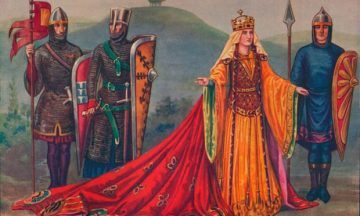 In 1142 Empress Matilda escaped from Oxford Castle where she was being held by her dynastic rival, Stephen of Blois. Since it was a snowy December, the self-proclaimed “Lady of the English” wrapped herself in a white fur cloak to blend into the snowy landscape before skating down the frozen river Thames to freedom. As a bedtime story for history-mad girls, Matilda’s flight has always had everything: a heroine outtricking a boy and a nod to the enchantment of Narnia.
Catherine Hanley, though, is writing for grown-ups, and her intention in this impressive study is to remove Matilda’s cloak of invisibility – there have been remarkably few books written about the woman who was arguably England’s first regnant queen – and restore her to full subjecthood. For while Matilda never actually led her troops into battle like Jeanne d’Arc, she was present in the generals’ tent, directing the next stage in her campaign to conquer the country.
more here.
 The explosion on April 26, 1986, at the V.I. Lenin, or Chernobyl, Atomic Energy Station in what was then the Ukrainian Soviet Socialist Republic is thought to have “vaporized” one worker on the spot. Another 30, drenched in fatal doses of radiation, died gruesome, lingering deaths. As of 2005, as many as 5,000 additional cancer deaths were projected locally — among 25,000 extra cancer cases Europe-wide. Contamination rendered 1,838-plus square miles “uninhabitable.” And a spectral column of radioactive gases escaped into the atmosphere, setting people on edge from Stockholm to San Francisco. It was the worst nuclear accident in history and could have been far worse.
 Gdańsk was a city of the borders for many years, with a prevailing influence of German culture, German music, German language, because even the Polish proletariat when they came from the villages were Germanized, because with the German language they had better chances. But there used to be about 15%-20% Polish speaking people, 3% French people, 2% English people, 3.5% Russians, Scottish people as well, a lot of Dutch people; this was a typical city of the borders. This was over after the Polish partition of 1795. And then Gdańsk, which used to be a rich merchant city, a merchant emporium, became a provincial Prussian city. In the nineteenth and twentieth centuries, these were periods of the great German nationalisms, which end up with the crime of 1939, because most of the Polish people here were murdered at that time. Surprisingly, the Jews could leave. Because this used to be the Free City of Gdańsk, the so-called ‘Free City’, and the authorities of Gdańsk signed an agreement with the Jewish Community in 1939, more or less, perhaps one year earlier, and while the war was still going on, until 1940 the Jewish population was still leaving. So, the multicultural city was over with the Prussian partition. Then, after the war, 99% of the German population left, and Polish people from various parts of former Poland came, from burned-down Warsaw, from Wilno, or from the Eastern borders, from those parts; so, people only came back to the idea of multiculturalism, after 1989, with the end of Communism. But, if ever we speak of multiculturalism in Gdańsk, we speak of the distant past. Of course, it’s a very good example of something to reach for, but it’s a deep past.
 As we await the final season of
  These days, no less an authority than Sarah Huckabee Sanders, the White House press secretary, said recently that God
 In Prophet of Freedom, Blight allows us to experience both the exuberance and the difficulties of a life acted out on stages. We see Douglass, as a small boy, gathering damp pages from a discarded Bible out of the gutter so he could learn how to read. We are shown the young, proud orator being shunted into filthy, segregated train cars even as he traveled to address throngs of adoring fans. And we are at the Rochester train station to see his wife Anna rush to meet him with a bundle of freshly ironed shirts before returning to her job making shoes, or caring for their five children, while the abolitionist rock star continued on his way. We are with him near the end of his life when he climbed a rocky crag near the Acropolis and lingered there to read St. Paul’s famous “Address to the Athenians,” in which the Apostle declared all people to be the “offspring” of God and that God “hath made of one blood all nations of men for to dwell on all the face of the earth.”
 Eighty percent of women living in communist East Germany always reached orgasm during sex, according to the Hamburg magazine Neue Revue in 1990. For West German women that figure was only 63 percent. Those counterintuitive findings confirmed two earlier studies, which East German sex researchers had published in 1984 and 1988. Those had found East German women reported high levels of sexual satisfaction outpacing those in the West.
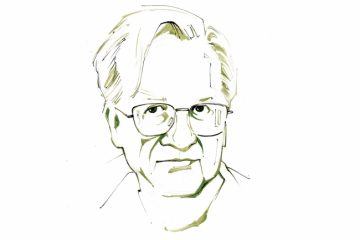 Hayden White, the philosopher of history whose classic Metahistory (1973) has had an enduring influence on the humanities, died last year. In a career spanning half a century, White, whose appointments included Stanford University and the University of California at Santa Cruz, provoked, alarmed, and invigorated professional historians and lay readers alike. In Metahistory and elsewhere,
 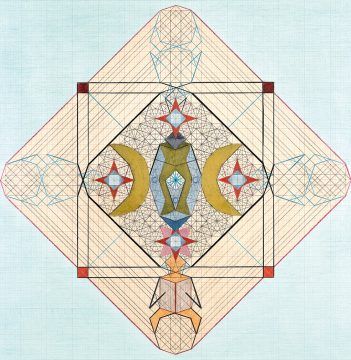 Few people ever observed Emma Kunz, a Swiss alternative healer and artist, at work. One of the only accounts comes from a man called Anton Meier, who first met Kunz when his parents asked her to cure his childhood polio. Kunz was a spiritualist who used drawing as a way to divine the future. Meier recalled watching her in the early 1940s as she attempted to predict the outcome of a meeting between Winston Churchill and Franklin Delano Roosevelt:
 We left our E-Z Pass in the apartment. Stacy and I realize this only upon arriving at the mouth of the tunnel en route to the Weill Cornell ER. The gate fails to lift as we approach and we almost plow through it. The man at the tollbooth tries to reckon with us, incoherent and hysterical and blocking traffic.
 “This is actually one of the most surprising things in the whole history of public opinion,” says
 What has the Event Horizon Telescope actually seen?
 Since the late 1990s, yearly rates of overdose deaths from legal “white market” opioids have consistently exceeded those from heroin. According to the Centers for Disease Control and Prevention, between 1999 and 2017, opioid overdoses killed nearly 400,000 people with 68 percent of those deaths linked to prescription medications. Moreover, as regulators and drug companies tightened controls on diversion and misuse after 2010, the American Society of Addiction Medicine determined that at least 80 percent of “new heroin users started out misusing prescription pain killers.” Some data sets point to even higher numbers. In response to a 2014 survey of people undergoing treatments for opioid addiction, 94 percent of people surveyed said that they turned to heroin because prescription opioids were “far more expensive and harder to obtain.”
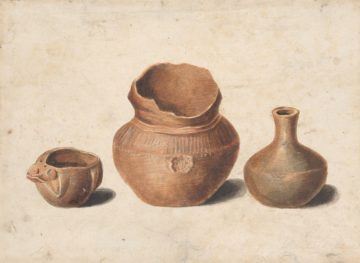 Almost nothing in this exhibition was created for aesthetic admiration alone. Whether it’s the way a Diné blanket’s lines break into daring geometric forms when placed across a person’s shoulders, or the transformation that a mask undergoes during a ritual, the full beauty of these objects has to be activated by the people who use them. One wishes those people were present. The more time one spends looking at the works on display at the Met, the more one suspects that they could only ever be seen as they are meant to be seen when used as they were meant to be used. Placed behind glass under the banner of “art,” they look abandoned.