
Heidi Ledford in Nature:
 Minute fossils pulled from remote Arctic Canada could push back the first known appearance of fungi to about one billion years ago — more than 500 million years earlier than scientists had expected. These ur-fungi, described on 22 May in Nature1, are microscopic and surprisingly intricate, with filament-like structures. Chemical analyses suggest that the fossils contain chitin, a compound found in fungal cell walls. If that analysis holds up, it could reshape understanding of how fungi evolved and whether they might have facilitated the movement of plants onto land. But some researchers are not yet convinced that the finding is truly a fungus. “It looks to me as if there’s reason for believing it’s real at this point,” says Mary Berbee, a mycologist at the University of British Columbia in Vancouver, Canada. “But more data would be really useful.”
Palaeobiologist Corentin Loron at the University of Liège, Belgium, and his colleagues found the fossils while exploring a region of Arctic Canada called the Grassy Bay Formation. The team had to travel to the study site, nestled amid the area’s dramatic cliffs, by helicopter. Because the rocks there formed without exposure to high temperatures and pressures, the fossils within them are remarkably preserved, says palaeobiologist Emmanuelle Javaux, Loron’s adviser at the University of Liège. From there, the team painstakingly sectioned the fossils into thin sheets that could be analysed with an electron microscope. Those images revealed branched filaments ending in spheres. The filaments were divided into segments by septae, walls that are found in some modern fungi.
The fossils were discovered in billion-year-old rock, and the presence of chitin in the specimens further persuaded the researchers that they were preserved fungi that died a billion years ago. The team named the fungus Ourasphaira giraldae.
More here.
 Dear Massimo,
 For me personally, the vision that became Wolfram|Alpha has a very long history. I first imagined creating something like it more than 47 years ago,
  Sometimes, it is the very ordinariness of a scene that makes it terrifying. So it was with a clip from last week’s BBC
  LATE IN THE
  Plastic makes up nearly 70% of all ocean litter
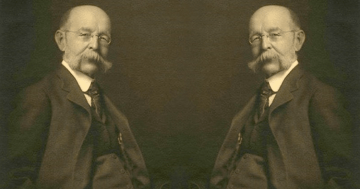 It’s amazing that this landmark symphony could have been so easily forgotten. As with the other seminal New Englanders—George Whitefield Chadwick, Horatio Parker, and Edward MacDowell, among them—modernism killed off Paine’s music. And with the ascendancy of American vernacular forms, reflected in the music of Charles Ives, Aaron Copland, and others, any music arising from the German Romantic tradition could be ridiculed and ignored. Paine may have been the acknowledged dean of a New England school, but he could not be comfortably located with any American school. Even Paine’s student Richard Aldrich, writing in the early 20th century, argued that Paine’s music, despite its “fertility,” “genuine warmth,” “spontaneity of invention,” and “fine harmonic feeling,” did not “disclose ‘American’ characteristics.” But what in Paine’s time and cultural milieu would have constituted an American characteristic?
 Somehow I became respectable. I don’t know how—the last film I directed got some terrible reviews and was rated NC-17. Six people in my personal phone book have been sentenced to life in prison. I did an art piece called Twelve Assholes and a Dirty Foot, which is composed of close-ups from porn films, yet a museum now has it in their permanent collection and nobody got mad. What the hell has happened?
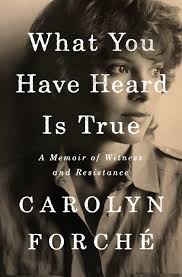 There is a lot of horror in this book. People are thrown from helicopters into the sea, their arms tied behind their backs. A colonel grinds up his victims’ bodies and feeds them to his dogs. Forché finds mutilated corpses by the side of the road. She visits a prison where men are kept in cages the size of washing machines. She and a friend are pursued by an escuadrón de la muerte (death squad). Later, she meets a man who was a member of one such squad, who recalls the sound of bubbles as he cut his victims’ throats.
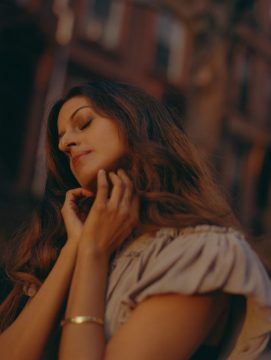 Why do we like what we like? The books, movies, photos, and artworks that form our perspective—who puts them in front of us? One answer is the critic, that cipher of taste who places art in its various corridors, then augments, defines, degrades, and ultimately shapes the works that shape us. In times when the public’s eye travels with ever more scope but not necessarily more depth, criticism, the act of choosing—and so much more—becomes more important than ever. It’s for this reason that so many eyes are turning to Parul Sehgal and Teju Cole, two critics—as well as editors, essayists, and artists—challenging not only us but art forms themselves.
 Most people in the modern world — and the vast majority of Mindscape listeners, I would imagine — agree that humans are part of the animal kingdom, and that all living animals evolved from a common ancestor. Nevertheless, there are ways in which we are unique; humans are the only animals that stress out over Game of Thrones (as far as I know). I talk with geneticist and science writer Adam Rutherford about what makes us human, and how we got that way, both biologically and culturally. One big takeaway lesson is that it’s harder to find firm distinctions than you might think; animals use language and tools and fire, and have way more inventive sex lives than we do.
 Earlier this year, the presidents of Sudan and Algeria both announced they would step aside
  A
A 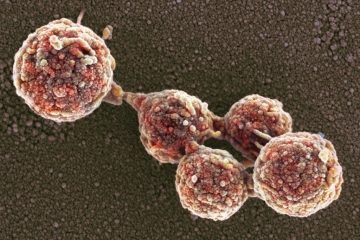 Scientists have created a living organism whose DNA is entirely human-made — perhaps a new form of life, experts said, and a milestone in the field of synthetic biology. Researchers at the Medical Research Council Laboratory of Molecular Biology in Britain reported on Wednesday that they had rewritten the DNA of the bacteria Escherichia coli, fashioning a synthetic genome four times larger and far more complex than any previously created. The bacteria are alive, though unusually shaped and reproducing slowly. But their cells operate according to a new set of biological rules, producing familiar proteins with a reconstructed genetic code. The achievement one day may lead to organisms that produce novel medicines or other valuable molecules, as living factories. These synthetic bacteria also may offer clues as to how the genetic code arose in the early history of life.
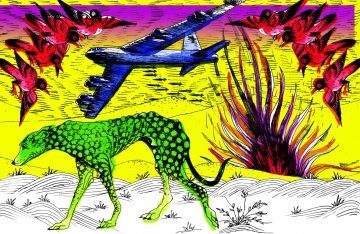 The wars in Afghanistan and Iraq have gone on so long that the Middle East war novel has itself become a crusty genre — a familiar set of echoes coming back to us from ravaged lands. Many of these books are stirring on the level of detail but an equal number thoughtlessly valorize the American soldier or wallow in the morally vacuous conclusion that war is hell and that’s that. Where is the ferocious “Catch-22” of these benighted conflicts? Who will have the temerity to make these wars the subject of bracing comedy?
 Jared Diamond’s new book,