Oscar Schwartz in The Guardian:
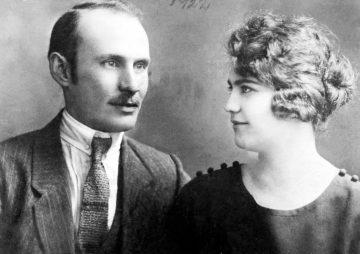 This genetic explanation of my Ashkenazi Jewish ancestry came as no surprise. According to family lore, my forebears lived in small towns and villages in eastern Europe for at least a few hundred years, where they kept their traditions and married within the community, up until the Holocaust, when they were either murdered or dispersed.
But still, there was something disconcerting about our Jewishness being “confirmed” by a biological test. After all, the reason my grandparents had to leave the towns and villages of their ancestors was because of ethno-nationalism emboldened by a racialized conception of Jewishness as something that exists “in the blood”.
The raw memory of this racism made any suggestion of Jewish ethnicity slightly taboo in my family. If I ever mentioned that someone “looked Jewish” my grandmother would respond, “Oh really? And what exactly does a Jew look like?” Yet evidently, this wariness of ethnic categorization didn’t stop my parents from sending swab samples from the inside of their cheeks off to a direct-to-consumer genetic testing company. The idea of having an ancient identity “confirmed” by modern science was too alluring.
More here.
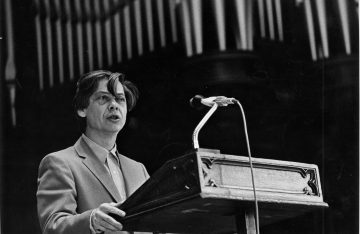
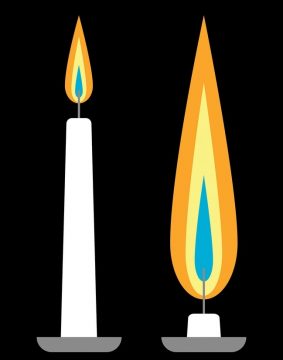 Almost all books of aphorisms, which have ever acquired a reputation, have retained it,” John Stuart Mill wrote in 1837, aphoristically—that is to say, with a neat if slightly dubious finality. (“How wofully the reverse is the case with systems of philosophy,” he added.) We prefer collections of aphorisms over big books of philosophy, Mill thought, not just because the contents are always short and usually funny but because the aphorism is, in its algebraic abbreviation, a micro-model of empirical inquiry. Mill noted that “to be unsystematic is of the essence of all truths which rest on specific experiment,” and that there is, in a good aphorism, “generally truth, or a bold approach to some truth.” So when La Rochefoucauld writes, “In the misfortune of even our best friends, there is something that does not displease us,” he is offering not a moral injunction saying “Take pleasure in the misfortune of your best friends” but a testable observation about what Mill termed “the workings of habitual selfishness in the human breast.” The aphorism means: We do take pleasure—not in every case, perhaps, but more often than we might admit—in the misfortune of our best friends.
 Extended parental care is considered one of the hallmarks of human evolution. A stunning new research result published today in Nature reveals for the first time the parenting habits of one of our earliest extinct ancestors.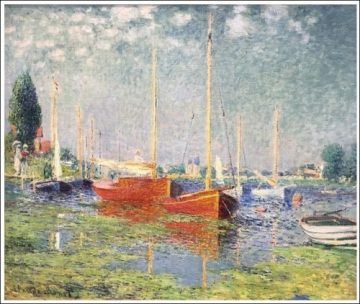
 We chased the fault line south of Salt Lake City, just past the Cottonwood Canyons, to a small ridge that overlooked a reservoir as silver as the sky. It was October, during a cold drizzle, and the sun was lofted behind the clouds like a shineless mothball. My brother, a Ph.D. student in geology, explained that what appeared to me as indistinct knolls and dips were “expressions” where the fault had deformed the Earth above it. I had spent the day looking at the ground or aiming my eye down my brother’s extended arm to identify subtleties like this. When my gaze finally returned to the Wasatch Mountains, the vision was fresh and horrifying. They were monster-like, tyratnnizing the skyline with their beauty. Under their jagged eminence, my brother and I felt burdened with our knowledge of the region’s fate.
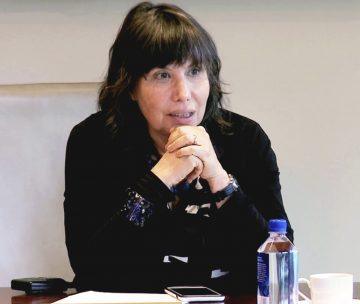 Everyone knows that Turing talked about the imitation game as a way of trying to figure out whether a system is intelligent or not, but what people often don’t appreciate is that in the very same paper, about three paragraphs after the part that everybody quotes, he said, wait a minute, maybe this is the completely wrong track. In fact, what he said was, “Instead of trying to produce a program to simulate the adult mind, why not rather try to produce one which simulates the child?” Then he gives a bunch of examples of how that could be done.
 In 2017, for the second time in recent years, U.S. life expectancy decreased. Headlines blamed the decline on suicides and opioids, and cast impoverished rural whites as the primary victims. A great deal of attention has been focused on Appalachia, whose population is (erroneously) portrayed as uniformly white, poor, and ravaged by drug addiction. White sickness has thus come to stand for what is supposedly wrong with health, health care, and culture in the United States.
 Ignorance involves having a false belief, or no belief at all, on a topic. This can be the result of a simple lack of information. In that case, as soon as we read up on the topic we have knowledge. What distinguishes knowledge resistance, by contrast, is that it cannot be fixed by supplying information. It is, as it were, a type of ignorance that is not easily cured.
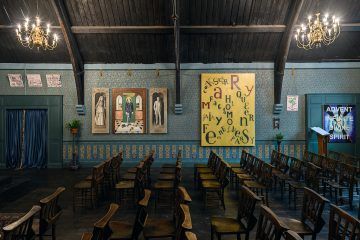 The light is dim, the air richly scented. Little purple tea lights flicker in the votive candle rack and the walls are decorated with twining sunflowers, exuberant passionflowers and several canvases of blousy green carnations monogrammed with Oscar Wilde’s prisoner ID number C.3.3. The Temple is a deconsecrated church with an attractive dark wood ceiling and matching antique chairs. A half-size marble statue of Wilde presides. The artists, McDermott and McGough, have painted various icons spelling out pejoratives such as ‘pansy’, ‘faggot’ and ‘cocksucker’, adorned with gold leaf and richly-coloured paint. Towards the back are intricate woodcut-style depictions of massacres with titles like ‘Nun Cutting Rope of Dead Homeric’, black canvases with cut-out fatality statistics, and monochrome portraits of individuals more recently killed by homophobia and transphobia, such as Justin Fashanu, Brandon Teena and Marsha P. Johnson. A placard in the hallway spells out all of the bigotries the temple stands against, ending with the instruction ‘only love here’. Opposite is a purpose-built offertory box ‘For the Sons and Daughters of Oscar Wilde’.
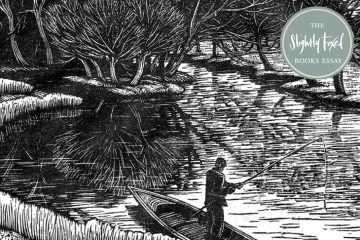 In the spring of 1883 my mother, Maud Du Puy, came from America to spend the summer in Cambridge with her aunt, Mrs Jebb. She was nearly 22, and had never been abroad before; pretty, affectionate, self-willed, and sociable; but not at all a flirt. Indeed her sisters considered her rather stiff with young men. She was very fresh and innocent, something of a Puritan, and with her strong character, was clearly destined for matriarchy.
 It is obvious that the discomfort I once felt over taking antidepressants echoed a lingering, deeply ideological societal mistrust. Articles in the consumer press continue to feed that mistrust. The benefit is ‘mostly modest’, a flawed analysis in The New York Times told us in 2018. A widely shared YouTube
 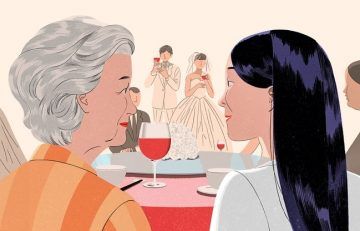 When a movie starts with a diagnosis of terminal cancer, what next? The first thing we saw in Akira Kurosawa’s “Ikiru” (1952) was an X-ray of a man’s stomach, with a tumor clearly visible, and Lulu Wang’s new film, “The Farewell,” sets off with similar starkness. An aged woman undergoes a CT scan, and we learn that she has Stage IV lung cancer and three months to live. But here’s the difference. Kurosawa’s hero, a meek civil servant, took stock of his mortality and decided to waste not a drop of the time that remained. Wang’s elderly lady, by contrast, is a merry old soul, already skilled at being alive, and requiring no further encouragement. So nobody tells her that she’s going to die.