
Anthony Lane in The New Yorker:
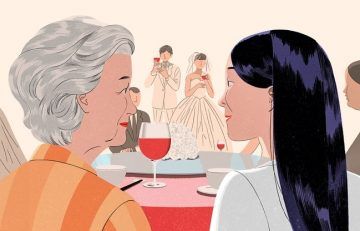 When a movie starts with a diagnosis of terminal cancer, what next? The first thing we saw in Akira Kurosawa’s “Ikiru” (1952) was an X-ray of a man’s stomach, with a tumor clearly visible, and Lulu Wang’s new film, “The Farewell,” sets off with similar starkness. An aged woman undergoes a CT scan, and we learn that she has Stage IV lung cancer and three months to live. But here’s the difference. Kurosawa’s hero, a meek civil servant, took stock of his mortality and decided to waste not a drop of the time that remained. Wang’s elderly lady, by contrast, is a merry old soul, already skilled at being alive, and requiring no further encouragement. So nobody tells her that she’s going to die.
She is known as Nai Nai (Zhao Shuzhen), or “Grandma,” and her home is in Changchun, in northeastern China. Meanwhile, her beloved granddaughter Billi (Awkwafina) is in New York, and it’s the distance between them—generational as well as geographical—that the film explores. When Billi was six, a quarter of a century ago, she and her parents, Haiyan (Tzi Ma) and Jian (Diana Lin), moved to America; they still live there, and speak English among themselves. Billi has her own apartment, plus a ring in her nostril and, most recently, a rejection letter for a Guggenheim Fellowship. Great.
What singles Billi out, though, is the aura of loss and loneliness that enfolds her, even before she hears of her grandmother’s illness, and credit for that must go to Awkwafina. Well in advance of her star turn in “Crazy Rich Asians” (2018), she was famed as a rapper, and her music videos, such as “My Vag,” rejoice in a genial bawdy. It’s remarkable to find such swagger—“New York City, bitch, / That’s where I come from, / Not where I moved to,” she declaims, in “NYC Bitche$”—replaced, in “The Farewell,” by the slouch of diffidence and doubt. As Billi, she gives a master class in hangdoggery, complete with bad posture and a lazy gait; it’s as if the land of opportunity has schooled her in disappointment. When her parents fly to China to be with Nai Nai, urging Billi to stay behind, it’s no surprise that she swiftly disobeys, and follows them. Changchun city, bitch, that’s where she goes to, and where most of the film takes place.
More here.
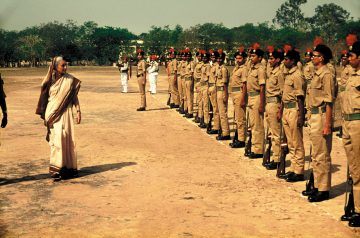
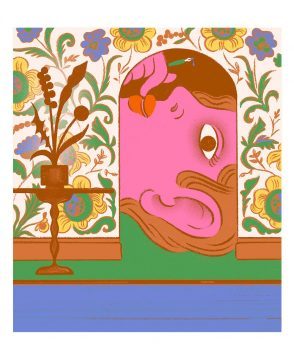 Consider the writer as houseguest. Is it a good idea to invite someone into your home whose occupation it is to observe everything? The writer as host might be no better. Even the most thoughtful guest will undoubtedly interfere with the writer’s productivity during the visit. It’s really no surprise that people who write for a living have given us some of our wisest sayings about a visit’s proper length.
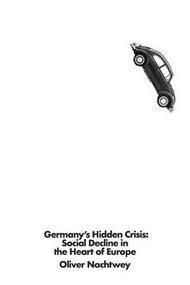 Adam Tooze in the LRB:
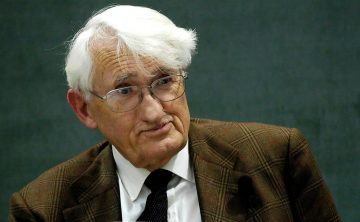 In Medium, first Seyla Benhabib responds to Raymond Guess piece in Point Magazine
 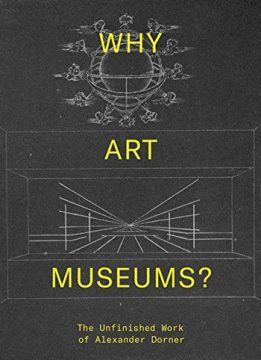 “Art museums are in a state of crisis.” The diagnosis is drastic, the remedy equally so: a radical update of both form and function. Hopelessly out of touch with the pulse of contemporary culture and the rhythms of everyday life, the grandiose architecture of the museum must be rethought in terms of adaptability and flexibility, with inert galleries transformed into sites of ongoing experimentation. Likewise the visitor’s experience, still rooted in antiquated models of passive contemplation, must be reimagined as a process of active participation and immersive engagement. Museums must reinvent themselves wholesale, in other words, to “guarantee their survival in a changing world.”
 It is no coincidence that most of her witnesses have been women. Alexievich, who began her writing life as a reporter on a local paper in Belarus, realised early on that what she was looking for, the memory of what things felt like, is better conveyed by women, who feel little shame in expressing an unvarnished sense of remembered horror. The death of beloved sons is a constant refr, as is that of suicide, about which she has also written a number of short storiesain that runs through her books. Embittered by wars in which they have been tricked into fighting, maimed by wounds that never heal, revolted by killings in which they were forced to take part, Alexievich’s male characters come home from war to take their own lives, leaving their desolate mothers to grieve anew. “They sent me back,” one woman says bleakly in Boys in Zinc, “a different man.”
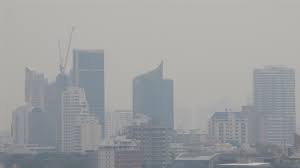 And what a scandal! The scale of this modern plague, we have begun to see, is staggering. We have long known that nearly three million people in poor countries die prematurely each year from inhaling wood smoke from open fires used for cooking, but we didn’t know until quite recently that many people in modern cities are having their lives cut short as a result of breathing in vehicle exhaust gases and industrial fumes. The official narrative has been that since the end of coal-burning in homes in the 1950s and the demise of heavy industry, urban air has been relatively clean, leaving us with nothing to worry about. The reality is shockingly different. We understand now that air pollution doesn’t just harm our lungs, as coal dust did, but also gets into the bloodstream. The World Health Organisation reckons that nine in ten people around the world breathe air containing ‘high levels’ of pollution; it is responsible for 26 per cent of premature deaths from heart disease, 24 per cent of those from strokes and nearly one-third of all deaths from lung cancer. It is linked to obesity in children, autism and dementia.
 In 1978, in
  YOU’VE PROBABLY HEARD
 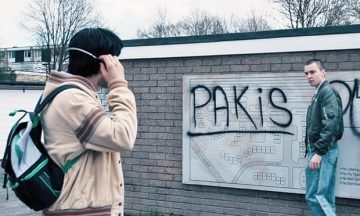 Boris Johnson was still a backbench Conservative MP and Donald Trump was a property developer and reality television star in the summer that Greetings from Bury Park was published. It was June 2007. I was 36, a journalist and broadcaster living in London. The world I worked in was white, middle-class and metropolitan – a long way from the world in which I had been raised. I had grown up in Luton, the working-class son of Pakistani parents. My father arrived in Britain in 1963 and my mother followed 11 years later with their three children. I was almost three years old. Bury Park was the Asian district of Luton, and my father worked on the production line at the Vauxhall car factory while my mother was a seamstress at home. My childhood was defined by a lack of money and a vivid awareness that my future was limited by my class and my colour. When I managed to get to university and build a career in the media, it became apparent that what I had considered an ordinary upbringing was very different from those of the people I worked among.
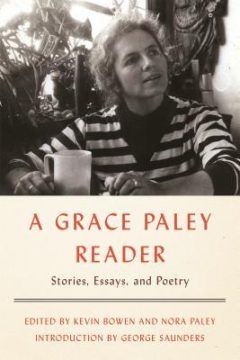 A Grace Paley Reader helps to return the writer to her historical moment, to the specific conditions that shaped her life as an artist and activist. The chronology in the back of the book pairs Paley’s literary publications with her political activities. A sampling: “1959: The Little Disturbances of Man published by Doubleday. Joins in organizing antinuclear protests and with protests against air-raid drills in schools.” “1969: Travels to North Vietnam with a small delegation of peace activists to receive three U.S. prisoners of war. ‘Distances’ is awarded O. Henry Award.” “1978: Arrested in antinuclear demonstration on White House lawn, receives six-month suspended sentence. Publishes ‘Somewhere Else’ in The New Yorker.” In Paley’s life, as in her fiction, the boundaries between the personal and the political, the domestic and the worldly, were remarkably porous. Politics entered her fiction as naturally as a familiar neighbor might step across the threshold of her apartment. For quite some time, critics have heralded Paley because of the compact precision, humor, and idiom of her prose. But equally important to our understanding is her deep engagement with the social and political movements of her time—and how this engagement, this passionate worldliness, defined her fiction.
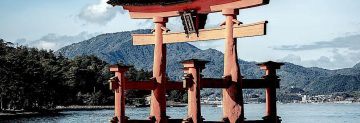 Shinto shrine gates (torii) are ubiquitous in western representations of natural Japan. Have we ever wondered why we are fascinated by these images – because of the beauty of this ancient architecture? The natural scenery where they are located? Or are we indeed fascinated by a sense of mystery, the harmony that forms between these human constructions with nature?
 The wonder of Harding is that her performances suggest another language of the face. Her many faces fall between the cracks of recognizable emotions and rarely seem to express turmoil or the felt sentiment buried in the songs. Instead, they supplement the music. She employs her face to present a carefully steered choreography, disjoined from the meanings of words and yet fused to the melodies, driving them into stray and unpredictable emotional registers.
 ‘When I came
 In April 1949, the poet
  In two essays,