
Benjamin Leszcz in The Globe and Mail:
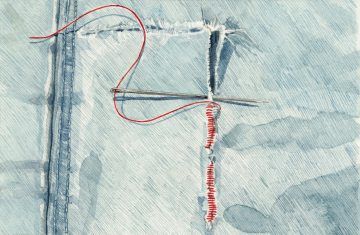 Several years ago, while living in London, England, my wife met Prince Charles at an event associated with the Prince’s Foundation, where she worked. She returned with two observations: First, the Prince of Wales used two fingers – index and middle – when he pointed. Second, Charles’s suit had visible signs of mending. A Google search fails to substantiate the double-barrelled gesture, but the Prince’s penchant for patching has been well documented. Last year, the journalist Marion Hume discovered a cardboard box containing more than 30 years of off-cuts and leftover materials from the Prince’s suits, tucked away in a corner at his Savile Row tailor, Anderson & Sheppard. “I have always believed in trying to keep as many of my clothes and shoes going for as long as possible … through patches and repairs,” he told Ms. Hume. “In this way, I tend to be in fashion once every 25 years.”
As it happens, double-breasted suits are rather on-trend. But more notable is Charles’s sartorial philosophy, which could not be timelier. The Prince comes from a tradition of admirable frugality – the Queen reuses gift-wrap – but his inclination to repair rather than replace, to wear his clothes until they wear out, is an apt antidote to our increasingly disposable times. Most modern consumers are not nearly so resourceful: The average Canadian buys 70 new pieces of clothing each year, about 60 of which ultimately wind up in a landfill.
More here.
 Self-replicating, bacterial life first appeared on Earth about 4 billion years ago. For most of Earth’s history, life remained at the single-celled level, and nothing like a nervous system existed until around 600 or 700 million years ago (MYA). In the attention schema theory, consciousness depends on the nervous system processing information in a specific way. The key to the theory, and I suspect the key to any advanced intelligence, is attention—the ability of the brain to focus its limited resources on a restricted piece of the world at any one time in order to process it in greater depth.
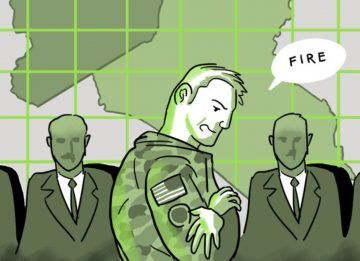 The crowded room was awaiting one word: “Fire.”
 Nearly two decades before Boeing’s MCAS system crashed two of the plane-maker’s brand-new 737 MAX jets, Stan Sorscher knew his company’s increasingly toxic mode of operating would create a disaster of some kind. A long and proud “safety culture” was rapidly being replaced, he argued, with “a culture of financial bullshit, a culture of groupthink.”
 To experience a thing
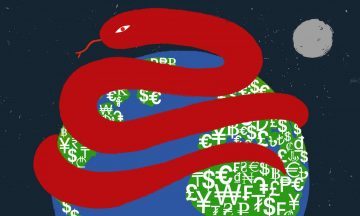 Capitalism reigns. But capitalism is in trouble. Therein lies the paradox of our age. For the first time in human history, a single economic system spans the globe. Of course there are differences between capitalism Chinese-style, American-style and Swedish-style. Close up, these differences can seem significant. But viewed through a wider lens, the distinctions blur. As the economist Branco Milanovic writes in his new book, Capitalism Alone, “the entire globe now operates according to the same economic principles – production organized for profit using legally free wage labor and mostly privately owned capital, with decentralized coordination”. After the fall of Soviet communism in 1989, and China’s embrace of the market, crowned by the nation’s entry into the World Trade Organization in 2001, it seemed, for a brief flicker of human history, that the world was converging on a political economy of free markets in liberal democracies. As it turned out, markets spread, but without necessarily bringing more democracy or liberalism along with them.
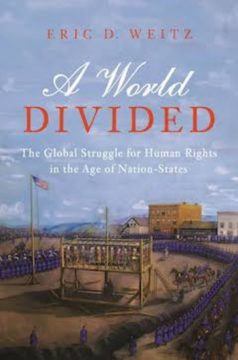 Eric D. Weitz in the LA Review of Books:
 Thomas Frank in the NYT:
 Richard Seymour in The Guardian:
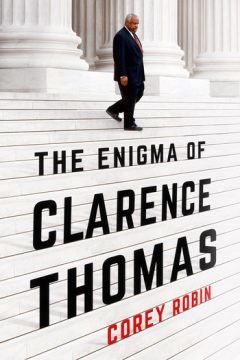 TAKE A MINUTE NOW to write down the first associations that come to your mind regarding Clarence Thomas. You might note that he represents the extreme right wing of the Supreme Court and that, beginning his twenty-ninth term this fall, he is its longest-serving justice, not to mention Donald Trump’s personal favorite. No doubt you’ll think of his alleged sexual harassment of Anita Hill during his tenure at the Department of Education and when he was head of the Equal Employment Opportunity Commission under Ronald Reagan, of the ordeal she went through when forced to testify about it during his 1991 confirmation hearings, to no avail, and of his own infamous characterization of those hearings as a “high-tech lynching.” Perhaps his conspicuous quiet will come to mind, his refusal to say anything during oral arguments for years at a time—the New York Times reported somewhat breathlessly in 2016 that Thomas had just resumed speaking from the bench after keeping shtum for an entire decade. You may also recall the flurry of news coverage that ensued recently when, not content simply to go along with the majority opinion in Box v. Planned Parenthood of Indiana and Kentucky, which upheld Indiana’s right to require that aborted fetuses receive funerary rites, he added a long and fervent concurring opinion that connected abortion rights to eugenics and the US’s ugly history of forced sterilization. I’m guessing, though, that you probably wouldn’t start by describing Thomas as, in Corey Robin’s words, “a conservative black nationalist on the Supreme Court.”
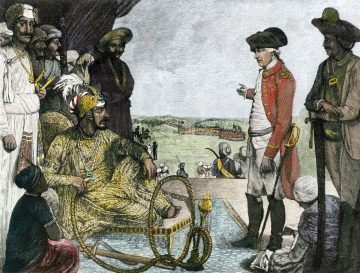 O
O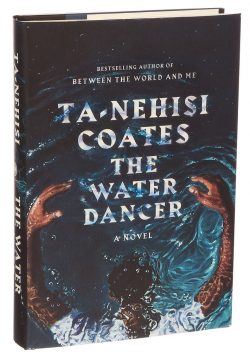 Coates doesn’t linger on the gruesome realities of slavery. There are no extended scenes of abuse. His novel increasingly begins to bend toward the motifs and impulses of the comic book and superhero world. “A power was within me,” Hiram says, “but with no thought of how to access it or control it, I was lost.” He seeks a mentor. She is called Moses. Others know her by the name Harriet Tubman, who in this novel is not merely the abolitionist who made daring missions to rescue enslaved people but a woman known to some as “the living master of Conduction.”
 This is the tale of a man who fled from desperate confinement, whirled into Polynesian dreamlands on a plank, sailed back to “civilization,” and then, his genius predictably unremunerated, had to tour the universe in a little room. His biographer calls him “an unfortunate fellow who had come to maturity penniless and poorly educated.” Unfortunate was likewise how he ended. Who could have predicted the greatness that lay before Herman Melville? In 1841, the earnest young man sneaked out on his unpaid landlady and signed on with the New Bedford whaler Acushnet, bound for the South Seas. He was 21, eager and shockingly open-minded, yearning not just to see but to live. In
 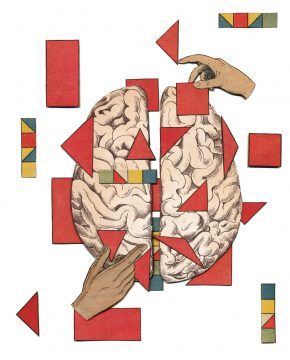 Piano players’ brains look different from those of violin players. Researchers have shown changes in brain activity in response to a short-term intervention in which girls played Tetris regularly — their visual-spatial brain areas seemed to enlarge. Such evidence of brain plasticity is key to Gina Rippon’s new book, “Gender and Our Brains” (which, yes, does relate the story of Phineas Gage, as well as that of the dead fish). The book is, at the core, concerned with the question of whether male and female brains are different. Rippon, a British professor of cognitive neuroimaging, reviews the history of studies of the gendered brain. The most persistent feature of these studies is the focus on size. Men have bigger brains on average, going along with their generally larger bodies, a fact that has come up again and again as an argument for male superiority, or at least structural difference. Size has fallen out of fashion, but the desire to identify gender-specific parts of the brain has not.