
Robert F. Service in Science:
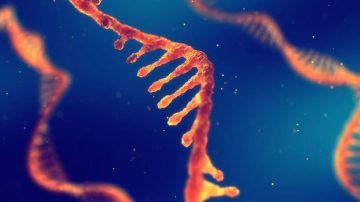 Sugar isn’t just for sweets. Inside cells, sugars attached to proteins and fats help molecules recognize one another—and let cells communicate. Now, for the first time, researchers report that sugars also appear to bind to some RNA molecules, the cellular workhorses that do everything from translating DNA into proteins to catalyzing chemical reactions. It’s unclear just what these sugar-coated RNAs do. But if the result holds up, it suggests vast new roles for RNA.
The report, posted to the preprint server bioRxiv on Monday, drew immediate Twitter responses verging on the hyperbolic: “a new era is starting!!” wrote one scientist. “A brilliant example of how collaboration … can alter the face of biochemistry as we know it!” wrote another. “This is a mind-blowing result,” tweeted a third. Asked by Science for comment, scientists were somewhat more measured. “This is a profound observation that nobody anticipated,” says Mark Lehrman, a pharmacologist at the University of Texas (UT) Southwestern Medical Center in Dallas who was not involved in the work. That profound observation still spurs caution: Others aren’t yet convinced about the basic findings.
The notion that RNAs might be modified by other molecules isn’t new. Chuan He, an RNA chemist at the University of Chicago in Illinois, notes that researchers have observed some 170 different chemical modifications to RNA—a methyl group here or an acetyl group there—that, among other functions, make sure RNA winds up in one cellular compartment or another. But until now, no one had seen complex sugars modify RNAs.
More here.
 Imagine you’re driving a trolley car. Suddenly the brakes fail, and on the track ahead of you are five workers you’ll run over. Now, you can steer onto another track, but on that track is one person who you will kill instead of the five: It’s the difference between unintentionally killing five people versus intentionally killing one.
 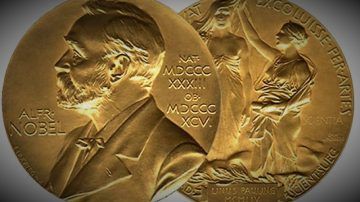 Anne Carson 4/1
 The upshot is that a subtle and mostly forgotten centuries-old choice in mathematical thinking has sent economics hurtling down a strange path. Only now are we beginning to learn how it might have been otherwise – and how a more realistic approach could help re-align economic orthodoxy with reality, to the benefit of all.
 In Rolling Stone, Greil Marcus
 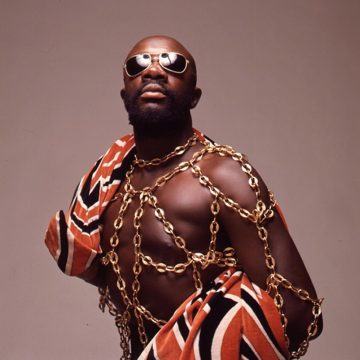 The meaning of Hayes’s music was similarly complex. But his seizure of musical space—literalized in the LP jacket for “Black Moses,” which unfolded to reveal a full-length portrait of Hayes in a robe, his arms outstretched—made a political statement at a time when black people were being made to feel acutely unwelcome in the public sphere: patrolled by police in their own neighborhoods, maimed and killed for being “in the wrong place at the wrong time.” Hayes took up time and space as if it were owed him, and listeners responded. “Hot Buttered Soul,” despite being what the critic Phyl Garland called “probably the strangest record hit of the year,” became the first Stax LP to go gold. It sold a million records to black consumers alone.
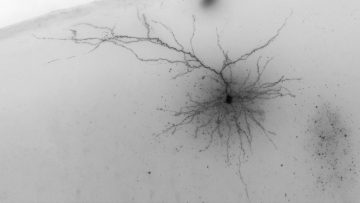 Lab mice endure a lot for science, but there’s often one (temporary) compensation: near-miraculous recovery from diseases that kill people. Unfortunately, experimental drugs that have cured millions of mice with Alzheimer’s disease or schizophrenia or glioblastoma have cured zero people — reflecting the sad fact that, for many brain disorders, mice are pretty lousy models of how humans will respond to a drug. Scientists have now discovered a key reason for that mouse-human disconnect, they
  Every age invents the language that it needs. Posterity will determine what it says about our own era that we have felt compelled to craft such words and phrases as ‘defriended’, ‘photobomb’, ‘flash mob’, ‘happy slapping’ and ‘selfie’. When our forebears in the 1850s found themselves at a loss for a term to describe the new cultural phenomenon of holding seances to summon souls from the great beyond, it was a little-known writer, John Dix, who recorded the emergence of a fresh coinage: “Every two or three years,” Dix wrote in 1853, “the Americans have a paroxysm of humbug … at the present time it is Spiritual-ism”. According to the Oxford English Dictionary, Dix’s comment is the first published use of the word ‘Spiritualism’, in the sense of channelling voices and visions from an invisible realm. Despite Dix’s suggestion that Spiritualism was likely a fleeting fad (“a paroxysm of humbug”), the modern psyche had well and truly been bitten by the bug. Before long, the existence of spirits with whom it was possible to communicate in the here-and-now was being passionately investigated as plausible by everyone from the leading evolutionary scientist Alfred Russel Wallace (who was eventually convinced) to the celebrated novelist and champion of empirical deduction, Arthur Conan Doyle (who needed little persuading).
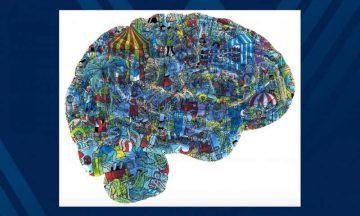 Where is Waldo?
 I
I That an author so notoriously sex-obsessed should concern himself with something as wholesome as ‘happiness’ looks, at first sight, like something of a contradiction. But Houellebecq was never really a hedonist. While often gratuitously graphic, his sex scenes are notably listless: related in blandly functional prose, they are conspicuously devoid of eroticism or joy. What some have interpreted as licentiousness could in fact be seen as the inverted prudery of the repressed social conservative. In Houellebecq’s fiction the libido, whether waxing or waning, is a problem to be overcome.
 My wife and I never spent much time talking about whether we wanted to have children. It was clear to both of us that we did, and our only concern was that we might not be able to. Yet if you had asked me why I wanted to have children, I would not have had anything very articulate to say. Nor did that fact bother me. Having children just seemed like the natural next step, and I felt no need to have or give reasons.
 Of course, every revolution is unique and comparisons between them do not always yield useful insights. But
  There has been quite a bit of prophesizing among pundits in the news media, on the
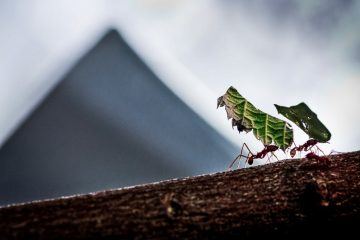 As a microbiologist, Massimiliano Marvasi has spent years studying how microbes have defeated us. Many pathogens have evolved resistance to penicillin and other antimicrobial drugs, and now public health experts