
Arundhati Roy in Lit Hub:
 Graveyards in India are, for the most part, Muslim graveyards, because Christians make up a miniscule part of the population, and, as you know, Hindus and most other communities cremate their dead. The Muslim graveyard, the kabristan, has always loomed large in the imagination and rhetoric of Hindu nationalists. “Mussalman ka ek hi sthan, kabristan ya Pakistan!”—Only one place for the Mussalman, the graveyard or Pakistan—is among the more frequent war cries of the murderous, sword-wielding militias and vigilante mobs that have overrun India’s streets.
As the Hindu right has taken almost complete control of the state, as well as non-state apparatuses, the increasingly blatant social and economic boycott of Muslims has pushed them further down the societal ladder and made them even more unwelcome in “secular” public spaces and housing colonies. For reasons of safety as well as necessity, in urban areas many Muslims, including the elite, are retreating into enclaves that are often hatefully referred to as “mini-Pakistans.” Now in life, as in death, segregation is becoming the rule.
More here.
 A third of the way through this absorbing and engagingly written book, Albert Costa describes a family meal: “The father speaks Spanish with his wife and his son, but uses Catalan with his daughter. The daughter in turn speaks Catalan with her father but Spanish with the rest of the family, including the grandmother, who only speaks Spanish though she understands Catalan.” It’s what Costa calls “orderly mixing”, and, depending on which restaurants you visit, a common enough situation: everyone is bilingual here, but the language used changes according to who it is directed at. Given that everyone at the table understands both languages, would it not be easier and less confusing if everyone just chose one language and stuck to it? That sounds logical, but the bilingual mind doesn’t work that way. If you do not believe it, Costa suggests “having a conversation with a friend in the language you do not usually use and see how far you get”.
 The footprints of a child are small but on November 14, 1960, six-year-old Ruby Bridges walked with purpose as she became the first African American student to integrate an elementary school in the South. This venture leads to the advancement of the Civil Rights Movement and created a pathway for further integration across the southern parts of the U.S.
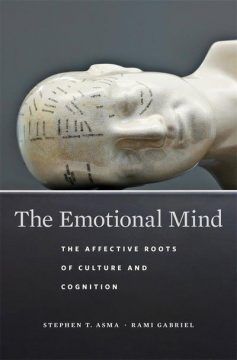 When Darwin wrote the Origin of Species, he famously closed the book with the provocative promise that “light will be thrown on the origin of man and his history.”
 The trebling of tuition fees would unleash a new golden age for English universities, or so we were told. They would become financially sustainable, competitive, liberated from stifling bureaucracy and responsive to the needs of students. And yet, nearly a decade later, higher education is in crisis.
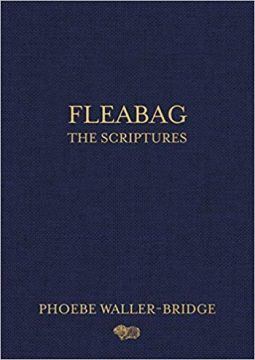 The title of Fleabag: The Scriptures (Ballantine Books, $28) is a cheeky play on words: It refers to the shooting scripts for the television comedy Fleabag, which are reproduced here in full, and it also refers to the fact that the second (and, if creator Phoebe Waller-Bridge is to be believed, final) season of the show, which debuted on Amazon Prime in May 2019, is about the main character’s romantic attachment to an unattainable Catholic priest. But it also acknowledges that Waller-Bridge’s words—printed out on creamy paper stock, bound inside a smooth navy-blue cover, and embossed with gold serif letters like a Gideon Bible—have become a new kind of religious text, albeit one that preaches primarily to secular women living in major metropolitan areas. And there is some truth to this visual provocation: If anyone had a truly blessed year, it was Phoebe Waller-Bridge. A
  B
B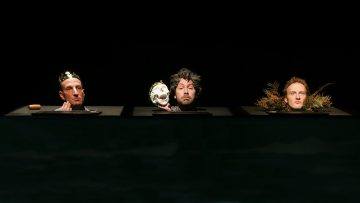 Should humanity lie back
  First, some basic facts to convey the scale of the problem. Cancer is the second most lethal disease in the U.S., behind only heart disease. More than 1.7 million Americans were diagnosed with cancer in 2018, and more than 600,000 died. Over 15 million Americans cancer survivors are alive today. Almost four out of ten people will be diagnosed in their lifetime, according to
  Wright
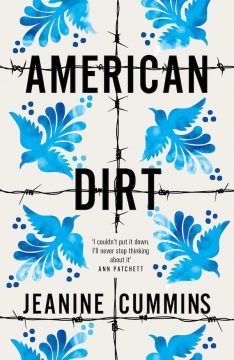 ‘What insults my soul’,
  IT’S AN APPROXIMATELY
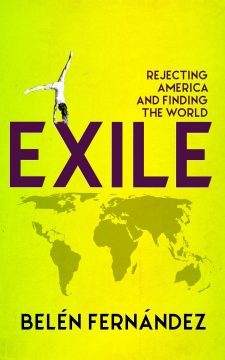 One way to lose a popularity contest in the United States is to mention in polite company — who may be chatting about, say, the impeachment or the Mueller investigation — the numerous ways the United States has meddled in the affairs of other countries throughout many years.
 Writing in The New York Times in June 2003, less than two years after the events of September 11 shattered the complacency with which many Americans conducted their lives,