
Shane Burley in Full Stop:
 For John Morgan, an American expat living in Budapest, controlling the form the world takes comes down to shaping how white people dream.
It is hard to imagine that Morgan, a quiet, nebbish man with curly hair and a meek smile, is at the center of an international fascist renaissance, but this is the reality of fringe politics in the social media age. When it comes to building a propaganda infrastructure capable of radicalizing a generation, it is just as likely to come from a bookish copy editor as it is from a charismatic march leader. Morgan was the creative force behind much of Arktos Media and, later, Counter-Currents, publishers known for creating the intellectual foundation for a new fascism.
Morgan’s history in publishing reveals an important but neglected side of the story of US white nationalism: the focus on building a ‘metapolitic’ rather than the direct mobilization that many expect from “white power” authors of the 1980s and 90s. Metapolitics refers to the ways of thinking that are “pre-political,” the emotional center that feeds political motions.
More here.

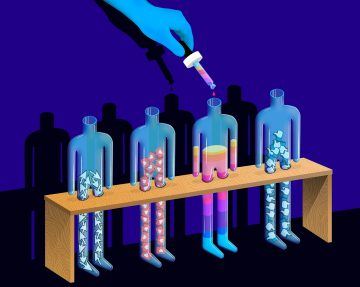 Dr. John Haygarth knew that there was something suspicious about Perkins’s Metallic Tractors. He’d heard all the theories about the newly patented medical device—about the way flesh reacted to metal, about noxious electrical fluids being expelled from the body. He’d heard that people plagued by rheumatism, pleurisy, and toothache swore the instrument offered them miraculous relief. Even George Washington was said to own a set. But Haygarth, a physician who had pioneered a method of preventing smallpox, sensed a sham. He set out to find the evidence. The year was 1799, and the Perkins tractors were already an international phenomenon. The device consisted of a pair of metallic rods—rounded on one end and tapering, at the other, to a point. Its inventor, Elisha Perkins, insisted that gently stroking each tractor over the affected area in alternation would draw off the electricity and provide relief. Thousands of sets were sold, for twenty-five dollars each. People were even said to have auctioned off their horses just to get hold of a pair. And, in an era when your alternatives might be bloodletting, leeches, and purging, you could see the appeal.
 Johann Wolfgang von Goethe, the 18th-century poet and philosopher, believed life was hardwired with archetypes, or models, which instructed its development. Yet he was fascinated with how life could, at the same time, be so malleable. One day, while meditating on a leaf, the poet had what you might call a proto-evolutionary thought: Plants were never created “and then locked into the given form” but have instead been given, he later wrote, a “felicitous mobility and plasticity that allows them to grow and adapt themselves to many different conditions in many different places.” A rediscovery of principles of genetic inheritance in the early 20th century showed that organisms could not learn or acquire heritable traits by interacting with their environment, but they did not yet explain how life could undergo such shapeshifting tricks—the plasticity that fascinated Goethe.
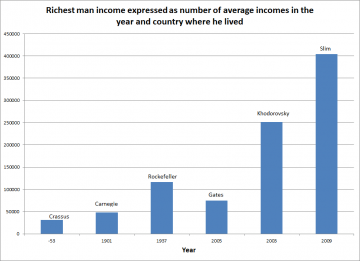 Branko Milanovic over at his website:
 Katherine Angel over at the Verso Blog:
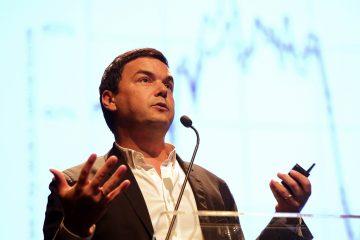 Danielle Charette talks to Thomas Piketty in Tocqueville 21:
 Joel Mokyr in Aeon:
 “Dalai Lama” is a foreign title. Tibetans refer to him with names like “Precious Protector,” “Wish-Fulfilling Jewel” and “the Presence.” The divide between the Tibetan Buddhist world — which often has included China and Mongolia — and the world beyond has rarely been of particular consequence to the Dalai Lamas, until this one, the 14th, who is the first to spend most of his life in exile; he fled to India in 1959 and has not returned. His biographer, facing the usual problems of recounting the life of a figure still living (the Dalai Lama will be 85 this year), is also faced with the dilemma of describing his life on the world stage (which has been fairly well documented) and his life inside the world of Tibetan Buddhism (which has not). This is the challenge that Alexander Norman, a longtime associate of the Dalai Lama, takes up in his new biography.
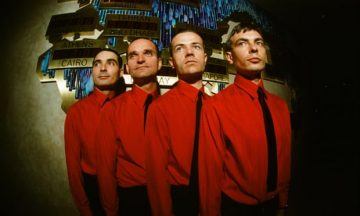 Kraftwerk
 Black women filmmakers—not invented yesterday and invented by no one but themselves—have persistently been making imaginative work in spite of the many obstacles and restrictions they’ve faced. The sixty plus films included in a recent series at Film Forum, “Black Women: Trailblazing African American Actresses & Images, 1920–2001,” exemplify their innovative and lasting legacies. One of these, Losing Ground (1982), by the filmmaker, playwright, and novelist Kathleen Collins, is a particularly incandescent example of filmmaking as a process of defiant self-creation.
 Viewers of the Oscar-winning film “
 Cancer has always been imagined as a biting, grasping, greedy beast. Hippocrates (or one of his students) is thought to be the first to name the disease karkinos, or crab, as ‘its veins are filled and stretched around like the feet of the animal called crab’. It was an image that would stick, embellished by physicians more deeply and vividly ever after. Like the crab, cancer was tenacious. ‘It is very hardly pulled away from those members, which it doth lay hold on, as the sea crab doth,’ remarked one 16th-century physician. There was no use in cutting away the tumour, just as there was no forcing a ‘Crab to quit what he has grasped betwixt his griping Claws,’ despaired another observer. Cancer the disease was as sneaky as its namesake. ‘It creeps little and little,’ noted one medieval commentator, ‘gnawing and fretting flesh and sinews slowish to the sight as it were a crab.’
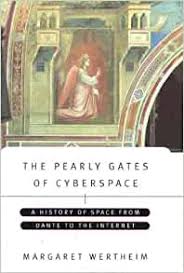 I am not the first to propose that Transhumanism channels elements of Christian eschatology. In The Pearly Gates of Cyberspace (1999), the science writer Margaret Wertheim argued that Transhumanists seek to “realize a technological substitute for the Christian afterlife” in “digital domains.” She documents, for example, Transhumanist hopes for “whole brain emulation,” whereby—as its most influential proponent, Hans Moravec, envisions it—a “robot brain surgeon” will download your “mind” tissue-layer by tissue-layer, after which you’ll wake up in a simulation. (The useless “meat” leftovers will be trashed.) One’s new cyber-body will now be “limitless” both in time and space, a hope that bears more than a passing resemblance to the “glorified” bodies promised by St. Paul. Moreover, a self made of bits could be backed up, making it possible for one’s “soul-data” to survive a crash or power outage. “As in the New Jerusalem,” Wertheim writes, “‘death would be no more.’”