Rebecca Robbins in STAT:
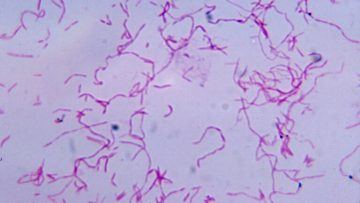 The many companies developing liquid biopsies to try to detect cancer early have so far largely mined the blood in search of things like mutations and epigenetic changes in human DNA shed by tumor cells. Now, new research raises the possibility that liquid biopsies could be used to spot cancer in a totally different way: by hunting for the DNA of bacteria and viruses released from tumors into the bloodstream. It’s a hypothesis that, if validated with more study, could usher in an entirely new class of diagnostics for cancer. In a study published Wednesday in the journal Nature, a team led by researchers at the University of California, San Diego, reported that they have developed machine learning models that, in early-stage testing, could identify and distinguish between different types of cancer based on microbial signatures in the blood.
The senior author of the study, the leading microbiome researcher Rob Knight, called the research “one of the most significant things to come out of our lab” since he moved to UCSD five years ago. “It’s introducing a completely new kind of information that you can get out of a liquid biopsy — where we would expect that new information would allow us to see things that are missed by techniques that just focus on the human DNA,” Knight said.
More here.
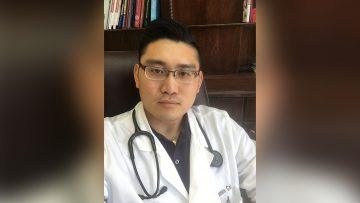 A New Jersey physician assistant who was the state’s first COVID-19 patient is speaking out from his hospital bed, calling his illness “severe” and raising concerns about his treatment. James Cai, a 32-year-old non-smoker with no other health conditions, has been at Hackensack University Medical Center for about a week and says his illness has worsened significantly over that time. “In the beginning, they just treat me like normal flu. They say I’m young, I’m not going to die, but they don’t know the truth about corona[virus],” Cai said during an
  I’ve learned a lot since the release of
  Ashutosh Varshney, a Brown University professor and
  Researchers are calling on citizen scientists to play a free online game called
 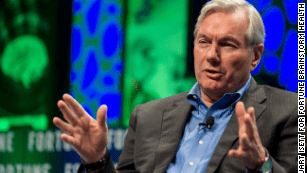 Michael Osterholm, the infectious disease expert who has been warning for a decade and a half that the world will face a pandemic, says the US is ill-prepared to combat the coronavirus due to a shortage of equipment and supplies.
 David Cutler: Yeah, one of the continual vexing points about U.S. healthcare is why it’s so expensive. There are a few reasons why the U.S. spends more than other rich countries. Obviously, in poor countries, there’s an enormous difference in the nature of medical care. Relative to other rich countries, I would say there are three principle reasons why the U.S. spends more. The first is that it’s administratively much more costly. So we have lots of people involved in submitting bills, and adjudicating claims and figuring out what services someone is allowed to receive and not allowed to receive and what you need to do in order to receive those services. And all of that involves people, and people are very expensive. And so probably the biggest contributor to the higher spending in the U.S. is that.
 If you tell me that one of the world’s leading neuroscientists has developed a theory of how the brain works that also has implications for the origin and nature of life more broadly, and uses concepts of entropy and information in a central way — well, you know I’m going to be all over that. So it’s my great pleasure to present this conversation with Karl Friston, who has done exactly that. One of the most highly-cited neuroscientists now living, Friston has proposed that we understand the brain in terms of a
  We tend to think of civility as maintaining a courteous and calm demeanor in political debate. But that can’t be correct. Keeping your cool is good, but courtesy and calmness can also be patronizing. Moreover, fervor is sometimes called for in politics. So civility is better understood as the avoidance of gratuitous escalation and excessive hostility. This allows for political antagonism but recognizes its limits.
 B
B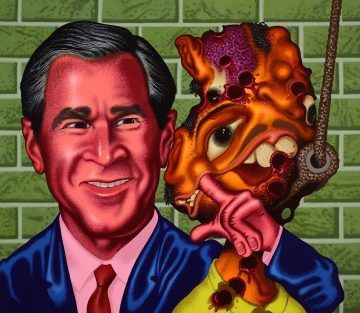 One of the earliest mature works in the exhibition, Sex Deviate Being Executed (1964), is also one of Saul’s best. Completed around the same time that Andy Warhol was obsessing over similar material, it shows a gay man smoking a cigarette as he sits in an electric chair. Simple moralistic interpretations get lost in the scene’s queasy virtuosity: the man’s stark profile; his thick, almost monumental arm, which resembles the haunch of an Egyptian sphinx; the decaying blue of his skin against the chair’s lilac. Here and throughout the galleries, the wall texts insist on simple moralistic interpretations anyway—apparently, this painting is about how homophobia, nationalism, and capital punishment are bad, and how a victim “maintains his dignity” in the face of death. The choice of words is unintentionally hilarious, since they appear just a few paces away from a decidedly undignified painting by the name of Human Dignity (1966), in which the title is scrawled on a pair of heaving, planetary breasts. Trust the show’s didactics and you could see Saul as a rough-around-the-edges liberal crusader—but you’d have to ignore the actual works.
 There are many ways to understand the passage of time—it’s not just one thing after the next, the pinhead of the present gnarling the flesh of your foot as you try, impossibly, to balance upon it. Not just peering through the mist of memory. Not just cutting through the ice ahead. Time moves back and forth, slows down, speeds up, it eddies—it does a lot of eddying. It concentrates itself in one moment and becomes diffuse and vague in another. We’re always in the present, though we can never quite get there, nor can we leave. All of this is what the music of McCoy Tyner, who died on Friday at the age of eighty-one, teaches, though as soon as one tries to paraphrase music in anything other than other music, it’s robbed of some of its magic and much of its meaning.
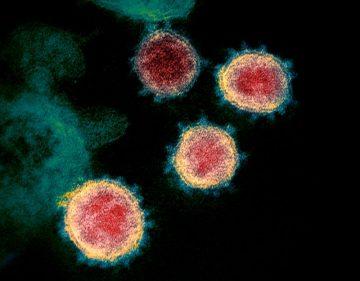 As the number of coronavirus infections approaches 100,000 people worldwide, researchers are racing to understand what makes it spread so easily. A handful of genetic and structural analyses have identified a key feature of the virus — a protein on its surface — that might explain why it infects human cells so readily. Other groups are investigating the doorway through which the new coronavirus enters human tissues — a receptor on cell membranes. Both the cell receptor and the virus protein offer potential targets for drugs to block the pathogen, but researchers say it is too early to be sure. “Understanding transmission of the virus is key to its containment and future prevention,” says David Veesler, a structural virologist at the University of Washington in Seattle, who posted his team’s findings about the virus protein on the biomedical preprint server bioRxiv on 20 February
 The feeling of being a fraud isn’t new, nor is our preoccupation with it. “All the world’s a stage…And one man in his time plays many parts,” wrote William Shakespeare. The principle of “fake it till you make it” has long propelled incompetents to greatness. The success of phoneys is endlessly fascinating. In the 2000s “On Bullshit”, a book by Harry Frankfurt, a Princeton philosopher, spent many weeks at the top of the New York Times’ bestseller list. But recently we have become fixated on a particular aspect of fraudulence – impostor syndrome – the sense that we are always posturing, that our accomplishments are in some way undeserved, no matter how consistent the evidence to the contrary. Impostor syndrome seems to have become an epidemic. That is partly because we have given the phenomenon a name. Two psychologists, Pauline Clance and Suzanne Imes, are credited with coining the term in a landmark study in the late 1970s, in which they identified the “internal experience” of feeling like an “intellectual phoney”. But our growing preoccupation with impostorism is also a result of profound social change. In the past most people were employed to make things – and it’s fairly easy to distinguish an expert chairmaker or bricklayer from a novice. Many more of us now work in the service economy: our lives are spent creating impressions rather than tangible items. There is no objective standard for providing a “great customer experience”. To be an excellent manager is a nebulous thing. At every level of every field, the number of roles where achievement is neither entirely measurable nor objective has grown.