
Paul Street in Counterpunch:
 History, literature, film, and scripture are loaded with stories and examples of redemption. Buddhism gives us the story of Aṅgulimāla, a pathological mass-murderer who became a follower of the Buddha and went on to be enshrined as a “patron saint” of childbirth in South and Southeast Asia. Rick Blaine, the character played by Humphrey Bogart in the 1942 Hollywood classic Casablanca, put side his cynical bitterness and seeming indifference to the rise of the Nazi Third Reich to help Isla Lund (played by Ingmar Bergman) – the former lover who jilted (and embittered) him – escape the grip of the Nazis with her husband, an anti-fascist Resistance fighter. The movie ends with Blaine declaring his determination to join the Resistance in Morocco. The New Testament tells the story of Zacchaeus, a chief tax collector and a wealthy man:
“Jesus looked up and said to him, ‘Zacchaeus, come down quickly, for today I must stay at your house.’ Zacchaeus stood there and said to Jesus, ‘Behold, half of my possessions, Lord, I shall give to the poor, and if I have extorted anything from anyone I shall repay it four times over.’ And Jesus said to Zacchaeus, ‘Today salvation has come to this house. For the Son of Man has come to seek and to save what was lost.’”
Zacchaues was perhaps inspiration for Charles Dickens’ character Ebeneezer Scrooge, a vicious exploitative capitalist turned into a benevolent and kindly employer when the ghosts of Christmas past, present and future visit him to tell him the story of his heretofore miserable, money-grubbing, and misanthropic life. Malcom X told his life story to Alex Haley as one of redemption. It was a tale of progression from violent and criminal hustler (known as “Detroit Red”) to the righteous and radical channeling and focusing his anger at White Society as a fiercely eloquent Civil Rights fighter for all the oppressed. When the leading munitions and arms manufacturer Alfred Nobel read a premature obituary that condemned his as “the merchant of death,” he bequeathed his fortune to establish the annual Nobel Peace Prize.
More here.
 There is perhaps no better individual showcase of The Beatles’ infinite variety than the “Yellow Submarine”/“Eleanor Rigby” double A-side record released on August 5 1966. One single was
  Rajan Roy in Margins:
 Hal Foster in Lit Hub
 Corey Robin in The Nation:
 If oppositional art can neither parody nor demystify the operation of power, what glimpses of the future can it provide? Whereas Foster’s previous books surveyed the art scene by identifying a small number of key trends, his approach here is more scattergun: we get 18 telegraphic essays on as many artists, whose work is used to illustrate competing forces in the culture industry. This kaleidoscopic perspective has its pitfalls. Breadth of analysis is often privileged over depth of insight. Sculptors, painters, conceptual artists and cultural theorists all make cameo appearances, yet the links between their work go unelaborated. Even so, the rapid pace of Foster’s prose captures the frenzied historical moment he is exploring; and his reluctance to offer simple answers acknowledges that multiple possibilities for reshaping our culture are currently ranged against each other.
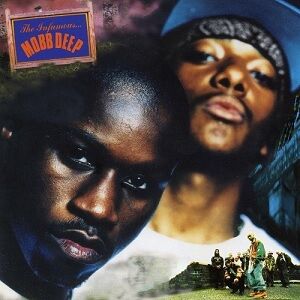 IN THE FALL of 1994, American radio and club DJs began receiving a promotional single in the mail: “Shook Ones, Pt. II,” by the Queens rap duo Mobb Deep. Those early promos came with little fanfare — no cover art, no liner notes, just a plain center sticker with the group’s name, song title, and record label logo. The reaction to “Shook Ones, Pt. II” was as spectacular as its arrival was understated. Its dark, discordant track and violent braggadocio powered the single onto hip-hop mix shows, and the song sparked fights in rowdier nightclubs whenever it rumbled over the speakers. Eminem’s hit 2002 film 8 Mile paid “Shook Ones, Pt. II” the ultimate homage by using it in the film’s cold open, a shot of auditory adrenaline jabbed into the heart of B-Rabbit as he prepares for an MC battle.
 IF THE TRUMP ADMINISTRATION
  Over the past month, Jennifer Leiferman, a researcher at the Colorado School of Public Health, has documented a tidal wave of depressive symptoms in the U.S. “The rates we’re seeing are just so much higher than normal,” she says. Leiferman’s team recently
  For those doubtful about the fascism analogy for Trumpism—and I count myself as one of them—the point is to appreciate both continuity and novelty better than the comparison allows. Abnormalizing Trump disguises that he is quintessentially American, the expression of enduring and indigenous syndromes. A response to what he represents hardly requires a restoration of “normalcy” but a questioning of the status quo ante Trump that produced him. Comparison to Nazism and fascism imminently threatening to topple democracy distracts us from how we made Trump over decades, and implies that the coexistence of our democracy with long histories of killing, subjugation, and terror—including its most recent, if somewhat sanitized, forms of mass incarceration and rising inequality at home, and its tenuous empire and regular war-making abroad—was somehow less worth the alarm and opprobrium. Selective outrage after 2016 says more about the outraged than the outrageous.
 Sweden has revealed
 For a heroin addict, Ciudad Juárez is Mecca. It’s cheap, drug possession charges result in just a couple of nights in jail, and the ability to earn U.S. currency by begging or doing odd jobs in El Paso significantly increases a person’s buying power in Mexico. These are things Comar learned after he abandoned his trucker job and moved from New York to Juárez in 1998. It’s also what several U.S. citizens who suffer from long-term addiction have told me makes Juárez the perfect place to live. And there’s no reason why they’d ever want to go back.