
Jan Mieszkowski at Public Books:
 “No one,” declared James Thurber, “can write a sentence like E. B. White.” Throughout his six-decade career, White was widely celebrated for his mastery of “the plain style.” His columns and anecdotes for the New Yorker, his longer essays, and his immensely popular trio of children’s books (Charlotte’s Web, Stuart Little, The Trumpet of the Swan) were invariably praised for their clarity and unadorned directness, not to mention their pithy gestures of tasteful irreverence.
In addition to being an acclaimed essayist and children’s author, White had the curious fate to have written the book on how to write, or at least part of it, when he updated and expanded a pamphlet his former teacher William Strunk Jr. had created for his students at Cornell. The result was the most successful composition guide of all time. The Elements of Style—“Strunk and White”—has sold more than 10 million copies and is still a staple of higher-education syllabuses, although it is assigned far more often than it is read.
It might seem self-evident that White the author practiced what Strunk and White the style gurus preached, but the truth is more complicated.
More here.
 WHILE FOR DECADES
 THE FINAL TALLY OF ECONOMIC DAMAGE
 In a perfect world, we would learn from success and failure alike. Both hold instructive lessons and provide needed reality checks that may safeguard our decisions from bad information or biased advice. But, alas, our brain doesn’t work this way. Unlike an impartial outcome-weighing machine an engineer might design, it learns more from some experiences than others. A few of these biases may already sound familiar: A positivity bias causes us to weigh rewards more heavily than punishments. And a confirmation bias makes us take to heart outcomes that confirm what we thought was true to begin with but discount those that show we were wrong. A new study, however, peels away these biases to find a role for choice at their core. A bias related to the choices we make explains all the others, says Stefano Palminteri of the French National Institute for Health and Medical Research (INSERM), who conducted a study published in Nature Human Behaviour in August
  Even
Even  Jordi Vaquer in Idees:
 Samantha Rose Hill in Aeon:
 F
F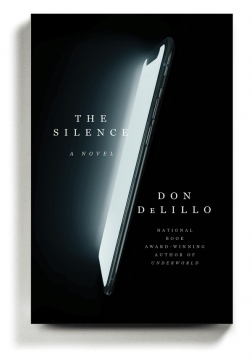 DeLillo’s new one is a pristine disaster novel with apocalyptic overtones. It’s a Stephen King novel scored by Philip Glass instead of Chuck Berry. A plane from Paris to Newark crash-lands. Two of the main characters are on this flight, and they survive. Power grids have gone down all over the world. Aliens? The Chinese? The Joker? QAnon?
 Sometime in the coming months, our prayers will have been answered. The researchers will have pulled their all-nighters, mountains will have been moved, glass vials will have been shipped, and a vaccine that protects us from the novel coronavirus will be here. We will all clamber to get it so we can go back to school, work, restaurants, and life. All of us, that is, except for people like Marcus Nel-Jamal Hamm. Hamm, a Black actor and professional wrestler, is what some might call an “anti-vaxxer,” though he finds that term derogatory and reductive. Since about 2013, he’s been running a Facebook page called “Over Vaccination Nation,” which now has more than 3,000 followers. One recent post