Why do the rich and the powerful sponsor literature festivals, prizes, and art in today’s world?

Annie Zaidi in Scroll.in:

The beating heart of literature is writers’ engagement with sadness and the conflicts of their time. Many of these conflicts are centred on wealth and access to natural resources: land, water, mineral, forest, stone, sand, clean air. Big money, often with the aid of big media, attempts to shape public opinion about who controls the world, who deserves what, how resources ought to be shared. In a similar vein, traditional hegemonies in India – patriarchy and the caste system – try to control the stories we tell about each other.

Why, then, do some of these powerful groups enable spaces where they can be challenged? Why do they invest in literature or theatre or film festivals where non-hegemonic views are invited? Writers are easy to take down, to put away or, at the very least, politely ignore. Why are we invited, given a platform and asked to comment on contentious issues?

I have struggled with this question for a few years now: what do the wealthy hope to gain?

More here.

Sniffing Out the Vast World of Smell

Sara Harrison in Undark:

THERE’S A WEALTH OF information floating in the air, though we rarely take the time to notice. Olfaction, or the ability to smell, may be the least appreciated of the five senses. A 2011 poll by the marketing firm McCann Worldgroup, for instance, found that 53 percent of young people would prefer to give up their sense of smell than to give up their use of technology.

But that was before the Covid-19 pandemic suddenly made us acutely aware of the dangers in the air around us: the droplets expelled from unmasked mouths and noses, the potentially infectious soup of molecules in unventilated, indoor spaces. And before anosmia, or the loss of smell, emerged as one of the most common Covid-19 symptoms. So perhaps it’s time we pay closer attention to what else is in the air.

As Harold McGee shows in “Nose Dive: A Field Guide to the World’s Smells,” olfaction is a fascinating landscape that adds much to our sensory experience of the world, if only we would breathe a bit deeper. He devotes some 600 pages to the vast and exciting “osmocosm,” his term for the odors that swirl around us every day, even if we don’t notice them.

More here.

Why Hunger and Loneliness Activate the Same Part of the Brain

Rasha Aridi in Smithsonian:

The Covid-19 pandemic has made the world feel lonelier than ever as people have been shut away in their homes, aching to gather with their loved ones again. This instinct to evade loneliness is deeply engrained in our brains, and a new study published in the journal Nature Neuroscience suggests that our longing for social interaction elicits a similar neurological response to a hungry person craving food, reports Ali Pattillo for Inverse. Livia Tomova, a cognitive neuroscientist at the Massachusetts Institute of Technology, and her collaborators conducted a study in which they had a test group of 40 people fast for ten hours. At the end of the day, the hungry subjects were shown images of pizza and chocolate cake while receiving a brain scan, reports Bethany Brookshire for Science News.

In a second round of experimentation, the subjects were barred from social interaction—no in person or virtual human contact—for ten hours. Afterward, they were shown images of people gathering and playing sports as the team scanned their brains. The scans revealed that the same part of their brains perked up in response to both food and social gatherings, reports Science News.

…”[This study] provides empirical support for the idea that loneliness acts as a signal—just like hunger—that signals to an individual that something is lacking and that it needs to take action to repair that,” Tomova tells Inverse.

More here.

Sunday Poem

Burnt Norton—excerpt

At the still point of the turning world. Neither flesh nor fleshless;
Neither from nor towards; at the still point, there the dance is,
But neither arrest nor movement. And do not call it fixity,
Where past and future are gathered. Neither movement from nor towards,
Neither ascent nor decline. Except for the point, the still point,
There would be no dance, and there is only the dance.
I can only say, there we have been: but I cannot say where.
And I cannot say, how long, for that is to place it in time.

T.S. Eliot
from
Four Quartets: Burnt Norton

Painting by John Civitello

Happiness Won’t Save You

Jennifer Senior in The New York Times:

More than 40 years ago, three psychologists published a study with the eccentric, mildly seductive title, “Lottery Winners and Accident Victims: Is Happiness Relative?” Even if you don’t think you know what it says, there’s a decent chance you do. It has seeped into TED talks, life-hack segments on morning shows, even the occasional whiff of movie dialogue. The paper is the peanut butter and jelly sandwich of happiness studies, a staple in any curriculum that looks at the psychology of human flourishing.

The study is straightforward. As the title suggests, the authors surveyed lottery winners and accident victims, plus a control group, hoping to compare their levels of happiness. But what the authors found violated common intuition. The victims, while less happy than the controls, still rated themselves above average in happiness, even though their accidents had recently rendered them all either paraplegic or quadriplegic. And the lottery winners were no happier than the controls, at least in any statistically meaningful sense. If anything, the warp and weft of their everyday lives was a little more threadbare. Talking to friends, hearing jokes, having breakfast — all of these simple pleasures now left them less satisfied than before.

There were flaws in the study — its design, alas, was as crude as an ax — but you can see why it became famous. It had an irresistible takeaway: Money! It doesn’t buy you happiness! Perhaps even more fundamentally, it had a sexy, almost absurd, premise. What kind of mind would think to pair lottery winners and accident victims in a research paper? Who in academic psychology had such a cockeyed imagination? It was social science by way of Samuel Beckett.

More here.

Saturday, November 28, 2020

Seize and Resist

Thea Riofrancos in The Baffler:

GLOBALIZATION IS UNDER ATTACK from all quarters. It’s hard to pinpoint when the discord began: the concept, and the process it grasps, is nearly coterminous with the contention swirling around it. January 1, 1994, the day the North American Free Trade Agreement went into effect, was also the day the Zapatista Army declared war on the Mexican government. In the United States, the alter-globalization movement erupted in the 1999 Battle of Seattle; in the hemisphere, it peaked with the 2005 World Social Forum in Porto Alegre, Brazil, which registered over 150,000 participants. A few years later came the “movements of the squares” as protesters occupied public spaces from Athens to New York to Cairo. These events coincided with an entire era of resistance to free trade and U.S. hegemony in Latin America, culminating in the Pink Tide, which in turn foreshadowed the global spread of populisms left and right that, though diametrically opposed in their diagnoses, targeted the insipid managerialism of market democracies.

And that was just the beginning. Having survived the turbulence of social movements and financial crises, the fate of the flat earth utopia—the dream of a global humanity linked by the sinews of peaceful trade, digital communication, and international institutions, all protected by benevolent American imperialism—entered into yet another phase of uncertainty. Across multiple continents, right-wing nationalism, itself nurtured by neoliberalism, captured state power. Trade wars, withdrawals from multilateralism, and reconfigurations of historic alliances ensued. Global integration already appeared at a nadir when the novel coronavirus emerged in China before spreading everywhere through the pathways of transnational interconnectedness. Supply chains premised on frictionless circulation and just-in-time production ground to a halt; meanwhile, political leaders of all ideological stripes bemoaned “dependency” not just on China, but on globally dispersed production itself, which manufactures everything from the superficial (fast fashion) to the essential (personal protective equipment). In their place, they called for “re-shoring” supply chains, scaling down production to domestic and regional levels, and balancing economic efficiency with newly salient exigencies of public health. Are we witnessing the twilight of globalization?

More here.

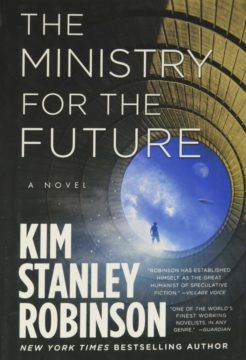
Of Course They Would: On Kim Stanley Robinson’s “The Ministry for the Future”

Gerry Canavan in the LA Review of Books:

IT SEEMS PERVERSELY easier to tell a science fictional story about a world centuries in the future than the one just a few years away. Somehow we have become collectively convinced that massive world-historical changes are something that cannot happen in the short term, even as the last five years alone have seen the coronavirus pandemic; the emergence of CRISPR gene editing; too many droughts, hurricanes, and wildfires to count; the legalization of gay marriage in many countries, including the United States; mass shooting after mass shooting after mass shooting; the #MeToo and #BlackLivesMatter movements; the emergence of self-driving cars; Brexit; and the election of Donald Trump to the presidency of the United States. We are living through historic times — the most widely tumultuous period of transformation and catastrophe for the planet since the end of World War II, with overlapping political, social, economic, and ecological crises that threaten to turn the coming decades into hell on Earth — but it has not helped us to think historically, or to understand that no matter how hard we vote things are never going to “get back to normal.” Everything is different now.

Everything is always different, yes, fine — but everything is really different now.

The Ministry for the Future is Kim Stanley Robinson’s grimmest book since 2015’s Aurora, and likely the grimmest book he has written to date — but it is also one of his most ambitious, as he seeks to tell the story of how, given what science and history both tell us to be true, the rest of our lives could be anything but an endless nightmare. It is not an easy read, with none of the strategies of spatial or temporal distancing that make Mars or the Moon or the New York of 2140 feel like spaces of optimistic historical possibility; it’s a book that calls on us instead to imagine living through a revolution ourselves, as we are, in the here and now. Robinson, our culture’s last great utopian, hasn’t lost heart exactly — but he’s definitely getting deep down into the muck of things this time.

More here.

How Digitalization Is Preparing a Fight for World Market Supremacy

(Photo by Sean Gallup/Getty Images)

Peter Schadt and Hans Zobel in Jacobin:

The United States and China are engaging in a trade war that British think tank Chatham House calls rooted in “a race for global technological dominance.” And for German business daily Handelsblatt, “Europe is getting caught in the crossfire of [this] technology war.” Faced with this threat, the European Commission has reserved large parts of its coronavirus recovery fund to boosting or maintaining Europe’s “digital sovereignty.” Technology, it would seem, is a matter of power politics. But what does “technological dominance” mean in the digital age?

In her State of the European Union address in September, European Commission president Ursula von der Leyen announced that we have ahead of us nothing less than a “digital decade,” and demanded clear-cut goals for a digital Europe by 2030. As she put it, “Europe must now lead the way on digital — or it will have to follow the way of others, who are setting these standards for us. This is why we must move fast.”

The three remaining world powers — the EU, China, and the United States — are today struggling for world market supremacy. The battles will be fought in the field of digital technology. And as von der Leyen indicated, one of their most important weapons will be the bid to impose their own standards on the global market. Let’s have a look at their battle plans.

More here.

The Militia Question

Suzanne Schneider in n+1:

FLOATING SOMEWHERE BETWEEN the optimism that Donald Trump will soon be fired by the American people and the fear that he will eke out a victory, a number of anxious questions circulate: Will he honor the results? Will he try to discredit the election? Will the task of deciding the presidency come down to the courts, for the second time in two decades? What if he refuses to go? Will the military really dispatch him with the swiftness that Joe Biden has promised? What if the transfer of power happens but is anything but peaceful—accompanied by protestors, police, vigilantes, and federal troops facing off on American streets? Pundits stress how unprecedented, and thus dangerous, it is to be even asking such questions; friends share ominous magazine articles about right-wing militias gearing up for civil war. In major cities, corporations are boarding up their storefronts in advance of Election Day.

For many scholars like myself, whose academic work chiefly concerns developments in the Global South, there is a certain familiarity to this disaster-in-the-making. The United States is facing a legitimation crisis of epic proportions, one that will not evaporate should Joe Biden oust Trump from the presidency.

More here.

How Latin America Reimagined Classical Economics

Nicola Miller in Boston Review:

As disillusionment with neoliberalism has grown over the last decade, many have called for an alternative vision of political economy—one that rejects market fundamentalism, embraces a notion of the public good, and remains sensitive to the way politics, economics, and ethics are deeply intertwined. In this effort to imagine new futures, it can be helpful to return to neglected resources of the past, and one striking example of vibrant economic thinking comes from Latin America in the late nineteenth and early twentieth centuries.

This rich legacy is often obscured by a mistaken assumption. The conventional account has it that classical political economy (CPE)—with its emphasis on self-regulating markets, free trade, and the pursuit of individual self-interest—was the dominant approach in Latin America from independence until after World War II, when new ways of thinking about development economics, pioneered by Argentine Raúl Prebisch and others in the 1950s, displaced the old paradigm. This standard story points out that in the late nineteenth century Adam Smith and David Ricardo were widely cited by Latin American authors, that John Stuart Mill’s Principles of Political Economy (1848) became a bible of economic wisdom, and that the idea of comparative advantage became naturalized. Laissez faire governments of the time parroted the theory, we are told, and allowed the proceeds of primary product exports to accumulate in the hands of a minority, with little concern for the rest of the economy. If industrialization took place—and economic historians have found more and more of it, earlier and earlier—it was despite, not because, of any deliberate policy, let alone a theory.

More here.

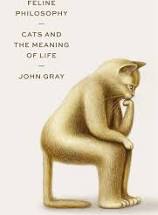
Cats and Philosophy

Tim Adams at The Guardian:

Gray never bought the idea that his book was a handbook for despair. His subject was humility; his target any ideology that believed it possessed anything more than doubtful and piecemeal answers to vast and changing questions. The cat book is written in that spirit. If like me you read with a pencil to hand, you will be underlining constantly with a mix of purring enjoyment and frequent exclamation marks. “Consciousness has been overrated,” Gray will write, coolly. Or “the flaw in rationalism is the belief that human beings can live by applying a theory”. Or “human beings quickly lose their humanity but cats never stop being cats”. He concludes with a 10-point list of how cats might give their anxious, unhappy, self-conscious human companions hints “to live less awkwardly”. These range from “never try to persuade human beings to be reasonable”, to “do not look for meaning in your suffering” to “sleep for the joy of sleeping”.

more here.

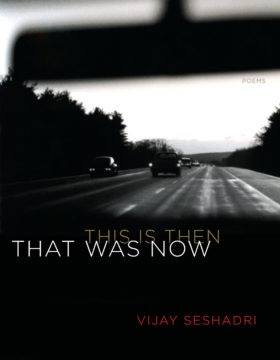
A Poet Who Mesmerizes by Zigs and Zags

David Orr at The New York Times:

To write as an ironist, especially today, is to risk that the reader loses patience with hedging, backtracking, spirals of cleverness. But sometimes the layers of the onion ensure the purity of the tears. “That Was Now, This Is Then” is anchored by “Collins Ferry Landing,” an elegy for the poet’s father. Its middle section, in prose, begins by addressing Seshadri’s father in the self-amused voice that is typical for this writer: “I have a friend. (You’ll be glad to know.) She and I work together. (You’ll be glad to know I still have a job.) She’s an ally. She’s sympathetic.” But it turns out that this sympathetic ally has done something terrible. The poet had been speaking about his loss (“I was telling her about you”) and then shied away from it into a galaxy of other subjects (“I was describing cultures of shame evolving across millennia; economies of scarcity versus economies of surplus. … Deep India, strewn with elephants and cobras”). And then the woman does this: “She put her right hand on my left arm and said, ‘He’ll always be with you. In your heart.’”

more here.

Skin in the Game: Wall Street’s answer to the student-debt crisis

Avi Asher-Schapiro in Harper’s Magazine:

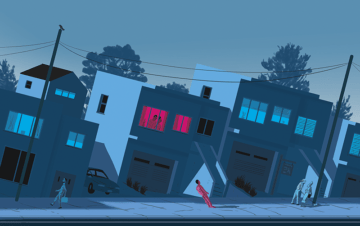
Susan Simien was born and raised in San Francisco, but he had begun to feel like a stranger in his hometown. In the Nineties, when Simien was growing up, the Ingleside neighborhood where he lived was diverse—nearly half of its households were, like Simien’s, middle-class and African-American. But in recent years, friends and neighbors had left for more affordable towns and suburbs—so many that Simien had lost track. Over the course of his lifetime, the African-American population in San Francisco had been cut in half. “You can’t throw a rock and hit someone who actually grew up around here,” Simien liked to say.

As a teenager, Simien knew he wanted to work in the tech industry. While other kids in his neighborhood were playing outside, he was shooting aliens on his Xbox; when anyone in his family needed help with a broken printer or new cell phone, they called Simien. In 2017, at age twenty-five, he joined the International Brotherhood of Electrical Workers union, and he was soon making $30 to $40 an hour as an AV installer—as much as $75,000 a year if he could get steady work. Over the long term, though, the pay wasn’t going to cut it in the Bay Area. “Low six figures was beginning to feel like low-income,” he told me. Simien and his family were just the sort of people getting priced out. He lived with his grandparents near the top of a sloping block in a boxy, two-story, suburban-style tract house—the kind of building that developers erected after World War II to accommodate the upwardly mobile families filling out the city’s edges. Simien’s grandmother worked for decades as a manager at a department store; by the mid-Nineties, she had saved enough money to buy the house for $150,000. The family is still paying off the mortgage. “I didn’t want to ever have to leave that house,” Simien told me. “I knew I had to do something.”

One day in 2017, Simien was riding the BART train when he saw an ad for the Holberton School, a for-profit technology training program. Holberton had plastered the stations with posters that said things like ivy league salaries and no up-front tuition and become a software engineer in 2 years or less. The ads featured flattering photos of people who looked like Simien’s friends from Ingleside: twentysomething African Americans, Asian Americans, and Latinos. They were all grinning.

More here.

William Faulkner’s Demons

Casey Cep in The New Yorker:
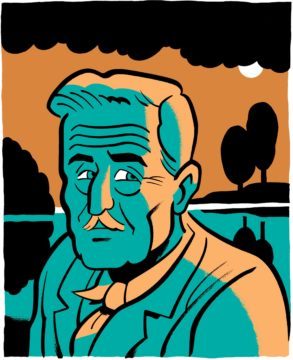
What if the North had won the Civil War? That technically factual counterfactual animated almost all of William Faulkner’s writing. The Mississippi novelist was born thirty-two years after Robert E. Lee surrendered to Ulysses S. Grant at Appomattox, but he came of age believing in the superiority of the Confederacy: the South might have lost, but the North did not deserve to win. This Lost Cause revisionism appeared everywhere, from the textbooks that Faulkner was assigned growing up to editorials in local newspapers, praising the paternalism and the prosperity of the slavery economy, jury-rigging an alternative justification for secession, canonizing as saints and martyrs those who fought for the C.S.A., and proclaiming the virtues of antebellum society. In contrast with those delusions, Faulkner’s fiction revealed the truth: the Confederacy was both a military and a moral failure.

The Civil War features in some dozen of Faulkner’s novels. It is most prominent in those set in Yoknapatawpha County, an imaginary Mississippi landscape filled with battlefields and graveyards, veterans and widows, slaves and former slaves, draft dodgers and ghosts. In “Light in August,” the Reverend Gail Hightower is haunted by his Confederate grandfather; in “Intruder in the Dust,” the lawyer Gavin Stevens insists that all the region’s teen-age boys are obsessed with the hours before Pickett’s Charge at Gettysburg. In these books, no Southerner is spared the torturous influence of the war, whether he flees the region, as Quentin Compson does, in “The Sound and the Fury,” or whether, like Rosa Coldfield, in “Absalom, Absalom!,” she stays.

A new book by Michael Gorra, “The Saddest Words: William Faulkner’s Civil War” (Liveright), traces Faulkner’s literary depictions of the military conflict in the nineteenth century and his personal engagement with the racial conflict of the twentieth. The latter struggle, within the novelist himself, is the real war of Gorra’s subtitle. In “The Saddest Words,” Faulkner emerges as a character as tragic as any he invented: a writer who brilliantly portrayed the way that the South’s refusal to accept its defeat led to cultural decay, but a Southerner whose private letters and public statements were riddled with the very racism that his books so pointedly damned.

More here.

Saturday Poem

Ceci n’est pas un pot?

—But what if one insisted on saying that there must also be something boiling in the
picture of the pot?
—Ludwig Wittgenstein, Philosophical Investigations 297

i.

The old forger might have laughed,
had he lived long enough to see
his youthful face on the 500 franc note,
recalling, after the war, printing his own
bank notes, painting fake Picassos,
adding de Chirico town squares to the mounting sum
of de Chirico squares just to stay alive.
“This is,” he might have said, “my face.”
“This,” he might have said, “is not my face.”

ii.

“What is in the pot, Rene?”
Sheila coyly asks. Steam
rises, or perhaps blows
a fierce whistle. He
has planned all afternoon
to offer her a cup of tea
with sugar or a boiled
potato with butter and salt
to keep her a little longer—
his wife away on social calls—
to talk of art, or nothing at all.
“Nothing,” he answers. “It is
my upturned derby pouring out
desire. It is the river Sambre,
where my mother drowned.”

M.L. Williams
from
Plume Magazine

Friday, November 27, 2020

A Murder at Harvard and a Half Century of Silence

Becky Cooper in Crime Reads:

I asked Iva and James to tell me everything they knew. They looked uncomfortable, whispering despite the fact that there wasn’t really anyone there but the barista.

The professor’s name was Karl Lamberg-Karlovsky, they said, and the story James had heard, like the one Morgan told me, was that this Harvard professor—tenured, and still on faculty—had an affair with his student and killed her when she wouldn’t end the liaison and threatened to tell either his wife or the university, he couldn’t remember which. His version also involved red ochre, but none of the cigarette butts. Red ochre, they explained, was used in many ancient burial rituals, either to preserve the dead or to honor them on their way to the afterlife. Its use seemed to limit the circle of suspects to someone with intimate knowledge of anthropology. Everyone in the department at Harvard, they said, knew the story. They had heard that another Harvard archaeology professor got too drunk at a recent faculty dinner and spilled the sordid tale to his students. In fact, they wouldn’t be surprised if most people in the field of archaeology knew and whispered about that particular professor.

I couldn’t understand how such a huge scandal, if any of it was true, could stay so quiet.

More here.