
W Ford Doolittle in Aeon:
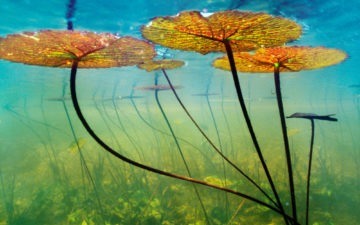 The idea that the Earth itself is like a single evolving ‘organism’ was developed in the mid-1970s by the independent English scientist and inventor James Lovelock and the American biologist Lynn Margulis. They dubbed it the ‘Gaia hypothesis’, asserting that the biosphere is an ‘active adaptive control system able to maintain the Earth in homeostasis’. Sometimes they went pretty far with this line of reasoning: Lovelock even ventured that algal mats have evolved so as to control global temperature, while Australia’s Great Barrier Reef might be a ‘partly finished project for an evaporation lagoon’, whose purpose was to control oceanic salinity.
The notion that the Earth itself is a living system captured the imagination of New Age enthusiasts, who deified Gaia as the Earth Goddess. But it has received rough treatment at the hands of evolutionary biologists like me, and is generally scorned by most scientific Darwinists. Most of them are still negative about Gaia: viewing many Earthly features as biological products might well have been extraordinarily fruitful, generating much good science, but Earth is nothing like an evolved organism. Algal mats and coral reefs are just not ‘adaptations’ that enhance Earth’s ‘fitness’ in the same way that eyes and wings contribute to the fitness of birds. Darwinian natural selection doesn’t work that way.
I’ve got a confession though: I’ve warmed to Gaia over the years.
More here.
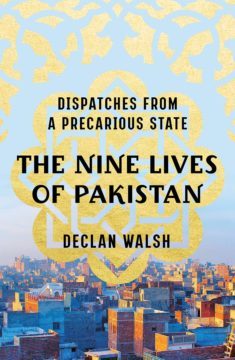 A decade before the arrival of New York Times correspondent Declan Walsh’s The Nine Lives of Pakistan: Dispatches from a Precarious State—which was released in the United States on Nov. 23—another major book of long-form reportage about the country’s chaotic post-9/11 years was published: Nicholas Schmidle’s To Live or to Perish Forever. The two books open with anecdotes of the authors being suddenly ordered to pack their bags and expelled from the country after reporting stories that crossed a red line for Pakistan’s security services—Schmidle for reporting on the Pakistani mutation of the Taliban and Walsh for his coverage of the insurgency in the vast, rural Balochistan province. Walsh’s book comes more than seven years after he was kicked out of Pakistan in May 2013.
 On December 4, Netflix subscribers will start streaming Mank, David Fincher’s biopic about Herman Mankiewicz, the Hollywood screenwriter who wrote the original script for Orson Welles’s Citizen Kane. Mank is a cinematic feast that requires neither familiarity with Herman Mankiewicz nor prior exposure to Citizen Kane to enjoy it. But as with most works of complexity, the more one brings to it, the richer the experience. As it happens, I bring a great deal. I call it knowledge. The less charitable might call it obsession.
 The best thing about David Fincher’s new film, “Mank,” is that it isn’t about what one expects it to be about. More specifically, the movie (which is streaming on Netflix) is not about the assertion, made most strenuously by Pauline Kael in her controversial New Yorker piece “
 IN HER MEMOIR
 Over at his
 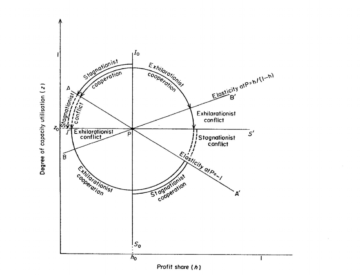 Maya Adereth interviews Amit Bhaduri in Phenomenal World:
 I
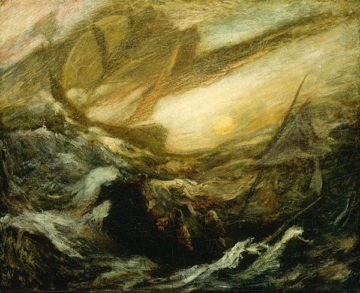
I There’s plenty wrong with rights, Nigel Biggar tells us, as some very powerful thinkers have been saying since the ‘rights of man and of the citizen’ first entered the lexicon of mass democratic politics during the French Revolution. This sceptical tradition has been particularly strong in Britain, a country that likes to think it invented rights at Runnymede. It runs from Edmund Burke, through Jeremy Bentham (who called natural rights ‘nonsense on stilts’) right up to contemporary figures like Jonathan Sumption, a former justice of the UK Supreme Court, and the philosopher Onora O’Neill.
 The
The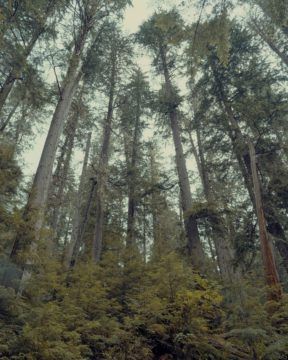 As a child, Suzanne Simard often roamed Canada’s old-growth forests with her siblings, building forts from fallen branches, foraging mushrooms and huckleberries and occasionally eating handfuls of dirt (she liked the taste). Her grandfather and uncles, meanwhile, worked nearby as horse loggers, using low-impact methods to selectively harvest cedar, Douglas fir and white pine. They took so few trees that Simard never noticed much of a difference. The forest seemed ageless and infinite, pillared with conifers, jeweled with raindrops and brimming with ferns and fairy bells. She experienced it as “nature in the raw” — a mythic realm, perfect as it was. When she began attending the University of British Columbia, she was elated to discover forestry: an entire field of science devoted to her beloved domain. It seemed like the natural choice.
 Tumbuktu, Tehran, London, Freetown, Honolulu, New Orleans. These are but a few of the compass points visited in