Yuval Noah Harari argues that what’s at stake in Ukraine is the direction of human history

Yuval Noah Harari in The Economist:
At the heart of the Ukraine crisis lies a fundamental question about the nature of history and the nature of humanity: is change possible? Can humans change the way they behave, or does history repeat itself endlessly, with humans forever condemned to re-enact past tragedies without changing anything except the décor?

One school of thought firmly denies the possibility of change. It argues that the world is a jungle, that the strong prey upon the weak and that the only thing preventing one country from wolfing down another is military force. This is how it always was, and this is how it always will be. Those who don’t believe in the law of the jungle are not just deluding themselves, but are putting their very existence at risk. They will not survive long.

Another school of thought argues that the so-called law of the jungle isn’t a natural law at all. Humans made it, and humans can change it. Contrary to popular misconceptions, the first clear evidence for organised warfare appears in the archaeological record only 13,000 years ago.

More here.
Saturday, February 19, 2022

Away from the Guns

Richard Seymour in Sidecar (photo by Jim Harrison – PLoS, CC BY 2.5):

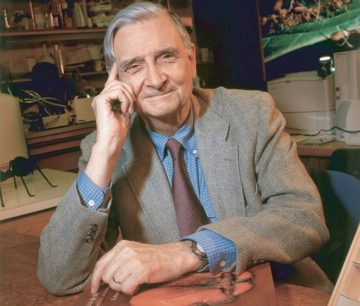
Edward O. Wilson, the Harvard-based naturalist who died on 26 December 2021 at the age of 92, was often misunderstood by the left. When he launched the field of sociobiology in 1975, he was charged by the Sociobiology Study Group – a critical group set up by Marxist geneticist Richard Lewontin – with trying to ‘justify the present social order’. His work, applying the modern synthesis of genetics and evolution to the interpretation of behaviour, appeared to give a new gloss to discredited biological determinism, and suggest that there was a natural basis for such undesirable characteristics as xenophobia and male dominance.

Despite the conservative implications of some of his work, Wilson did not consider himself a man of the right. In his own words, he was a ‘Roosevelt liberal turned pragmatic centrist’. He considered himself a feminist, and furiously rejected charges of racism. His major intellectual goal, which he termed ‘consilience’, was to unify the sciences through a narrow version of Darwinism. He hoped that the essential questions about art, society and religion could be addressed, in part, as questions about genetics. His major ethical concern was to defend the biosphere, challenge human exceptionalism and cultivate respect for the non-human species he studied. Awareness of the ‘limits of human nature’, achieved by viewing humanity ‘from a distance’ – from a termite’s-eye-view, one might say ­– would undermine anthropocentrism.

More here.

Eskom, Unbundling, and Decarbonization

Bruce Baigrie in Phenomenal World:

South Africa has one of the most carbon-intensive economies in the world. It is also in a staggering and protracted unemployment crisis—the real unemployment rate, including discouraged work-seekers, is near 50 percent. But there remain tens of thousands of workers employed in South Africa’s coal mining and power sector. The combination marks South Africa as a country desperately in need of the ever-elusive “just transition.”

The announcement at COP26 of an international climate finance deal of $8.5 billion to fund a transition away from coal has been understandably welcomed across the political spectrum. Under the proposed deal, Eskom, South Africa’s state-owned utility, will receive funding to ease the decarbonization process and the transformation to a renewables-based power sector. But this renewable energy will come overwhelmingly from private firms, continuing the path set in motion by decades of policymaking to liberalize and privatize electricity generation.

The COP26 deal was announced weeks before Eskom chief executive André de Ruyter announced the separation of its transmission wing. The announcement marks the success of the long-term government policy of restructuring or “unbundling” Eskom. Proposed in the post-apartheid era, unbundling would separate the transmission, generation, and distribution functions of the public utility. In the context of the energy transition, it sets South Africa on a path of leaving major investment decisions to the market, with Eskom increasingly relegated to a supporting role in managing the country’s grid.

More here.

Check Your Spillover

Geoff Mann in the LRB:

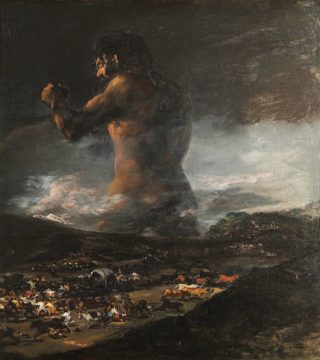
The ​American economist William Nordhaus opened his Nobel Prize speech in 2018 with a slide of the painting El Coloso, traditionally attributed to Goya and completed sometime between 1808 and 1812. Like Goya’s better-known images of the Madrid uprising of 2 May 1808 and the bloody retribution that came after, the painting depicts the calamitous violence of the Peninsular War, which followed Napoleon’s invasion of Spain. But while Goya’s intentions are clear in El Dos and El Tres de Mayo, it is much less obvious what is going on in El Coloso. A giant man, shrouded in mist, looms over the hills. In the dark valley below, people and animals are caught in desperate flight. Only a single donkey remains still, unflustered. The giant is half-turned away from us and from the refugees, his fist raised, ready to fight. But his eyes appear to be closed. Who or what presents the threat isn’t visible to us.

Is the colossus protecting the people, or is it him they fear? Does he symbolise the French armies wreaking havoc across the Spanish hills or Spain standing up to the invaders? If the giant is Spain, which Spain is he: the Bourbons demanding restoration or the liberal republicanism that flared briefly at the time Goya was painting? Nordhaus, whose speech was about the contribution he has made to the economics of climate change, didn’t engage with any of this.

More here.

To Be Black and Restful on the Body of the Earth

Amber Officer-Narvasa in Guernica:

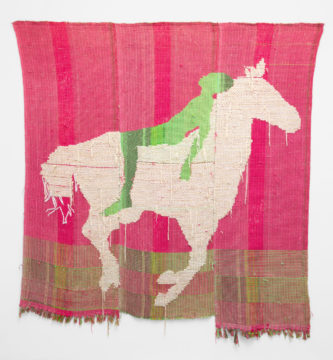
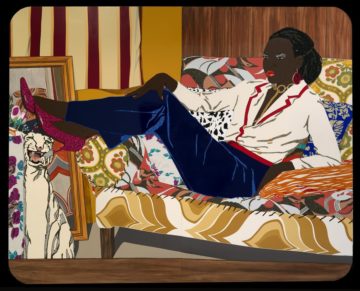
when no softness came, we looked for the tired in each other’s knees. Held it up by our fingertips, wove a bed where we might dream. When no softness came, I cried in the shower and gave my anger to the sea. I forgot I wasn’t alone until the spirit with nine hundred and sixteen selves came and goaded me into staying alive. Reclining backward on a moving horse, the figure in your tapestry looks like they’re doing an impossible thing. I recognized it as I walked through the gallery — the taut and tender of seeking rest in a place swirling with its impossibility.

The Black cowboys they show us in school, in movies and magazines, are upright, stoic. They look out at us defiantly from grayscale photographs, demanding we mark their presence in the expansionist and messy histories of the so-called American West. Growing up, I never thought to ask if Bass Reeves was sometimes tired after long days chasing horse thieves and wrangling cattle on Chickasaw land. If Stagecoach Mary ever just wanted to lie next to the woman she traveled over a thousand miles for and never deliver mail again. Diedrick, I guess what I’m trying to say is that the image of the horse — in visual art, in archives — sometimes seems irretrievably bound up with a mythos of masculinity and war, an imperative of action. That the back of a horse is so often the site of the most scripted discursive struggles over who we can be.

I’m thinking here of Kehinde Wiley’s painting of a Black Napoleon, a durag-clad man on a rearing horse, getting ready to lead invading armies across the Alps.

 More here.(Note: At least one post throughout the month of February will be devoted to Black History Month. The theme for 2022 is Black Health and Wellness)

Imagine another America: One where Black or brown people had attacked the Capitol

Chauncey Devega in Salon:

As you have been repeatedly reminded in recent days, one year ago, thousands of Donald Trump’s followers launched a lethal attack on the U.S. Capitol as part of a larger coup attempt whose obvious goal was to overturn America’s multiracial democracy and install their Great Leader as de facto dictator. Several people would died during the Capitol assault. More than 150 police officers and other law enforcement agents were injured.

Many in Trump’s attack force were armed, including with guns. Explosives were found nearby, with other deadly weapons cached not far away. It’s a mistake to call Trump’s attack force a “mob” or to describe them as engaging in a “riot.” Knowingly or not, they were part of a coordinated effort to overturn the results of the 2020 presidential election and overthrow American democracy.

In the year since then, we have begun to learn the scale of the larger fascist plot against democracy: It was nationwide, and conducted both by legal and extralegal means. At moments, a military coup appeared possible. Fox News and other right-wing propagandists systematically lied about the coup attempt, both as it was occurring and ever since. Right-wing street thugs and militias were activated. At least 1,000 Republican public officials were involved in planning and coordinating the coup, including members of Congress who volunteered to help facilitate a nullification of the 2020 election and a potential government takeover. There were detailed step-by-step plans as to how Vice President Mike Pence, in conjunction with Republican officials on the federal and state level, would reject the people’s will and keep Donald Trump in power.

More here.  (Note: At least one post throughout the month of February will be devoted to Black History Month. The theme for 2022 is Black Health and Wellness)

Saturday Poem

Face Time

On another night
in a hotel
in a room
in a city
flanked by all
that is unfamiliar
I am able to move
my finger along
a glass screen
once across
once vertical
& in seconds
see your mother
smiling in a room
that is our own
that is now so
far away but
also not so far
away at all
& she can place
the small screen
near her belly
& when I speak
I can see you
moving beneath
her skin as if you
knew that this
distance was
only temporary
& what a small
yet profound
joy it is to be some-
where that is not
with you but to
still be with you
& see your feet
dance beneath
her rib cage like
you knew we’d
both be dancing
together soon.

by Clint Smith
from the
Academy of American Poets, 8/11/2017


The Revolutionary Music Of J Dilla

Harmony Holiday at Bookforum:

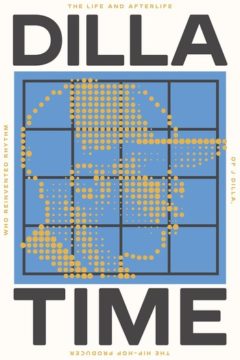
That hagiography can make a whole generation of listeners and griot consumers delusional or silly with lopsided obsession, but in the aftermath of Dilla’s time on the planet, the hero worship that bloomed felt more like a call to rigor and self-mastery. Dilla renewed a whole era’s trust in its ability to sound how it felt to be alive, to sound real and not like someone hoping to get famous off a gimmick. Our collective faith in singular greatness, like that of John Coltrane or Duke Ellington or Miles Davis or Billie Holiday, was renewed by Dilla. Dilla Time, the book, gives us a precise map of the influence we were trying to unravel then, and explains why it felt like mundane time had officially ended for a while. Mistakes were “thrilling to James,” Charnas writes. “They reminded him of messy house parties, and the interminable rehearsals of his childhood, and the discord of musical devotion in the sanctuary of Vernon Chapel, the unity made from the chaos of humans interacting.”
more here.

On The Stasi Poetry Circle

Anthony Quinn at The Guardian:

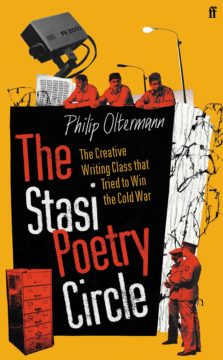
Philip Oltermann’s engrossing The Stasi Poetry Circle recounts a history so outlandish and unlikely that you feel it must be true. The author was inspired to investigate after running his own poetry group for pensioners at a day centre in London’s King’s Cross . How had a brutal spy agency alighted on poetry, “this vaguest of disciplines”, as a tool for training its employees? His research brings him into contact with soldiers and border guards who attended monthly meetings of “writing Chekists” at the Adlershof compound, a place so secret it didn’t even feature on a map of Berlin. Here, they would mull over the finer points of verse while bearing in mind the writer Friedrich Wolf’s stern credo: “The material of our age lies in front of us, hard as iron. Poets are working to forge it into a weapon. The worker has to pick up this weapon.” You can almost hear the sound of pens being chewed.

more here.

The Love Theme in Bringing Up Baby

Lesley Chow at The Current:

What’s exceptional about the film’s use of the tune is that it is a love song sung under duress, not for courtship but to appease the whims of a leopard named Baby and an equally unpredictable woman (Hepburn is as much a principle of chaos as any wild creature). The song must be performed in the exact style and pace that accommodates the leopard’s movements: a harried and desperate version when Baby wants to jump out of the car; a few dawdling, absent-minded phrases once he’s safely on the estate.
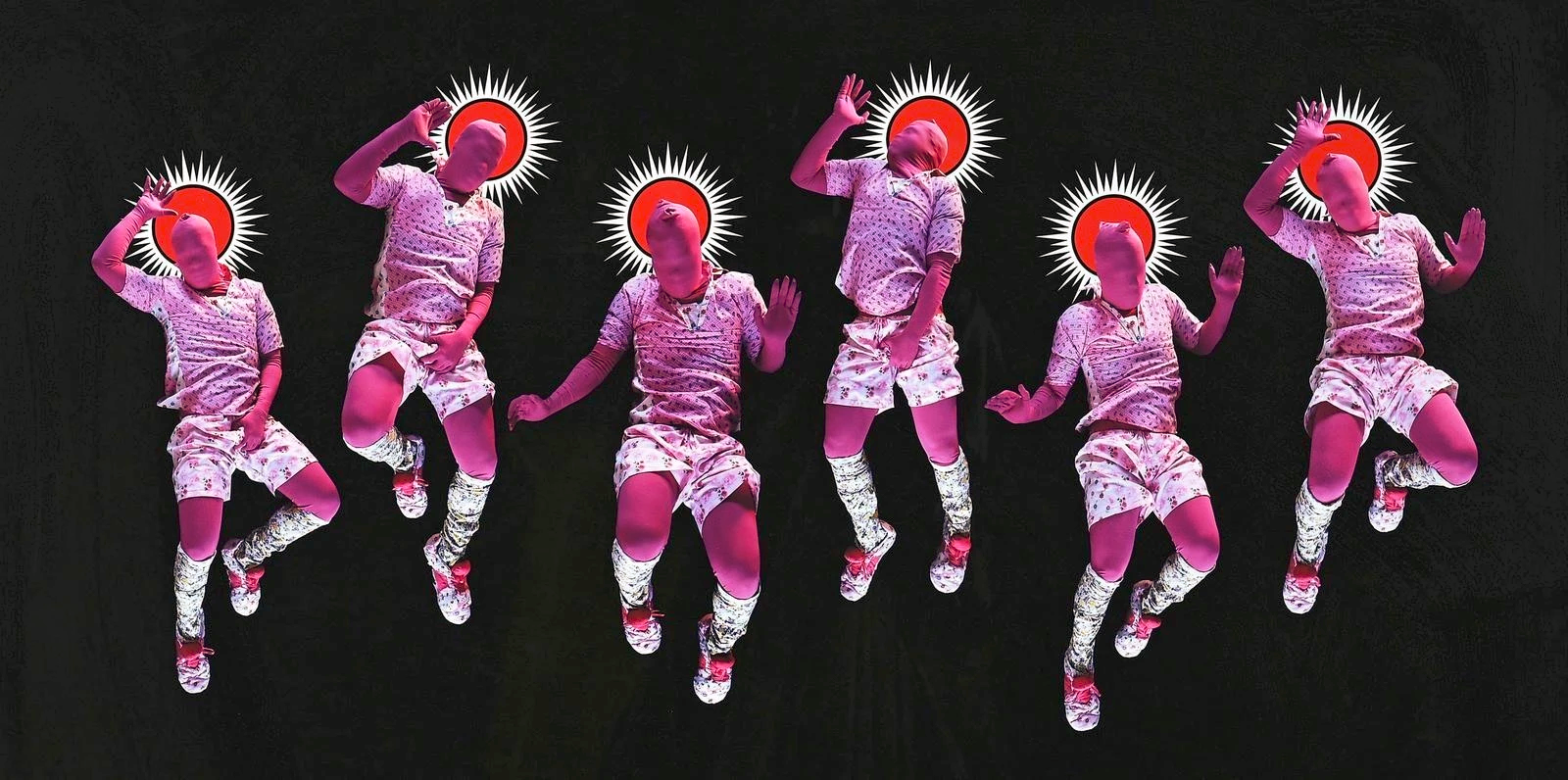
The song is finally sung in its entirety when Susan and David attempt to coax Baby down from a neighbor’s roof. For once, the couple are in sync. David is beginning to warm to Susan’s bizarre charms, and the two perform a serenade, complete with discreet harmonizing.

more here.

Friday, February 18, 2022

Six Lions

Yasmine Musa in the Hypocrite Reader:

  1. It was the second month of lockdown and the spring stretched before me like Arabic ice cream. My dad announced that he would be out all day, so I put two tabs of acid in a water bottle and headed out to the garden. A perfect time to pretend to enjoy solitude and figure out the riddles of the universe. I pulled out a big picnic blanket, sat beneath the shade of a young apple tree and waited for the new blooms of the cactus flower to speak.


  2. Before Yusef left Berlin and went back to Beirut, he gave me Letters to a Young Poet by Rilke. In it, Rilke wrote that the solitary man must remember to see the plants and animals, “patiently and willingly uniting and increasing and growing not out of physical suffering but bowing to necessities that are greater than pleasure and pain and more powerful than will withstanding.” And that is the secret of sweetness, the young poet must realize. I read the lines over and over again that spring and did not understand what Rilke meant, which is why I took the acid.
  3. Bringing the acid to Palestine was Khalil’s idea. Because Khalil is my best friend from high school and I live in Berlin, it was difficult to say no. I took Khalil’s request as a divine calling and asked another friend to lead me on the path of finding a drug dealer.

More here.

The Millions of People Stuck in Pandemic Limbo

Ed Yong in The Atlantic:

Close to 3 percent of U.S. adults take immunosuppressive drugs, either to treat cancers or autoimmune disorders or to stop their body from rejecting transplanted organs or stem cells. That makes at least 7 million immunocompromised people—a number that’s already larger than the populations of 36 states, without even including the millions more who have diseases that also hamper immunity, such as AIDS and at least 450 genetic disorders.

In the past, immunocompromised people lived with their higher risk of infection, but COVID represents a new threat that, for many, has further jeopardized their ability to be part of the world. From the very start of the pandemic, some commentators have floated the idea “that we can protect the vulnerable and everyone else can go on with their lives,” Seth Trueger, who is on immunosuppressants for an autoimmune complication of cancer, told me. “How’s that supposed to work?”

More here.

What Can Replace Free Markets? Groups Pledge $41 Million to Find Out

Steve Lohr in the New York Times:

Wages have been stagnant for most Americans for decades. Inequality has increased sharply. Globalization and technology have enriched some, but also fueled job losses and impoverished communities.
Those problems, many economists argue, are partly byproducts of government policies and corporate practices shaped by a set of ideas that championed free markets, free trade and a hands-off role for government. Its most common label is neoliberalism.

A group of philanthropists and academics say it is time for a new set of ideas to guide the economy. The William and Flora Hewlett Foundation and Omidyar Network announced on Wednesday that they were committing more than $41 million to economic and policy research focused on alternatives.

“Neoliberalism is dead, but we haven’t developed a replacement,” said Larry Kramer, president of the Hewlett Foundation.

More here.

Friday Poem

Blind Boone’s Pianola Blues

They said I wasn’t smooth enough
to beat their sharp machine.
That my style was obsolete,
that old rags had lost their gleam
and lunge. That all I had
left was a sucker punch
that couldn’t touch
their invisible piano man
with his wind-up gut-
less guts of paper rolls.
And so, I went and told them
that before the night was through
I’d prove what the son of an ex-
slave could do: I dared them
to put on their most twisty
tune. To play it double time
while I listened from another
room past the traffic sounds
of the avenue below.
To play it only once,
then to let me show
note for note how that scroll
made its roll through Chopin
or Bach or Beethoven’s best.
And if I failed to match my fingers
and ears with the spinning gears
of their invisible pneumatic piano
scholar, I’d pay them the price
of a thousand dollars.

And what was in it for Boone?
you might ask . . .
Read more »

Revisiting Black history through the eyes of Zora Neale Hurston

Arielle Gray in The Christian Science Monitor:

“Negro folklore is not a thing of the past,” Zora Neale Hurston wrote. “It is still in the making.”
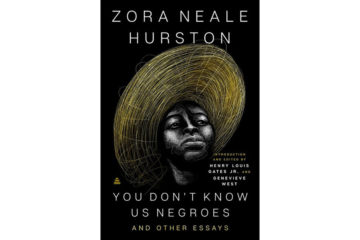
A new collection of Hurston’s essays and stories, edited and introduced by Henry Louis Gates Jr. and Genevieve West in “You Don’t Know Us Negroes and Other Essays,” seems to prove her right. One hundred years ago, Hurston was attending Howard University, a historically Black college, as a young writer. Now a century later, this collection re-contextualizes both Hurston the writer and Black life in American culture.

Born in 1890s Alabama, Hurston spent her life observing Black people in her community and beyond. Through both her fiction writing and her anthropology work, she developed new ways of conceptualizing Black language, music, and culture. She insisted on capturing the nuances of Black people in the Americas and often used Black vernacular, or what is now called African American Vernacular English, in her writing. Her 1937 novel, “Their Eyes Were Watching God,” was initially panned by her contemporaries, who criticized it for its primary use of AAVE.

More here. (Note: At least one post throughout the month of February will be devoted to Black History Month. The theme for 2022 is Black Health and Wellness)

Artists at the Center: Celebrating Black History Month

From Smithsonian:

SAAM: SAAM’s website and physical spaces hold artworks and resources aplenty to take a deep dive into the presence and impact of African American artists on our world. In honor of Black History Month, here are a few of our favorite videos of artists speaking about their life, work, and inspiration.

In search of more resources and art? SAAM is home to one of the most significant collections of works by African American artists in the world. Browse artworks, more videos, and other resources on our highlights page.

More here. (Note: At least one post throughout the month of February will be devoted to Black History Month. The theme for 2022 is Black Health and Wellness)

Thursday, February 17, 2022

The Fight Against Inflation Is Becoming a Class War

Leah Downey in Foreign Policy:

Central banks have started reacting to inflation. In February, the Bank of England raised its base rate for the second time in two months, and the U.S. Federal Reserve is expected to do the same at its meeting in March. (Interestingly, so has the Bank of Russia—even the threat of war can’t break the dominant contemporary central banking consensus.) Alongside this shift in monetary policy, the governor of the Bank of England, Andrew Bailey, has asked workers not to push for a pay rise despite the fact that Bailey himself rakes in a rather large annual salary.

The difference between Bailey’s own income and his request is a dissonance that many have enjoyed emphasizing, in part because it smacks of class conflict: Let the workers suffer while I sit in my castle full of gold bars. The problem with this particular site of class conflict, such as it is, is that there is no way for the working class to win. It’s a case of heads, the asset holders win, tails, the working class loses.

More here.

The urine revolution: how recycling pee could help to save the world

Chelsea Wald in Nature:

Scientists say that urine diversion would have huge environmental and public-health benefits if deployed on a large scale around the world. That’s in part because urine is rich in nutrients that, instead of polluting water bodies, could go towards fertilizing crops or feed into industrial processes. According to Simha’s estimates, humans produce enough urine to replace about one-quarter of current nitrogen and phosphorus fertilizers worldwide; it also contains potassium and many micronutrients (see ‘What’s in urine’). On top of that, not flushing urine down the drain could save vast amounts of water and reduce some of the strain on ageing and overloaded sewer systems.

More here.