
 Gordon Peake and Miranda Forsyth in Aeon:
We live in Canberra and Washington, DC, two stately capital cities that embody all the trappings and the ethos of the bureaucratic state. With their monuments, statues and symmetrical lines, the architects of both cities dreamt them as manifestations of the rational administrations that would work there. Imposing government buildings are the dominant architectural feature of both places, rising like redwood plantation trees in a planned forest. Irrespective of the decade or the party in charge, policies and plans that emerge from these buildings have the hallmarks of a planned forest, too: ordered, consistent and ostensibly guided by clear rules.
In terms of their scale, size and administrative grandeur, Canberra and Washington, DC are as different as can be from another city where we have both spent time: little Buka Town, the tumbledown, sun-scorched capital of Bougainville, presently an autonomous region of Papua New Guinea (and possibly soon the world’s newest country, after a 2019 referendum on independence, in which 97.7 per cent of the population voted in favour). In Buka, there is no capacious national repository to store administrative documents: the Bougainville government’s archives are a rusty-red shipping container into which papers get chucked periodically.
Ironically, though, it was in Buka that we found ourselves constantly bumping into the ghost of Max Weber, considered the father of bureaucracy (although he himself might bristle at that designation).
More here.
 When my parents first told me I was going to Hindu camp, I was not happy. And, to be honest, I was more than a little scared. My parents claimed they knew what was best for me, vom. Most of my summer vacations were spent back in India with family, so it was almost a treat to be able to stay home for once. I’d miss swimming at Park N Pool, riding bikes to Dairy Queen and picnicking at Idlewild Park. Why would I want my perfect summer in the ‘burbs to be interrupted by some stupid camp where I wouldn’t know anyone? Would there be bears? And even more terrifying, would there be cute boys?
 Steven Preister’s house in Washington, D.C. is a piece of American history, a gorgeous 110-year-old colonial with wooden columns and a front porch, perfect for relaxing in the summer. But Preister, who has owned it for almost four decades, is deeply concerned about the environment, so in 2014 he added something very modern: solar panels. First, he mounted panels on the back of the house, and they worked nicely. Then he decided to add more on the front, facing the street, and applied to the city for a permit.
 Marina Herlop
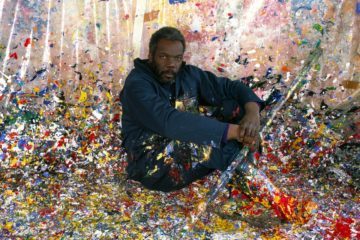 His huge Technicolor paintings, draped without frames, crossed over into sculpture — tabernacles to fearlessness and radicality. Hung from the ceilings or tacked to the walls, they looked like canvas mountain ranges or gigantic tents and huts, marching cities on the plain.
 By the end of the twentieth century, a small number of international institutions had come to wield great influence over the domestic economic policies of many states around the world. The International Monetary Fund (IMF) and World Bank, in particular, made assistance to member states conditional on a broad suite of reforms, often with far-reaching political and social consequences. From Africa to Latin America to Asia, loans were tied to the balancing of government budgets, the privatization of state-owned industries, the removal of regulations, and the lowering of tariffs.
 Despite thousands of years of research and an unending fascination with marine creatures, humans have explored only
  The series includes works that are part of Anthology Film Archives’ Essential Cinema collection; many of these show at Anthology about once a year. But many do not. This is a rare opportunity to see, for example, Jack Smith’s unfinished Normal Love—although it won’t be the adventure it was when Smith himself projected it, narrated it, and once forgot the take-up reel so the film (camera original) unspooled all over the floor. At 120 minutes, it occupies the entirety of Program Six, and on Saturday plays back-to-back with Smith’s masterpiece, Flaming Creatures, and Ken Jacobs’s Blonde Cobra, a film for which the term “underground” could have been invented. Among other rarities: Nathaniel Dorsky’s lyrical Ingreen, sharing a bill with Andrew Meyer’s Shades and Drumbeats and one of the most influential films in the history of gay cinema, Gregory Markopoulos’s Twice a Man. If you are unaware of the degree to which the history of avant-garde cinema is inextricable from the history of LGBTQ+ cinema, the films just mentioned—along with Kenneth Anger’s Scorpio Rising, Andy Warhol’s Blow Job and Screen Tests (Reel 16), and Barbara Rubin’s Christmas on Earth—make the case.
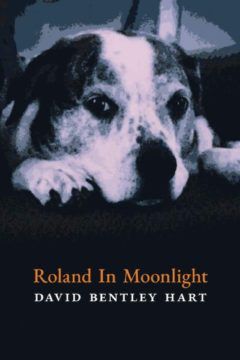 INCLUDED AMONG THE great literary felines would be the ninth-century Pangur Bán, written about by an Irish monk of Reichenau Abbey who enthused that his pet was “the master of the work which he does every day”; the witch-queen Grimalkin in William Baldwin’s 1561 novel, Beware the Cat, where “birds and beasts” have “the power of reason”; Montaigne’s kitten of which he asked, “When I play with my cat, how do I know she is not playing with me?”; Dr. Johnson’s beloved Hodge, of whom Boswell wrote that the great lexicographer “used to go out and buy oysters [for him], lest the servants having that trouble should take a dislike to the poor creature”; and of course T. S. Eliot’s splendiferous Mr. Mistoffelees.
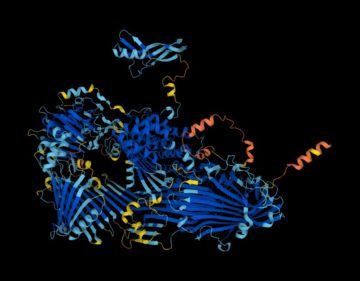 Researchers have used AlphaFold — the revolutionary artificial-intelligence (AI) network — to predict the structures of more than 200 million proteins from some 1 million species, covering almost every known protein on the planet.
 Some analysts now fear that the long decline of interstate war may be about to reverse. In an article for The Economist published shortly before the Russian invasion, the Israeli writer Yuval Noah Harari declared the decline in international war to be “the greatest political and moral achievement of modern civilization.” But he also worried that a war in Ukraine could bring about “a return to the law of the jungle.” In an