
Yellow
I’m wearing my yellow robe, drinking coffee out of a yellow mug that has a
rooster on it. When I take coffee into my mouth, I hold off from swallowing
and let my tongue believe it’s taking a luxurious bath. Traffic swooshes
down the street. People are busy being busy. For hours, I’ve been planning
a trip to the end of the driveway to pick up the newspaper. Ravens bicker
with each other out in the yard. The cats circle my chair, beg to be let out to
murder. Each day we inch our way toward death. One day, without knowing
it, we buy the clothes we’ll be buried in. We smile for a camera that snaps
the shot that’ll be used for our obituary. I’ll probably die in this robe, but
until then I’m going to eat some waffles that come in a box that’s also
yellow. Often, when children draw the sun, they’ll either use a yellow or
orange crayon. The older, more advanced children will use both. In
kindergarten, there was this kid who drew his suns in big, blood-red circles.
The teacher once asked him why he chose red for his suns, and he said,
“This is how I see it. This is how it is in my world.”
—Joshua Michael Stewart
from Love Something
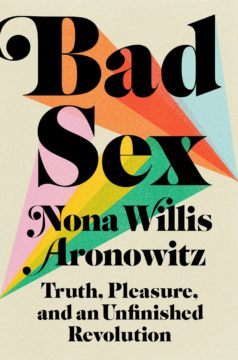 For Ellen Willis, feminism represented the possibility of being defiantly, boldly herself. Willis wasn’t so concerned with fitting into a single political camp; she loved, for example, rock and roll, even songs that had outrageously misogynistic lyrics. “Music that boldly and aggressively laid out what the singer wanted, loved, hated,” she wrote in an essay about bands such as the Sex Pistols and Ramones, “challenged me to do the same.” Meanwhile, she was bored by the “wimpiness” of milder, mellower, bands, including those that were explicitly feminist. Feminism allowed her to sort through these messy and incongruous pleasures freed from shame; to relish when her unruly feelings revealed a peculiar, unique kernel of self.
 Wilderson and Hartman insist that Afropessimism is not a politics (ARA 42–43, 56–57; SOS 65), but that demurral is either naïve or disingenuous. Counsel against pursuit of solidarities with nonblacks is a political stance and a potentially quite consequential one at that. And Afropessimism’s groupist focus proceeds from a class politics that represents the perspectives and concerns of a narrow stratum as those of the entire racialized population. Wilderson displays this class perspective in his romanticization of “Black suffering” (AP 328–331f).
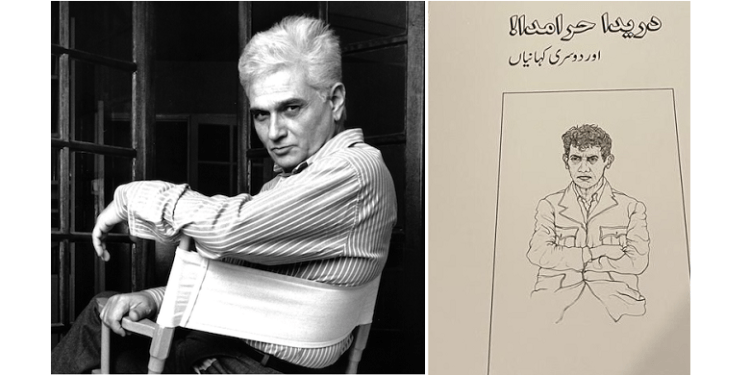 The title story of Julien’s short story collection Derrida Haramda! introduces us to Shahid Wirk (or, as he is lovingly called by his friends, Sheeda) from Sheikhupura, who writes a surreal novel “Nazia” inspired by André Breton’s iconic surrealist work Nadja. Shahid’s novel is as an absurd piece of writing about a strange woman who haunts the streets of Sheikhupura. The narrator follows the woman at night, walking the city’s empty streets, and as he walks and walks, he is slowly confronted by the alienation he feels in the city, whose streets have emptied as if the city had been wiped clean of humans and animals by a poisonous gas. Julien’s stories often engage these peculiar and, at times, monstrous relationships and affiliations between European and South Asian creative work.
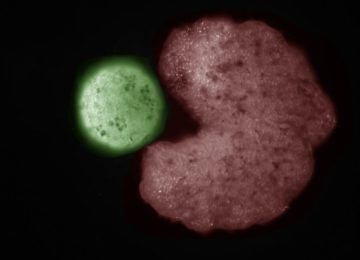 In one of the most dramatic demonstrations to date that cells are capable of more than we had imagined, the biologist Michael Levin of Tufts University in Medford, Massachusetts and his colleagues have
 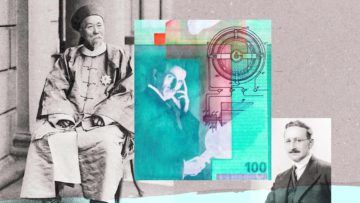 So argues
 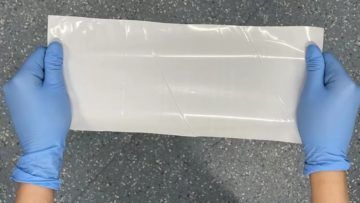 Scientists have developed a virus-killing plastic that could make it harder for bugs, including Covid, to spread in hospitals and care homes. The team at Queen’s University Belfast say their plastic film is cheap and could be fashioned into protective gear such as aprons. It works by reacting with light to release chemicals that break the virus. The study showed it could kill viruses by the million, even in tough species which linger on clothes and surfaces. The research was accelerated as part of the UK’s response to the Covid pandemic. Studies had shown the Covid virus
 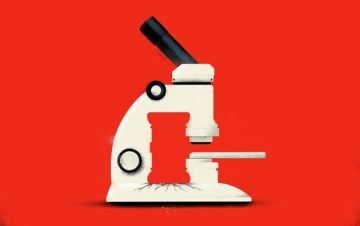 In late June, the US Supreme Court issued a trio of landmark decisions that repealed the right to abortion, loosened gun restrictions and
 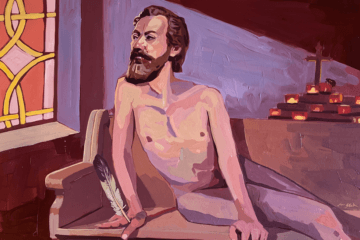 In her exquisitely written, perceptive, and moving Super-Infinite: The Transformations of John Donne (FSG, 2022), the British scholar Katherine Rundell argues that Donne’s “writing is itself a kind of alchemy: a mix of unlikely ingredients which spark into gold.” No 17th-century poet still reads quite as shockingly new as Donne does. Not
  So many accounts of Chekhov’s death, many of them exaggerated, some outright bogus. The only indisputable thing is that he died at forty-four. That’s etched in stone in Moscow. I like to read them anyway. I’m not alone. Chekhov death fanatics abound.
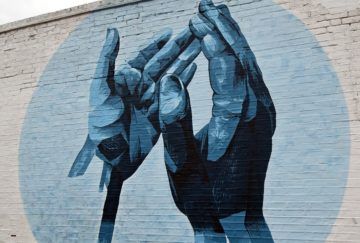 Most of us have struggled to maintain our mental well-being throughout the COVID-19 pandemic. Surrounded by fear and apprehension, it’s been hard to keep hope alive. In my experience, those who have managed to find ways to feel useful have fared better than most. I was lucky: well before the sudden appearance of COVID-19, I had already been writing about our shared forms of vulnerability, global interdependencies, and the need to place the complexities of care at the very heart of politics. Even timelier, four friends had joined me to study our culture’s historic refusal to value care work. Our resulting small Care Collective quickly produced a book for Verso, The Care Manifesto (2020), keeping us all busier than ever, as we connected with others around the world who were also addressing the politics of care. As we developed our vision of a truly caring world, we focused on how governments, municipalities, and media outlets might become more caring, working to promote collective joy rather than their current narrow and duplicitous concern with individual aspiration, knowing that so many will inescapably flounder. Understanding that we all depend on each other, and nurturing rather than denying our interdependencies, encourages us all to work to cultivate a world in which each of us can not only live, but thrive.
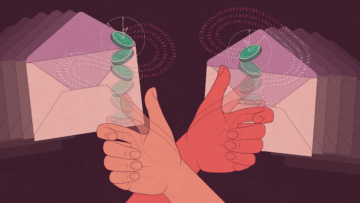 If someone tells you a fact you already know, they’ve essentially told you nothing at all. Whereas if they impart a secret, it’s fair to say something has really been communicated.
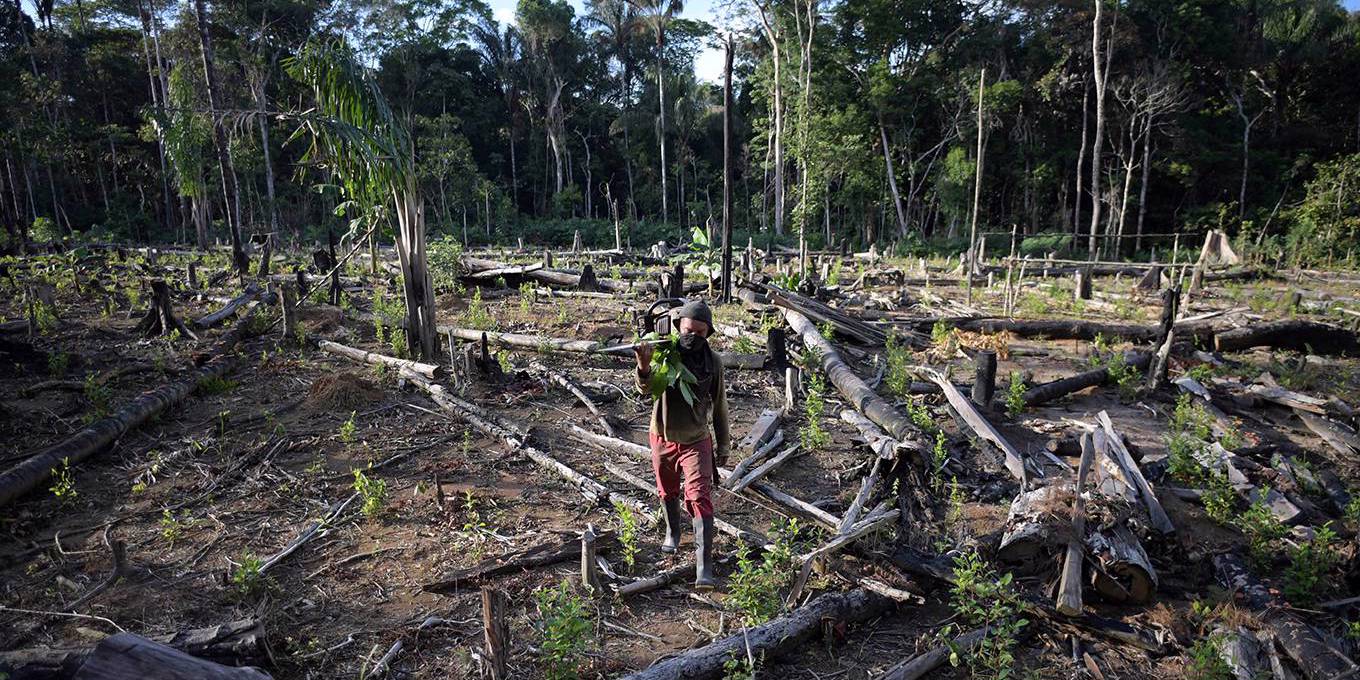 Overcoming the risk of “immiserizing” growth – an increase in aggregate national output that results in a net decline in national welfare – has been a perennial challenge as countries pursue economic development. It is also proving to be a major roadblock to achieving greater global income convergence.
 IS A GAS GUZZLER
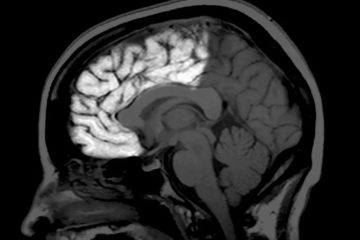 Scientists have discovered a glitch in our DNA that may have helped set the minds of our ancestors apart from those of Neanderthals and other extinct relatives. The mutation, which arose in the past few hundred thousand years, spurs the development of more neurons in the part of the brain that we use for our most complex forms of thought, according to a new