Herb Brody in Nature:
 Sad times are inevitable, and most people eventually rally. But clinical depression is different, and more brutal. All sense of well-being evaporates; life can seem not worth the trouble. According to one estimate, more than 60% of people worldwide who have attempted suicide have a depressive disorder (S. Borentain et al. BMC Psychiatry 20, 384; 2020). Antidepressant drugs are commonly prescribed as treatment, but none is universally helpful. Other types of therapy are beginning to enter the scene, from psychedelic compounds such as psilocybin to implanted devices that zap the brain with pulses of electricity.
The causes of depression are manifold and complex. But biologically definable factors are starting to come to light. One theory that is gaining support is that the culprit might be a slowdown in nerve growth — meaning that measures that encourage neurons to form could help to keep depression at bay. Obesity has been found to be both a cause and a consequence of depression in a vicious circle.
More here.

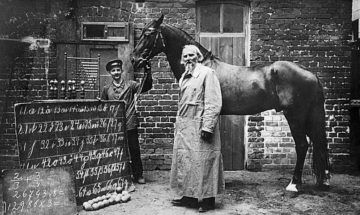
 The United States may regard itself as a “
 For humans, biologically speaking, soul mates are entirely real. But just like all relationships, soul mates can be complicated. Of course, there isn’t a scientifically agreed-upon definition for “soul mate.” But humans are in a small club in the animal kingdom that can form long-term relationships. I’m not talking about sexual monogamy. Humans evolved with the neurocircuitry to see another person as special. We have the capacity to single someone out from the crowd, elevate them above all others and then spend decades with them.
 At its height in the 1840s, the West African kingdom of
 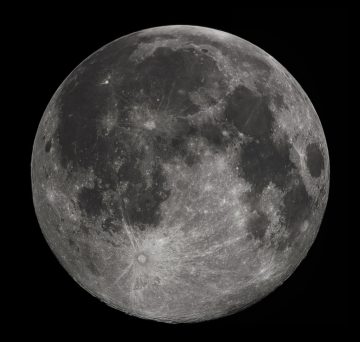 Marco D’Eramo in Sidecar:
 John Burn-Murdoch in the FT (image © Bloomberg):
 Robert Scott in the LA Review of Books:
 W
W The grand title of Andrea Wulf’s new book is wonderfully sneaky — at least that’s how I chose to read it, considering that “Magnificent Rebels” happens to recount plenty of unmagnificent squabbling among a coterie of extremely fallible humans.