Iran’s moment of truth: what will it take for the people to topple the regime?

Christopher de Bellaigue in The Guardian:
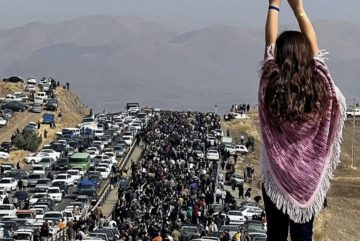
For the past 12 weeks, revolutionary sentiment has been coursing through the cities and towns of the Persian plateau. The agitation was triggered by the death of Mahsa Amini, a young Kurdish woman, on 16 September after she was arrested by the morality police in Tehran. From the outset the movement had a feminist character, but it has also united citizens of different classes and ethnicities around a shared desire to see the back of the Islamic Republic. Iran has known numerous protest movements over the past decade and a half, and the nation’s supreme leader, Ayatollah Ali Khamenei, has comfortably suppressed each one with a combination of severity and deft exploitation of divisions within the opposition. This time, however, the resilience and unity shown by the regime’s opponents have consigned the old pattern of episodic unrest to the past. Iran has entered a period of rolling protest in which the Islamic Republic must defend itself against wave upon wave of public anger.

In their retaliation against the protesters, the security forces have killed at least 448 people, including 60 children and 29 women, and made up to 17,000 arrests.

More here.

36 Answers to “What Is the Value of Philosophy?”

00:00 – Jonathan Schaffer 01:34 – Timothy Williamson 06:11 – Michael Slote 09:19 – Alex Rosenberg 10:48 – Benjamin Mitchell-Yellin 14:36 – Susanna Siegel 18:08 – Frank Jackson 21:45 – Stanley Fish 25:33 – Benj Hellie 31:12 – Arif Ahmed 33:57 – Joshua Rasmussen 35:58 – Christopher Peacocke 36:42 – Eric Sampson 37:52 – Terence Horgan 41:08 – Michael Huemer 44:08 – Owen Flanagan 46:33 – Brian Bix 48:15 – Mark Balaguer 51:04 – Paul Weirich 52:35 – Roy Sorensen 54:47 – Don Loeb 56:54 – Michael Walzer 1:00:22 – Alex Worsnip 1:04:24 – Pete Mandik 1:12:37 – Manuel Vargas 1:17:10 – Tyler Burge 1:22:54 – Linda Zagzebski 1:24:58 – Christopher Kaczor 1:26:09 – Avery Archer 1:30:47 – Brian Skyrms 1:31:38 – Herman Cappelen 1:36:58 – Tim Maudlin 1:40:54 – Barbara Partee 1:47:59 – Manuel Garcia-Carpintero 1:58:10 – Steven Pinker 2:01:49 – Kendall Walton

7th Nerve: A hi-tech medical exam draws its subject back to a more archaic, essential experience

Carol Rumens in The Guardian:

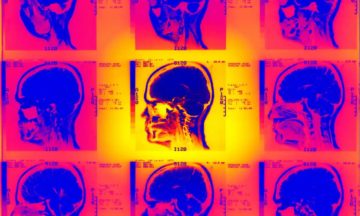
Bell’s palsy is a neurological condition resulting from damage to the seventh cranial nerve, and typified by partial facial paralysis and pain on one side of the head.
Show me your teeth. Can you lift your arms?
Try to smile. Close your eyes. Swallow.
Dive into the dark water. Lie still
while the machine passes around you
and a voice reaches you from another room
where music is playing.
Is it just that side?

…Creatures real and imaginary thread through the landscapes of Goliat, the recently published second collection by the Welsh poet Rhiannon Hooson. There are roe deer, feral cats and, in the title poem, endangered whales (Goliat is an oilfield in the Barents Sea). Gentle monsters and combination-species may appear – stag-boy, rat-boy, the occasional mermaid or faun. This week’s poem also engages with the magic realism of metamorphosis, despite its real and human starting point, a possible diagnosis of Bell’s Palsy.

Traditionally, the number seven has magical associations. Stanza one, at seven lines the longest in the poem, begins the transformative process. It is bookended by short commands and questions from an unseen medical practitioner to a patient undergoing tests. The voice is unnerving, the actions and answers required intimately connected to simple human existence and needs. Threat is established. But a new register enters the third line: “Dive into the dark water.” From this point on, 7th Nerve becomes a kind of duet, diminishing the clash between the voice of the medic and the voice of the speaker-to-self. Between them they alter the course and meaning of the poem.

More here.

What you need to know about the U.S. fusion energy breakthrough

Shannon Osaka in The Washington Post:

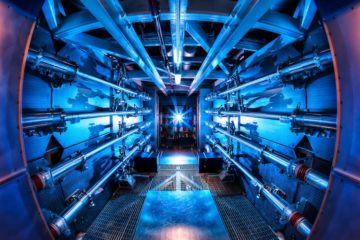
Existing nuclear power plants work through fission — splitting apart heavy atoms to create energy. In fission, a neutron collides with a heavy uranium atom, splitting it into lighter atoms and releasing a lot of heat and energy at the same time. Fusion, on the other hand, works in the opposite way — it involves smushing two atoms (often two hydrogen atoms) together to create a new element (often helium), in the same way that stars creates energy. In that process, the two hydrogen atoms lose a small amount of mass, which is converted to energy according to Einstein’s famous equation, E=mc². Because the speed of light is very, very fast — 300,000,000 meters per second — even a tiny amount of mass lost can result in a ton of energy.


Monday, December 12, 2022

Sunday, December 11, 2022

Nietzsche and the perils of denying your self

Guy Elgat at IAI News:

Should one be altruistic and act for the sake of others, even at a cost to oneself? Should one’s actions be free of any egoistic motivations? Is selflessness a virtue one ought to strive for and cultivate? To many of us the answer to such questions is so self-evident that even raising them would appear to be either a sign of moral obtuseness or an infantile attempt at provocation. For Friedrich Nietzsche, the 19th Century “immoralist” German philosopher, however, the answer to these questions was by no means straightforward and unequivocal. Rather, he believed that altruism and selflessness are neither virtues to be unconditionally pursued and celebrated nor obligations grounded in absolute morality. Moreover, he thought that other-regard (regard for others) is something to be practiced, if at all, with care and moderation; indeed, in some cases selflessness could pose a great danger or even be a sign of deep existential malaise.

More here.

New systems like chatGPT are enormously entertaining, and even mind-boggling, but also unreliable, and potentially dangerous

Gary Markus in his Substack newsletter:

Avatar of S. Abbas Raza created by Lensa AI.

The core of that threat comes from the combination of three facts:

• these systems are inherently unreliable, frequently making errors of both reasoning and fact, and prone to hallucination; ask them to explain why crushed porcelain is good in breast milk, and they may tell you that “porcelain can help to balance the nutritional content of the milk, providing the infant with the nutrients they need to help grow and develop”. (Because the systems are random, highly sensitive to context, and periodically updated, any given experiment may yield different results on different occasions.)

• they can easily be automated to generate misinformation at unprecedented scale.

• they cost almost nothing to operate, and so they are on a path to reducing the cost of generating disinformation to zero. Russian troll farms spent more than a million dollars a month in the 2016 election; nowadays you can get your own custom-trained large language model, for keeps, for less than $500,000. Soon the price will drop further.

More here.

Gareth Evans on Revitalizing the Struggle for Human Rights

Gareth Evans in Project Syndicate:

This century has not been kind to human-rights optimists, with 2022 being no exception. Many gains in the recognition and protection of the universal rights recognized in the post-World War II and post-Cold War years have stalled or been eroded. Russia’s criminal behavior in Ukraine is but the most recent example of a broader trend – made even more shocking by Russia’s status as a permanent member of the United Nations Security Council, which exists to uphold the very principles of international law that the Kremlin is now so brazenly violating.
Looking back, the high-water mark for human rights in the last two decades may have been the 2005 UN World Summit, when more than 150 heads of state and government unanimously embraced, as a universal principle, the concept of a “responsibility to protect” (R2P) populations against genocide and other mass atrocity crimes. We have had little to celebrate since then, as many recent surveys demonstrate.

More here.

From Russia with Love: Science and Ideology Then and Now

Anna I. Krylov in Heterodox STEM:

My everyday experiences as a chemistry professor at an American university in 2021 bring back memories from my school and university time in the USSR. Not good memories—more like Orwellian nightmares. I will compare my past and present experiences to illustrate the following parallels between the USSR and the US today: (i) the atmosphere of fear and self-censorship; (ii) the omnipresence of ideology (focusing on examples from science); (iii) an intolerance of dissenting opinions (i.e., suppression of ideas and people, censorship, and Newspeak); (iv) the use of social engineering to solve real and imagined problems.
More here.

Body Am I – the new science of self-consciousness

P D Smith in Guardian:

Moheb Costandi’s title is taken from Nietzsche’s philosophical masterpiece Thus Spoke Zarathustra: “The awakened and knowing say: body am I entirely, and nothing more; and soul is only the name for something about the body.” The radical rejection of mind-body dualism expressed in this sentence is shared today by most neuroscientists, who believe that the mind is a product of the brain. Indeed, this “neurocentric” view has been widely accepted and, writes Costandi, “the idea that we are our brains is now firmly established”.

Yet this has given rise to a new dualism, one in which the body and the brain are seen as separate entities. This is what Costandi – a science writer who trained as a neuroscientist – seeks to correct in his illuminating and detailed investigation into how our understanding of the brain and its role in shaping our sense of self has evolved across the last 200 years, and what today’s research in neuroscience, psychiatry and psychology tells us about the relationship between brain and body. He writes: “The brain does not exist in isolation; it is one part of a complex and dynamic system that also includes the body and the environment.”

More here.

Sunday Poem

Asking Questions of the Moon

….. Some blind girls
….. ask questions of the moon
….. and spirals of weeping
….. rise through the air

      …..  —Federico Garcia Lorca

As a boy, I stood guard in right field, lazily punching my glove,
keeping watch over the ballgame and the moon as it rose
from the infield, asking questions of the moon about the girl
with long blond hair in the back of the classroom, who sat with me
when no one else would, who talked to me when no one else would,
who laughed at my jokes when no one else would, until the day
her friend sat beside us and whispered to her behind that long hair,
and the girl asked me, as softly as she could: Are you a spic?
And I, with a hive of words in my head, could only think to say:
Yes, I am. She never spoke to me again, and as I thought of her
in the outfield, the moon fell from the sky, tore through the webbing
of my glove, and smacked me in the eye. Blinded, I wept, kicked
the moon at my feet, and loudly blamed the webbing of my glove.

by Martín Espada
from
Floaters
W.W. Norton & Company, 2021

Trump’s 2024 Campaign So Far Is an Epic Act of Self-Sabotage

Susan Glasser in The New Yorker:

The official campaign for the 2024 Republican Presidential nomination is barely three weeks old, but there is one clear takeaway so far: Donald Trump is running against himself—and losing. From his low-energy announcement speech at Mar-a-Lago to his dinner with the Hitler-praising Kanye West and the white supremacist Nick Fuentes, Trump has courted more controversy than votes since launching his bid in November. He has held no campaign rallies and hired no campaign manager. He has hosted a QAnon conspiracy theorist and helped raise money for the indicted insurrectionists of January 6th. More classified items have been found in his possession, and his Trump Organization was convicted in New York of a major tax-fraud scheme. He has scared away neither prospective opponents nor prosecutors, and, while openly courting extremists, he seems to be running on a campaign platform that is somehow even more nakedly driven by self-interest than his previous two bids. Just last week, he suggested jettisoning the Constitution so he could be reinstated to the office he was thrown out of by the voters in 2020. “A Massive Fraud of this type and magnitude allows for the termination of all rules, regulations, and articles, even those found in the Constitution,” he wrote in a post on his social network, Truth Social.
The fact that he actually put his objections to the Constitution in writing is a classically Trumpian flourish—one that seems more likely to be used against him in a court of law than to win him any support.

More here.

Saturday, December 10, 2022

The Long American Counter-Revolution

David Waldstreicher in Boston Review:

U.S. history is a strange, exceptional field of play where, to paraphrase Garrison Keillor’s famous sign-off from Lake Wobegon, all the revolutions are strong, all the revolutionaries are kind, and even the civil wars are above average.

In the orthodox telling, there was only one revolution that mattered, after all. The fact that American revolutionaries won their independence in part because the French intervened in their British civil war has often been narrated as at most a useful irony. Certainly Africans or Natives had nothing to do with it, except as desperate fighters for their own marginal purposes: defined out of the story partly because they lost but mostly because, well, they were defined out of the story. Yet the century-long debate between “Progressive” (read: radical) versus “Whig” (liberal and conservative) historians about whether ordinary white people benefitted or whether elites did has begun to seem almost beside the point: there was more at stake for others than republicanism or nationhood.

The certainty that “the people” and their liberties triumphed and set the stage for future progress doesn’t seem sufficient as history anymore. Casting the U.S. Civil War as a second good revolution—a resolution of unfinished business that finally ended slavery (how stubborn it proved!) and created a real nation-state—leaves many questions unanswered. If Revolutionary-era ideas and Civil War identities are so powerful and bend so decisively toward justice, why are the wrong ones winning? No wonder the settler revolutionaries of 1776 realized that the first priority was spin—or as Thomas Jefferson put it so delicately in the Declaration of Independence, “a decent respect for the opinions of mankind.”

More here.

The Respect for Marriage Act Sets a Dangerous Precedent for Civil Rights

Katherine Franke in The Nation (Photo by Jim Watson / AFP via Getty Images):
State legislatures across the country put a target on the backs of LGBTQ people this year. Lawmakers introduced nearly 200 bills that would criminalize the health care LGBTQ people need and deserve, erase our history and culture, and render our very existence unspeakable. So, it came as somewhat of a surprise that the US Senate, and now the US House, passed a bill to secure marriage rights for same-sex couples. The Respect for Marriage Act requires the federal government to recognize the marriages of same-sex couples, and mandates that all states honor valid marriages from other states—specifically barring states from refusing to validate out-of-state marriages if the reason for doing so is the couple’s sex, race, ethnicity, or national origin. The bill now heads to President Biden for his signature.

The bill has an unusual provenance. When the Supreme Court overruled Roe v. Wade last June in Dobbs v. Whole Women’s Health, Justice Clarence Thomas wrote a concurrence that made explicit what was implied in Justice Alito’s majority opinion: By knocking the constitutional legs out from under the right to abortion, the court left nothing for the rights to contraception and same-sex marriage to stand on.

More here.

Geopolitics is for losers

Harold James in Aeon:

Today everyone talks geopolitics. The idea is infectious. It appears to come from nowhere. Twenty years ago, the term was exotic, and the meaning behind it quaint. The world was different then. In 2002, America Unrivaled – a book edited by my Princeton colleague, G John Ikenberry, the foremost exponent of the idea of liberal internationalism – asked why there was so little resistance from other countries to American power projection. That was when the momentum in the United States for an attack on Iraq was building up. The contributors argued that there was no balancing against the unipolar moment that had been created with the disintegration of the Soviet Union: in short, no geopolitics. That changed in the course of the 2000s, and the word ‘geopolitics’ began its road to a dominance of political discourse.

There are simple numerical indicators (see Figure 1 below). A compilation of all newspaper uses of ‘geopolitics’ in English-language publications shows a remarkable increase, in two surges, one after the 2007-08 global financial crisis, and the second after 2014-15, in the aftermath of Russia’s annexation of Crimea and the European refugee crisis that followed the Syrian war.

More here.

Money and the Climate Crisis

Mona Ali , Anna Gelpern, Avinash Persaud, Rishikesh Ram Bhandary, Brad Setser, and Adam Tooze in Phenomenal World’s The Polycrisis:

The conclusion of COP27 reflected persisting uncertainties around coordinated global action towards decarbonization. Major agreements—including the establishment of a loss and damage fund—were reached, but the burden of mounting debt among global South countries continued to limit climate ambition.

The second event convened by The Polycrisis begins with COP27 and tackles the larger constraints in the global financial system, the role of private finance and multilateral development banks, the possibilities of debt restructuring, and new avenues to rethink climate finance. The discussion featured Mona Ali, Rishikesh Ram Bhandary, Anna Gelpern, Avinash Persaud, and Brad Setser, and was moderated by Adam Tooze.

A recording of the event can be viewed here. This transcript has been lightly edited for length and clarity.

A conversation on climate and the global financial architecture

ADAM TOOZE: It seems to me that there are four key issues for us to discuss. The first is the question of sovereign debt restructuring. Looming over that is the role of private finance in addressing development issues, and climate finance issues in particular. Then there is the role of multinational financial institutions: the World Bank and the IMF. But the obvious place to start is with COP27, and where we’re at now.

Avinash, from your point of view, where do things stand, particularly with the Bridgetown Initiative? You and Barbados Prime Minister Mia Mottley have developed this clearly formulated program for a route out of the impasse we find ourselves in.

More here.

Hilma af Klint: The Painter As A Mystic

Madoc Cairns at The Guardian:

The voices in her head told Hilma af Klint she would be a great artist. They weren’t wrong. Born in 1862, she was unusual from an early age. Growing up in austere Lutheran Sweden, Af Klint studied art at university: a rare feat for a woman. Even less common was her insistence on practising as a professional after graduation. In the face of a society – and an art world – riddled with extreme misogyny, a quiet, conventional career in portraiture seemed the best she could hope for. But then, as Julia Voss reveals in her new biography, Af Klint started to receive messages from another world – and her life in this one was irrevocably altered.

In 1906, she began the construction of an extraordinary series of 1,200 paintings, which she continued until her death in 1944. Reproduced in colour in Voss’s book, the work is still novel, a century or so on. Which wouldn’t have surprised Af Klint. Her visions told her that she was making art for people of the future.

more here.