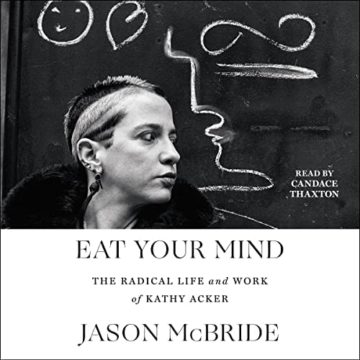
New Biography Of Kathy Acker

Dwight Garner at the NYT:

Kathy Acker — proto-punk, tough-stemmed flower, ransacker of texts, literary heir to William S. Burroughs and Gertrude Stein, sex worker, loather of establishments, striver for maximum impudence — was born into a soft life on Manhattan’s East Side in 1947.

Her father’s last name was Lehman, but she didn’t know that until she was grown. Her mother raised her with a stepfather whose surname was Alexander. The name on her birth certificate was Karen, but everyone called her Kathy.

The Alexanders kept poodles and dined together every night. There were private schools, a beach house on Long Island, summer camps in Maine. In high school Kathy was president of the U.N. club. She was presented as a debutante. Though she would struggle financially as an adult, she always wrote with a Montblanc fountain pen. Later she came into a trust fund.

more here.

Saturday Poem

Ode to the Soccer Ball Sailing Over a
Barbed-Wire Fence

…….. Tornillo. Has become the symbol of what may be the longest U.S. mass
 ……. detention of children not charged with crimes since the World War II
…….. internment of Japanese Americans.
  —Robert Moore, Texas Monthly

Praise Tornillo: word for screw in Spanish, word for jailer in English,
word for three thousand adolescent migrants incarcerated in a camp.

Praise the three thousand soccer balls gift-wrapped at Christmas,
as if raindrops in the desert inflated and bounced through the door.

Priase the soccer games rotating with a whistle every twenty minutes,
so three thousand adolescent migrants could take turns kicking a ball.

Priase the boys and girls who walked a thousand miles, blood caked
in their toes, yelling in Spanish and a dozen Mayan tongues on the field.

Praise the first teenager, brain ablaze like chili pepper Christmas lights,
to kick a soccer ball high over the chain-link and barbed wire-fence.

Praise the first teenager to scrawl a name and number on the face
of the ball, then boot it all the way to the dirt road on the other side.

Praise the smirk of teenagers at the jailer scooping up fugitive
soccer balls, jabbering about the ingratitude of teenagers at Christmas.

Praise the soccer ball sailing over the barbed-wire fence, white
and black like the moon, yellow like the sun, blue like the world.

Praise the soccer ball fling to the moon, flying to the sun, flying to other
worlds, flying to Antigua, where Starbucks buys coffee beans.

Praise the soccer ball bounding off the lawn at the White House,
thudding off the president’s head as he waves to absolutely no one.

Praise the piñata of the president’s head jellybeans pouring from his ears,
enough to feed three thousand adolescents incarcerated at Tornillo.

Praise Tornillo: word in spanish for adolescent migrant internment camp,
abandoned by jailers in the desert, liberated by a blizzard of soccer balls.

by Martín Espada
from
Floaters
W.W. Norton, 2021

Cells: Memories for My Mother

Anthony Cummins in The Guardian:

The Irish writer Gavin McCrea was supposed to be writing the third in a loose trilogy of novels about the development of communism, following Mrs Engels (2015), told in the voice of Friedrich Engels’s Irish wife, Lizzie Burns, and The Sisters Mao (2021), set in China and London during the 60s and 70s. By his own account in an interview last year, the next book will run from the fall of the Berlin Wall to the 2008 financial crash. But it got put on hold when, in February 2020, McCrea was the target of homophobic street violence while walking home. The painful memories that the attack stirred brought the structure of a memoir pouring out of him during a late-night writing session and he had no choice but to carry on.

Cells opens when McCrea returns to Dublin from a spell living abroad late in 2019. The advent of the pandemic adds an unforeseen dimension to his decision to stay and look after his widowed mother, a former care home worker who is becoming increasingly forgetful; under locked-down chit-chat about crosswords and vegetarian meals, he seethes with unlanced resentment that she didn’t do more when he was the victim of homophobic bullying at high school in the 1990s.
McCrea divides the narrative into seven episodes ranging fluently in time via nested memories told with reference to psychoanalysis (“According to Carl Jung… As Freud says…”) and art (the title refers, among other things, to Louise Bourgeois’s work of the same name). He writes with arresting precision, whether he’s introducing us to his mother’s flat (“There are 15 steps up, covered in an old carpet of beige, mauve, burgundy, and blue stripes… After six steps, I am in the seating area, which consists of three ill-matching bits of furniture”) or recounting a recurring dream about wetting himself in the presence of his agent’s son.

More here.

Study of Millions Finds Genetic Links to Smoking and Drinking

Katherine Irving in The Scientist:

A study surveying more than 3.4 million people has found nearly 4,000 genetic variants related to the use of alcohol and tobacco, scientists reported Wednesday (Dec 7) in Nature. More than 1,900 of the variants had not previously been linked to substance use behaviors, study coauthor and statistical geneticist at the Penn State College of Medicine Dajiang Liu states in a press release. The novel findings were aided by the fact that a fifth of the genomic samples came from individuals of non-European ancestry, Liu says.

“This is a great study. It demonstrates the power of using large samples from multiple ancestry groups in well-designed analyses,” geneticist and neuroscientist Joel Gelernter of Yale University tells New Scientist.

Although scientists have conducted similar genome-wide association studies (GWAS) in the past, Liu tells New Scientist that the majority of those surveys were conducted primarily on people of European descent. Although social situations and policies may influence a person’s inclination towards smoking and drinking, there is substantial evidence that a person’s genetic makeup may also predispose them towards alcohol and tobacco usage. “We’re at a stage where genetic discoveries are being translated into clinical [applications],” Liu tells Nature. “If we can forecast someones risk of developing nicotine or alcohol dependence using this information, we can intervene early and potentially prevent a lot of deaths.”

More here.

Friday, December 9, 2022

Can AI Write Authentic Poetry?

Keith Holyoak at The MIT Press Reader:

Artificial intelligence (AI) is in the process of changing the world and its societies in ways no one can fully predict. On the hazier side of the present horizon, there may come a tipping point at which AI surpasses the general intelligence of humans. (In various specific domains, notably mathematical calculation, the intersection point was passed decades ago.) Many people anticipate this technological moment, dubbed the Singularity, as a kind of Second Coming — though whether of a savior or of Yeats’s rough beast is less clear. Perhaps by constructing an artificial human, computer scientists will finally realize Mary Shelley’s vision.

Of all the actual and potential consequences of AI, surely the least significant is that AI programs are beginning to write poetry. But that effort happens to be the AI application most relevant to our theme. And in a certain sense, poetry may serve as a kind of canary in the coal mine — an early indicator of the extent to which AI promises (threatens?) to challenge humans as artistic creators. If AI can be a poet, what other previously human-only roles will it slip into?

More here.

Why the laws of physics don’t actually exist

Sankar Das Sarma in New Scientist:

I was recently reading an old article by string theorist Robbert Dijkgraaf in Quanta Magazine entitled “There are no laws of physics”. You might think it a bit odd for a physicist to argue that there are no laws of physics but I agree with him. In fact, not only do I agree with him, I think that my field is all the better for it. And I hope to convince you of this too.
First things first. What we often call laws of physics are really just consistent mathematical theories that seem to match some parts of nature. This is as true for Newton’s laws of motion as it is for Einstein’s theories of relativity, Schrödinger’s and Dirac’s equations in quantum physics or even string theory. So these aren’t really laws as such, but instead precise and consistent ways of describing the reality we see. This should be obvious from the fact that these laws are not static; they evolve as our empirical knowledge of the universe improves.

Here’s the thing. Despite many scientists viewing their role as uncovering these ultimate laws, I just don’t believe they exist.

More here.

The Long American Counter-Revolution

David Waldstreicher in the Boston Review:

In the orthodox telling, there was only one revolution that mattered, after all. The fact that American revolutionaries won their independence in part because the French intervened in their British civil war has often been narrated as at most a useful irony. Certainly Africans or Natives had nothing to do with it, except as desperate fighters for their own marginal purposes: defined out of the story partly because they lost but mostly because, well, they were defined out of the story. Yet the century-long debate between “Progressive” (read: radical) versus “Whig” (liberal and conservative) historians about whether ordinary white people benefitted or whether elites did has begun to seem almost beside the point: there was more at stake for others than republicanism or nationhood.

The certainty that “the people” and their liberties triumphed and set the stage for future progress doesn’t seem sufficient as history anymore.

More here.

Michael Heizer’s ‘City’: A Visit to a Ruin Being Born

Kirsten Swenson at Art in America:

The trip to Michael Heizer’s City begins in a city: Las Vegas, city of neon and glass, concrete and gravel. I cannot think about City without reference to its nearest desert metropolis, where water and social safety nets are in short supply. Most visitors to City will begin here. But to experience Land art is not simply to show up at a destination. It is a journey, a series of encounters with different landscapes and the systems that operate in and around them.

City has been on my mind since the early 2000s and my first visit to Heizer’s Double Negative (1969) for a Land art seminar I taught at the University of Nevada, Las Vegas. To experience that work, a visitor descends into deep notches blasted from a mesa about 60 miles northeast of Las Vegas, passing between ragged sandstone walls to emerge from the cut and take in sweeping views of the Virgin River Valley. Anyone can visit Double Negative, of which Heizer has said, “There is nothing there, yet it is still a sculpture.”

more here.

Nick Cave

Kate Mossman and Nick Cave at The New Statesman:

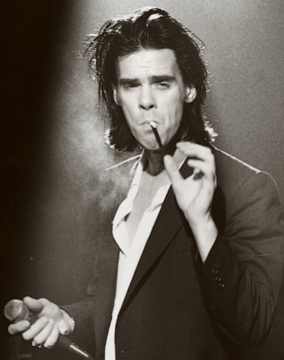
The former Archbishop of Canterbury, Rowan Williams, recently selected Faith, Hope and Carnage as his New Statesman book of the year. I asked him why he found it particularly moving. “There are various familiar ways of putting together the language of faith and the experience of appalling suffering,” he told me. “Some people simply treat faith as consolation: things look terrible but it’s going to turn out fine. Others say that the experience of atrocity negates all possible reference to the sacred or the divine. Nick Cave refuses both sorts of simplicity. For him, the extremity of pain and loss releases something; it pushes you over the edge of whatever limits you had taken for granted and uncovers a kind of imaginative energy, not always welcome.”

Cave’s book is perhaps unique in drawing connections between faith, grief and creativity. His God “lives here”, Williams told me, “where the God of the Book of Job or of Elie Wiesel or Dostoevsky lives, not consoling but overwhelming and generating. Not a rationale for suffering or an excuse for looking away but a resource for standing in the middle of it all without complete disintegration of mind and heart.”

more here.

Friday Poem

The Long Boat

When his boat snapped loose
from its mooring, under
the screaking of the gulls,
he tried at first to wave
to his dear ones on shore,
but in the rolling fog
they had already lost their faces.
Too tired even to choose
between jumping and calling,
somehow he felt absolved and free
of his burdens, those mottoes
stamped on his name-tag:
conscience, ambition, and all
that caring.
He was content to lie down
with the family ghosts
in the slop of his cradle,
buffeted by the storm,
endlessly drifting.
Peace! Peace!
To be rocked by the Infinite!
As if it didn’t matter
which way was home;
as if he didn’t know
he loved the earth so much
he wanted to stay forever.

by Stanley Kunitz
from
The Collected Poems

World’s Oldest DNA Discovered, Revealing Ancient Arctic Forest Full of Mastodons

Stephanie Pappas in Scientific American:

The oldest DNA ever recovered has revealed a remarkable two-million-year-old ecosystem in Greenland, including the presence of an unlikely explorer: the mastodon.
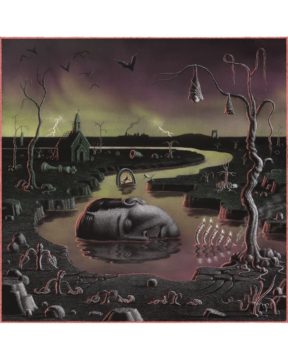
The DNA, found locked in sediments in a region called Peary Land at the farthest northern reaches of Greenland, shows what life was like in a much warmer period in Earth’s history. The landscape, which is now a harsh polar desert, once hosted trees, caribou and mastodons. Some of the plants and animals that thrived there are now found in Arctic environments, while others are now only found in more temperate boreal forests. “What we see is an ecosystem with no modern analogue,” says Eske Willerslev, an evolutionary geneticist at the University of Cambridge and senior author of the study, which was published in Nature.

Until now, the oldest DNA ever recovered came from a million-year-old mammoth tooth. The oldest DNA ever found in the environment—rather than in a fossil specimen—was also a million years old and came from marine sediments in Antarctica. The newly analyzed ancient DNA comes from a fossil-rich rock formation in Peary Land called Kap København, which preserves sediments from both land and a shallow ocean-side estuary. The formation, which geologists had previously dated to around two million years in age, has already yielded a trove of plant and insect fossils but almost no sign of mammals. The DNA analysis now reveals 102 different genera of plants, including 24 that have never been found fossilized in the formation, and nine animals, including horseshoe crabs, hares, geese and mastodons. That was “mind-blowing,” Willerslev says, because no one thought mastodons ranged that far north.

More here.

T. S. Eliot saw it coming

James Parker in The Atlantic:

Why is april the cruellest month? Why did the chicken cross the road? Why do people watch golf on television? The first question I can answer.

April is the cruellest month because we are stuck. We’ve stopped dead and we’re going rotten. We are living in the demesne of the crippled king, the Fisher King, where everything sickens and nothing adds up, where the imagination is in shreds, where dark fantasies enthrall us, where men and women are estranged from themselves and one another, and where the cyclical itch of springtime—the spasm in the earth; the sizzling bud; even the gentle, germinal rain—only reminds us how very, very far we are from being reborn. We will not be delivered from this, or not anytime soon. That’s why April is cruel. That’s why April is ironic. That’s why muddy old, sprouty old April, bustling around in her hedgerows, brings us down.

Imagine, if you will, a poem that incorporates the death of Queen Elizabeth II, the blowing up of the Kerch Bridge, Grindr, ketamine, The Purge, Lana Del Rey, the next three COVID variants, and the feeling you get when you can’t remember your Hulu password. Imagine that this poem—which also mysteriously contains all of recorded literature—is written in a form so splintered, so jumpy, but so eerily holistic that it resembles either a new branch of particle physics or a new religion: a new account, at any rate, of the relationships that underpin reality.

More here.

Thursday, December 8, 2022

Why cosmology may not end with a bang

David Kordahl in The New Atlantis:

Some sixty years ago, Arno Penzias and Robert Wilson were scraping pigeon droppings from a large radio antenna at Bell Labs in New Jersey. They were radio engineers, and their project was straightforward. They wanted to see if they could eliminate the persistent background noise in radio signals, and they supposed that capturing the pigeons roosting in the horn and cleaning it might help. They realized that it didn’t.

Today, the radio noise they detected has been identified as the cosmic microwave background, a subject of intense scientific scrutiny. The pigeon traps have been displayed as relics by the Smithsonian’s National Air and Space Museum.

More here.

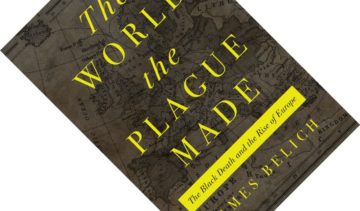
The World The Plague Made: The Black Death And The Rise Of Europe

Leon Vlieger at The Inquisitive Biologist:

The medieval bubonic plague pandemic was a major historical event. But what happened next? To give myself some grounding on this topic, I previously reviewed The Complete History of the Black Death. This provided detailed insights into the spread and mortality caused by the Black Death, which was only the first strike of the Second Plague Pandemic. With that month-long homework exercise in my pocket, I was ready to turn back to the book that send me down this plague-infested rabbit hole in the first place: The World the Plague Made by historian James Belich. One way to characterise this book is that it retells the history of Europe from 1350 onwards as if the plague mattered.
More here.

The decades long war waged by the two ruling parties against the working class

Chris Hedges in his Substack newsletter:

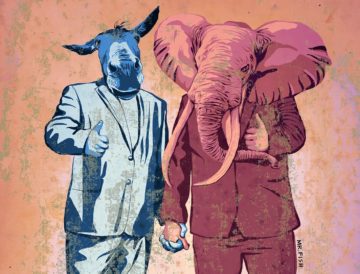
The Congressional decision to prohibit railroad workers from going on strike and force them to accept a contract that meets few of their demands is part of the class war that has defined American politics for decades. The two ruling political parties differ only in rhetoric. They are bonded in their determination to reduce wages; dismantle social programs, which the Bill Clinton administration did with welfare; and thwart unions and prohibit strikes, the only tool workers have to pressure employers. This latest move against the railroad unions, where working conditions have descended into a special kind of hell with massive layoffs, the denial of even a single day of paid sick leave, and punishing work schedules that include being forced to “always be on call,” is one more blow to the working class and our anemic democracy.

The rage by workers towards the Democratic Party, which once defended their interests, is legitimate, even if, at times, it is expressed by embracing proto-fascists and Donald Trump-like demagogues.

More here.