Stone
De piedra, sangre.
I make my own heaven. I drag it out of the streets, and
inhospitable terrains. I mixed “tabique”, brick, mortar with
my hands, kneading,
I need, to make my own heaven.
It is clandestine, in broad daylight.
It’s microwave popcorn, from Costco, because Costco can
cross the border as many times as it wants and it has never
been asked to go back to where it came from. Not in this
kitchen, scrubbed so clean, with bleach, that the roaches have
to ask permission to scatter out onto the floor.
Sulema and I, don’t flinch. She has figured me out. We know
we have lived some shit and now, it takes more than a
cockroach to keep us from moving, forward.
Fuck the roaches, the military, the long nights and even
longer days. There is popcorn to be made,
a courtyard of children waiting for it.
Baby girl walks in to check on our progress. She is waiting
impatiently for popcorn, the smell of butter making its way
around the shelter, La Casa.
The house is built on a solid foundation of Goodyear tires,
and unpacked, repacked, suitcases, unpacked, repacked plans.
Today, there is popcorn.
All that matters is today,
For my sake, not Sulema’s.
The flowerbeds, and the upside-down Christmas trees, drying
out in the sun are beautiful.
I will remember them, when I am warm by a campfire,
watching my children for signs of a chill.
I will remember them,
determined,
uneven steps, protruding out of a hillside, going wherever
they need to go.
Wherever they need to go.
There is no going back.
Sulema and I both know this, standing in the hot kitchen of
the TJ shelter, it is obvious.
It is a beautiful truth, it takes hesitation and beats it down,
into the floor.
We danced on it.
by Aideed Medina
from Split This Rock

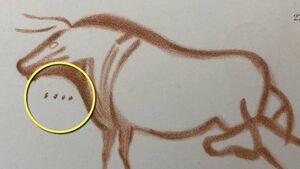 A London furniture conservator has been credited with a crucial discovery that has helped understand why Ice Age hunter-gatherers drew cave paintings.
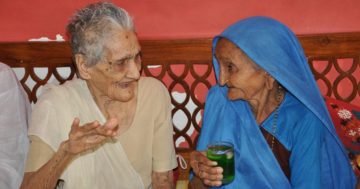 You may wonder about the focus on the need for social connections as one grows older, in this book. After all, isn’t friendship usually associated with youth? Education management expert Ravi Acharya would say no to that. After spending his working years in Pune and Ahmedabad, among other places, Acharya moved to Bengaluru. He is lucky to have two of his closest friends live on the same street. Acharya says we don’t realise the importance of actually talking to our friends, in a world dominated by conversations on WhatsApp, Facebook, and other social media. “We friends make it a point to meet once a month,” says Acharya, “and avoid conversations over WhatsApp unless necessary. Such social connections and making an effort toward being in touch is important for active ageing.”
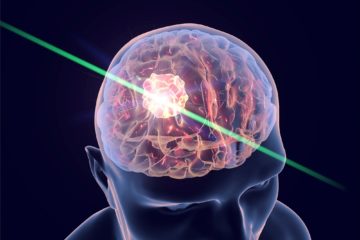 Scientists are harnessing a new way to turn cancer cells into potent, anti-cancer agents. In the latest work from the lab of Khalid Shah, MS, PhD, at
 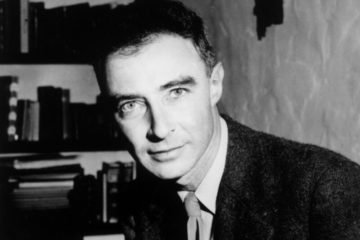 Nearly 70 years after having his security clearance revoked by the Atomic Energy Commission (AEC) due to suspicion of being a Soviet spy, Manhattan Project physicist
 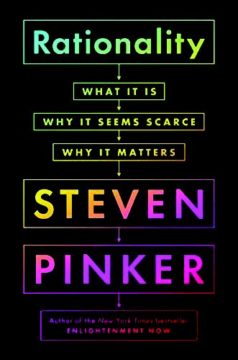 Just another run-of-the-mill, middle-of-the-road Pinker volume. Which is another way of saying it’s bloody marvelous. What a consummate intellectual this man is! Every one of his books is a bracing river of fluent readability to delight the non-specialist. Yet each one simultaneously earns its place as a major professional contribution to its own field. Grasp the fact that the field is different for each book, and you have the measure of this scholar. Steven Pinker’s professional expertise encompasses linguistics, psychology, history, philosophy, evolutionary theory—the list goes on. There’s even a book on how to write good English—for, sure enough, he is a master of that too.
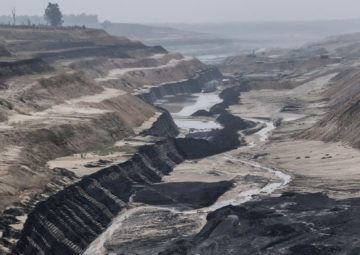 The village was located in the central Indian state of Chhattisgarh, on the edge of the dense Hasdeo Arand forest. One of India’s few pristine and contiguous tracts of forest, Hasdeo Arand sprawls across more than 1,500 sq km. The land is home to rare plants such as epiphytic orchids and smilax, endangered animals such as sloth bears and elephants, and sal trees so tall they seem to brush against the sky.
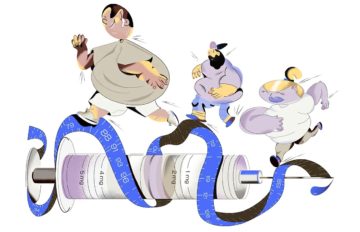 The hotel ballroom was packed to near capacity with scientists when Susan Yanovski arrived. Despite being 10 minutes early, she had to manoeuvre her way to one of the few empty seats near the back. The audience at the ObesityWeek conference in San Diego, California, in November 2022, was waiting to hear the results of a hotly anticipated drug trial. The presenters — researchers affiliated with pharmaceutical company Novo Nordisk, based in Bagsværd, Denmark — did not disappoint. They described the details of an investigation of a promising anti-obesity medication in teenagers, a group that is notoriously resistant to such treatment. The results astonished researchers: a weekly injection for almost 16 months, along with some lifestyle changes, reduced body weight by at least 20% in more than one-third of the participants
 C
C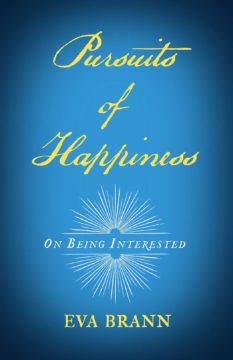 Brann’s new book sweeps across the vast range of things that hold her interest. It thus invites us to enjoy the life of the mind and to live from our highest selves. A thoughtful encounter with this book will make you, I swear, a better person. The book includes chapters on Thing-Love, the Aztecs, Athens, Jane Austen, Plato, Wisdom, the Idea of the Good. The first half provides an on-ramp to the chapter titled “On Being Interested,” which falls in the dead center of the book. This central chapter serves as more than a cog in the wheel: it is an ars poetica. Addressing issues of attention, focus, and interest itself, as well as how and where to deploy these functions throughout our lives, “Being Interested” offers a solution for any seeker intrigued by the notion that happiness is not an accident but a vocation. Brann characterizes the pursuit of happiness as “ontological optimism […] to be maintained in the face of reality’s recalcitrance.” In her 2010 book Homage to Americans: Mile-High Meditations, Close Readings, and Time-Spanning Speculations, Brann recounts her experience of waiting for a delayed flight at the Denver Airport. Rather than whining about the tedium and soul-sucking banality of the event, she turns her exquisite attention to the actual experience of “waiting.” Possessed of a consistent ability to enjoy, Brann seems literally incapable of boredom.
 IFC Films has released a
  One of the first things I learnt to say in Dutch was ‘we beat them to death with sticks’. Not exactly standard fare for the first week of language classes, but then again this wasn’t an ordinary language class. As a historian working with 16th- and 17th-century documents, I was taking a specialised class to learn to read the Dutch of the period – so, instead of learning how to talk about hobbies or ask directions to the train station, we jumped straight into texts from the so-called Golden Age of the Netherlands.
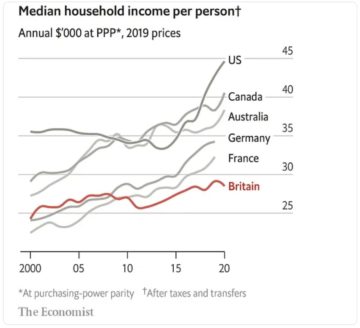 After a year of political turmoil and financial embarrassment, Britain ends 2022 shaken. There is a new spate of talk about national decline. Once again the UK is falling behind. The outlook is uncertain. It is symptomatic that Perry Anderson chose already in 2020, to author yet another gigantic essay for the