
Cameron Hudson in Persuasion:
 History is repeating itself in Sudan. Tensions between rival security factions, which spilled out last April into open conflict, have rapidly created the world’s largest displacement crisis and food security crisis. Nearly half of the country’s 50 million people are in desperate need of food aid that is not reaching them, either because of access constraints or because it is simply not available.
For those tracking events in the country, a seemingly endless thread of headlines and editorials lament this “forgotten conflict.” But this is the wrong framing. The crisis in Sudan is neither forgotten nor ignored. It is de-prioritized. And that is worse.
The fact is that we know far more about the unfolding crisis today than we did 20 years ago when the Darfur region first became a household name.
More here.
 T
T On August 16, 1918, a bookkeeper in Denver named George Eyser wrote a will. He was not married and had no children. And so it was to his only sibling, his sister Ottilie, with whom he lived in a two-story brick house at 420 Downing Street, that he bequeathed his property and possessions: money, the proceeds from an insurance policy, a gold watch and chain, a scrapbook that chronicled the nearly three decades he spent as an amateur gymnast, and his crowning glory—the six Olympic medals he won on a single October day in 1904.
 The difference between good art and bad art is that good art is subtle. Pakistan struggles to do subtle. There is certainly your everyday slapstick comedy, the tragic heroine, and the flippantly violent hero. But no, Pakistan is not at all good at subtle, which is why Sarmad Khoosat’s
  A
A  J
J For more than four years, reflexive partisan politics have derailed the search for the truth about a catastrophe that has touched us all. It has been estimated that
  After the murder of George Floyd in May 2020, former NBA player
  When Schwartz comes up in conversation today, two things are typically remarked of him. First, he is a man whose reputation has eclipsed his work, his stature as a poet having surrendered to the clamor for myth. Second, this myth is one of vertiginous and scandalous decline. Delmore Schwartz: an American tragedy. Both commonplaces have the unfortunate merit of being true.
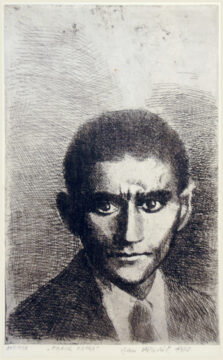 The coincidence of the centenary of Kafka’s death, on 3 June, and the publication of the first complete, uncensored
 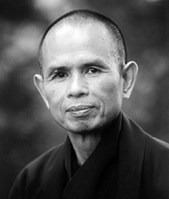 What are the most basic elements of love and how can we manifest them in our lives and our relationships? This is the question that Thich Nhat Hanh tackles in his short book, ‘True Love’. Looking at human love through the lens of Buddhist teaching, he breaks it down into four aspects: loving-kindness, compassion, joy and freedom and uses his direct and simple style to advise us how to put these elements to work in our own lives.
 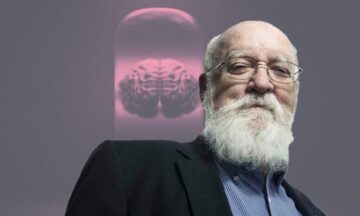 When Daniel Dennett’s essay collection “Brainstorms” was published in 1978, the interdisciplinary field of cognitive science was just emerging. Dennett was a young scholar who wanted to get philosophers out of their armchairs and into conversations with psychologists, linguists, and computer scientists. “I tried in ‘Brainstorms’ to write about the problems in language accessible to all serious thinkers, as jargon-free as possible, with lots of examples,” he writes in the preface to
  Scientists have successfully developed a new, controllable prosthetic extra thumb designed to enhance productivity.