
David Stromberg in The American Scholar:
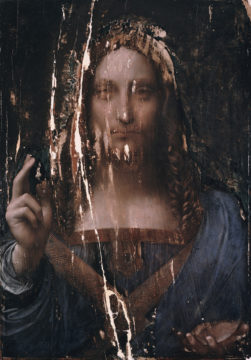 I got the call late on a summer afternoon. Yanai Segal, an artist I’ve known for years, asked me whether I’d heard of the Salvator Mundi—the painting attributed to Leonardo da Vinci that was lost for more than two centuries before resurfacing in New Orleans in 2005. I told him that I’d heard something of the story but that I didn’t remember the details. He had recently undertaken a project related to the painting, he said, and wanted to tell me about it. I was eager to hear more, but first I needed to remind myself of the basic facts. We agreed to speak again soon.
As I refreshed my memory in the following days, I learned that although there was considerable controversy about the history and legitimacy of the painting, there was some general consensus, too. The Salvator Mundi—“Savior of the World”—was most likely completed at the turn of the 16th century. An oil painting rendered on a walnut panel, it depicts Jesus offering a blessing with his right hand while holding an orb that represents Earth with his left.
More here.
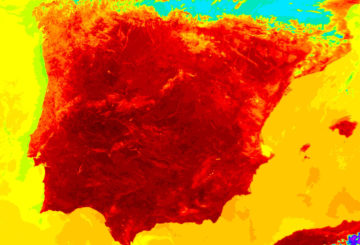 The trouble is not ignorance: we know that heat can kill. Humans have recognized the threat for millennia, and over the last two centuries they have scrutinized heat wave mortality to understand who is most at risk and to develop strategies to prevent those deaths. Still people die. Similarly, we have developed strategies that could moderate climate disaster due to global warming, but our fossil fuel
  Rapid progress in the development of artificial intelligence has been too rapid for many, including pioneers of the technology, who are now issuing dire warnings about the future of our economies, democracies, and humanity itself. But AI is hardly the first technological advance that has been portrayed as an existential threat.
 So are we really essentially the same animals as the early Homo sapiens hunting and gathering on the savannahs? Dartnell thinks so. “The fundamental aspects of what it means to be human – the hardware of our bodies and the software of our minds – haven’t changed.” This is, indeed, the assumption behind evolutionary psychology, which seeks to explain modern human behaviour in terms of what is hypothesised to have been adaptive for our cave-dwelling ancestors. But his mainframe-age metaphor of hardware and software is old hat and inaccurate. We now know that the human brain exhibits substantial neuroplasticity: in other words, the “software” can change the “hardware” it’s running on, as is not the case for any actual computer.
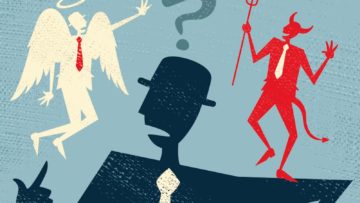 No, it’s not. Participants in our studies tell us that people are less kind, less nice, less honest, less good, that this has been happening their whole lives, that it’s been happening recently, and that it’s been happening everywhere. Which should make it pretty easy to find some evidence of this somewhere, and we find no evidence of it anywhere. In fact, we find pretty good evidence that it
  Dear Reader,
 The actor, 90, has long harboured the desire to write a thriller, and was inspired to do so by a news item, says his UK publisher, Hodder’s Rowena Webb, about “the discovery of uranium by workers on a dump in London’s East End”. The novel’s lead character is DCI Harry Taylor, who, according to the synopsis, is “called in when just such a package is found, mysteriously abandoned in Stepney and stolen before the police can reclaim it. As security agencies around the world go to red alert, it is former SAS man Harry and his small team from the Met who must race against time to find who has the nuclear material and what they plan to do with it.”
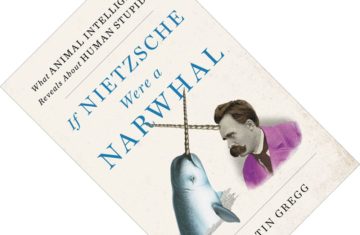 From the absurdist Terry-Gilliam-style cover to the provocative subtitle to my enjoyment of his previous book
  Cormac McCarthy
 Travelers to Unimaginable Lands is that rarity: true biblio-therapy. Lucid, mature, wise, with hardly a wasted word, it not only deepens our understanding of what transpires as we care for a loved one with Alzheimer’s, it also has the potential to be powerfully therapeutic, offering the kind of support and reorientation so essential to the millions of people struggling with the long, often agonizing leave-taking of loved ones stricken with the dreaded disease. The book is based on a profound insight: the concept of “dementia blindness,” which identifies a singular problem of caring for people with dementia disorders—one that has generally escaped notice but, once understood, may make a significant difference for many caregivers.
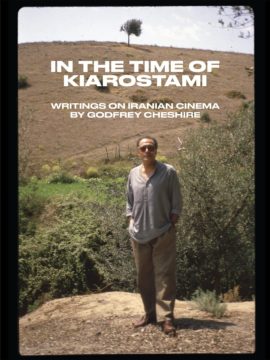 In theory, a fundamentalist religious dictatorship should not be a hospitable environment for an extraordinary artistic flowering whose treasures continue—four decades later—to please, confound, and reinvent themselves to audiences around the world. Yet this seems to be exactly the case with Iran’s cinematic output since 1979, when Ayatollah Ruhollah Khomeini and his followers consolidated power in the wake of the Shah’s departure. (The Shah was himself a tyrant, but of the kind who sought to project a modern and art-friendly image.) We are all familiar with artists, writers, and filmmakers circumventing official and de facto censors to produce subversive masterpieces. But the consistency of Iranian cinema’s march across the world stage over the last 30-plus years suggests that something more powerful than individual creativity is at play—rather, a kind of relentless cultural force inexorably punching through whatever obstacles an authoritarian government places in its way.
 After years of official pronouncements to the contrary, significant new evidence has emerged that strengthens the case that the SARS-CoV-2 virus accidentally escaped from the Wuhan Institute of Virology (WIV).
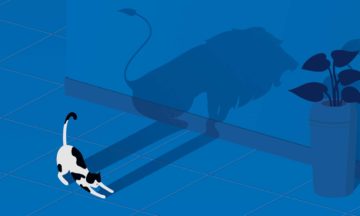 Few people would mistake a wolf for a dog. But if you saw the ancestor of the domestic cat in your backyard, your first thought would likely be “What a cool-looking housecat!” rather than “What’s an African wildcat doing in Manchester?” That’s how little they’ve changed, earning them the tag “barely” or “semi-domesticated”. There have been some minor anatomical shifts – domestic cats have longer intestines and smaller brains, for example – but very few genetic ones (and certainly many fewer than separate dogs from their wild ancestors). What about behaviour, then? Which of the traits we commonly associate with our furry friends are the result of domestication, and which do they share with their wild relatives?