
Amanda Taub in The New York Times:
 Did you watch the finale of “Succession” on HBO this week? If so, did the final shot of Tom and Shiv in their car make you think of “Bargaining With Patriarchy,” Deniz Kandiyoti’s 1988 article that is a classic feminist text?
Me too! And not just because “Bargaining With Patriarchy” would make an extremely literal three-word summary of the entire series. For while “Succession” was not overtly about the patriarchy, it is unquestionably about a patriarchy. “Succession,” for those unfamiliar, follows the exploits of the Roy family: literal patriarch Logan, an aging media baron in the mold of Rupert Murdoch, and his adult children. Most of the show’s plot was driven by his son Kendall’s various failed efforts to dethrone or succeed him, some of which roped in Kendall’s sister, Shiv, and/or his brother Roman. Which brings me to Kandiyoti, the feminist theorist whose groundbreaking work is surprisingly helpful for understanding today’s HBO hit.
More here.
 S
S 6
6

 Bulgakov’s Moscow is my Moscow. Zemlyanoy Val, my street, is a few trolleybus stops away from his—Sadovaya. On evening walks of nearly six decades ago, I listened to my awe-struck parents talk about the seemingly unpublishable masterpiece of a forgotten writer improbably seeing the light of day.
 Scenario 1: Propaganda and bad actors
 I have never in my life ‘loved’ any people or collective,” Hannah Arendt famously wrote in a 1963 letter to Gersom Scholem, embracing Scholem’s accusation that she was a daughter of the Jews who failed to love the Jewish family as a whole. Besides the circularity and the meanness entailed in such self-love, Arendt made clear, the love of an abstraction made no sense to her: “I indeed love ‘only’ my friends and the only kind of love I know of and believe in is the love of persons.” Daniel Boyarin’s latest book, The No-State Solution: A Jewish Manifesto, can be read as the reply that Scholem, who stopped talking to Arendt, never sent—an attempt to describe a Jewish love of the Jewish people that somehow turns on the love of persons.
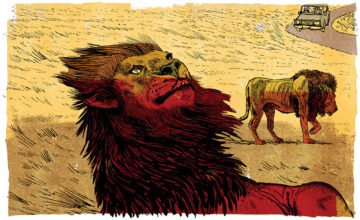 Even the warthogs in Botswana are incredibly charming. Everything is very distinct and pure. The Okavango Delta is an alluvial plain, sort of like a Louisiana swamp but with incredibly non-humid clear air. Especially compared to the camp on the Zambezi River, which was foreboding, with elephants constantly crushing the dry gnarled branches.
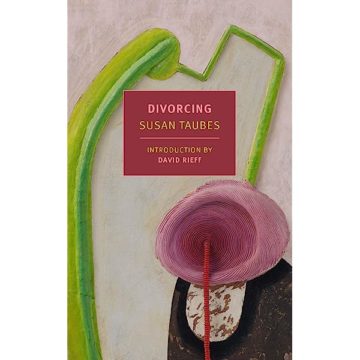 Susan Taubes’s novel “Divorcing” (1969) begins with a report in France-Soir of a femme décapitée, a woman whose head was cut clean off when she was hit by a car in the Eighteenth Arrondissement of Paris. The woman, Sophie Blind, is, like Taubes, the daughter of a psychoanalyst, the granddaughter of a rabbi, and the estranged wife of a scholar and a rabbi. She is also the mother of mostly male children, and the lover of Gaston, Roland, Alain, Nicholas, and Ivan. In flight from her married life in New York, she has just moved to Paris with her children. She is killed before she has a chance to finish arranging the furniture in her new apartment.
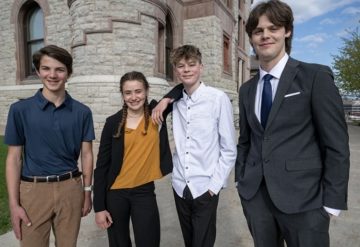 Climate science will get its day in court this week as lawyers for Rikki Held and 15 other young people argue that the state of Montana’s environmental policies promote fossil fuels, in violation of their right to a ‘clean and healthful environment’. That right is enshrined in the state’s constitution, making the climate case — Held v. Montana — the first of its kind to go to trial in the United States, and the latest example of frustrated citizens worldwide taking legal action to force their governments to act on climate change.
 On Nov. 30 last year, OpenAI released the
  J.K. Rowling is not a witch. She acquitted herself well in her recent “trial,” by which I mean the podcast series hosted by
  Adam Mastroianni was always bothered by anecdotal claims that people are becoming less kind, respectful and trustworthy over time. So he took a deep dive into such claims: he wrote a PhD dissertation.
 I’ve recently been corresponding with the erudite, recondite and just plain delightful arts writer Morgan Meis, initially about our mutual passion for
  A new study estimates the weight of New York City’s buildings at 1.68 trillion pounds and says that, little by little, they’re sinking into the ground. The Big Apple could ultimately share the same fate as Venice, which is