
 Scientists have come to realize that in the soil and rocks beneath our feet there lies a vast biosphere with a global volume nearly twice that of all the world’s oceans. Little is known about these underground organisms, who represent most of the planet’s microbial mass and whose diversity may exceed that of surface-dwelling life forms. Their existence comes with a great puzzle: Researchers have often assumed that many of those subterranean realms are oxygen-deficient dead zones inhabited only by primitive microbes keeping their metabolisms at a crawl and scraping by on traces of nutrients. As those resources get depleted, it was thought, the underground environment must become lifeless with greater depth.
In new research published last month in Nature Communications, researchers presented evidence that challenges those assumptions. In groundwater reservoirs 200 meters below the fossil fuel fields of Alberta, Canada, they discovered abundant microbes that produce unexpectedly large amounts of oxygen even in the absence of light. The microbes generate and release so much of what the researchers call “dark oxygen” that it’s like discovering “the scale of oxygen coming from the photosynthesis in the Amazon rainforest,” said Karen Lloyd, a subsurface microbiologist at the University of Tennessee who was not part of the study. The quantity of the gas diffusing out of the cells is so great that it seems to create conditions favorable for oxygen-dependent life in the surrounding groundwater and strata.
More here.
 Last week, Sinéad O’Connor took off on an early-morning bicycle trip around Wilmette, Illinois, a pleasant suburb of Chicago. The Irish pop singer—now forty-nine, and still best known for ripping up a photograph of Pope John Paul II on “Saturday Night Live,” in 1992, while singing the word “evil,” a remonstrance against the Vatican’s handling of sexual-abuse allegations—had previously expressed suicidal ideations, and, in 2012, admitted to a “very serious breakdown,” which led her to cancel a world tour. Ergo, when she still hadn’t returned from her bike ride twenty-four hours later, the police helicopters began circling. Details regarding what happened next—precisely where O’Connor was found, and in what condition—have been scant, but authorities confirmed her safety by the end of the day.
 Behind cardiovascular disease, cancer is the second major cause of death in the United States and will likely cause
  Even before Lee Iacocca sold the two-millionth copy of his autobiography, it was the most successful business book of its kind. More impressively, when that sales milestone was reached in July 1985, less than a year after its publication, Iacocca joined the ranks of America’s all-time bestsellers, regardless of genre, including Gone With the Wind and The Power of Positive Thinking. From his humble origins as the firstborn son of Italian immigrants, Iacocca distinguished himself as an engineer at Ford Motor Company before becoming CEO of the Chrysler Corporation in 1978, when it was on the brink of bankruptcy. Iacocca turned Chrysler around, paying back a government bailout and leading the former automotive straggler to the top of the car industry within a few short years. Highlighted repeatedly in Iacocca’s practically unavoidable TV commercials for Chrysler in the 1980s and ’90s, it was an American success story. But it was also something else, maybe something more: the creation of a new character on the American scene, the Celebrity CEO.
 A study of more than 38,000 young people has confirmed what researchers had begun to suspect: the COVID-19 pandemic precipitated a jump in cases of type 1 diabetes in children and teenagers. At first, researchers thought that the rise was caused by the virus itself — but it turns out that is probably not true. Nevertheless, with the overall cause of type 1 diabetes still a mystery, the findings offer new mechanisms for researchers to explore.
 Narendra Modi, the 72-year-old Hindu activist from Gujarat, has been prime minister since 2014. His father was a railroad station tea seller. A rare member of India’s “backward” castes to reach his country’s top post, he is the antitype of the urbane Nehru, and the movement he leads is the antithesis of Congress as Nehru reshaped it. Under Modi’s leadership the BJP, founded in 1980 and focused on the aspirations of the 80% of Indians who are Hindu, has become the world’s largest political party. Political scientists say India has moved on to a “second party system” with the BJP at its center, much as the first party system was dominated by Congress.
 The critical tide is turning, once again. The professional critics—and not just the old, curmudgeonly ones—are fed up with moralizing, and they are willing to speak about it in public. From Lauren Oyler’s observation that “anxieties about being a good person, surrounded by good people, pervade contemporary novels and criticism” to Parul Sehgal’s exhortation against the ubiquitous “trauma plot” that “flattens, distorts, reduces character to symptom, and … insists upon its moral authority” to Garth Greenwell’s lament about a literary culture that “is as moralistic as it has ever been in my lifetime”—the critical vanguard has made its judgment clear. For all its good intentions, art that tries to minister to its audience by showcasing moral aspirants and paragons or the abject victims of political oppression produces smug, tiresome works that are failures both as art and as agitprop. Artists and critics—their laurel bearers—should take heed.
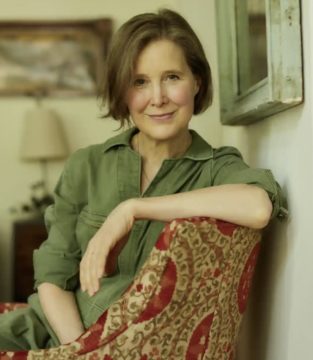 To say that Patchett is evangelical about books is no mere cliche. In one of her essays, she compares her zeal to that of a Hare Krishna devotee she met many years ago who spent every day proclaiming his love of God to strangers in Chicago airport. “I would stand in an airport to tell people how much I love books, reading them, writing them, making sure other people felt comfortable reading and writing them.”
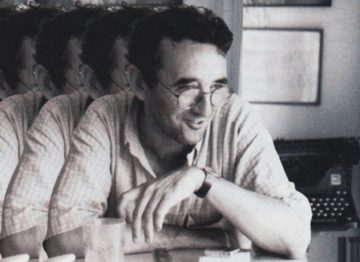 “We never stop reading, although every book comes to an end, just as we never stop living, although death is certain.” This certain death came tragically early for the Chilean poet and novelist Roberto Bolaño, writer of that lapidary sentence, who died twenty years ago this month at the age of 50.
 Even today, no one is
 The Argentinian writer Jorge Luis Borges lost his vision—what he called his “reader’s and writer’s sight”—around the same time that he became the director of the National Library of Argentina. This put him in charge of nearly a million books, he observed, at the very moment he could no longer read them.