The Limits of Conspiracy Debunking—Revisited
by David Kordahl Note: This piece is an accidental addendum to my column of March 2021, “The Limits of Conspiracy Debunking,” though it can be read separately. Sometimes, we’re surprised. Though everyday surprises can be comedic, the surprises that we register collectively are more often tragic. My parents both remember the assassination of John F.…
Exorcising a New Machine
by David Kordahl Here’s a brief story about two friends of mine. Let’s call them A. Sociologist and A. Mathematician, pseudonyms that reflect both their professions and their roles in the story. A few years ago, A.S. and A.M. worked together on a research project. Naturally, A.S. developed the sociological theories for their project, and…
Scientific Models and Individual Experience
by David Kordahl I’ll start this column with an over-generalization. Speaking roughly, scientific models can be classed into two categories: mechanical models, and actuarial models. Engineers and physical scientists tend to favor mechanical models, where the root causes of various effects are specified by their formalism. Predictable inputs, in such models, lead to predictable outputs.…
On Reading a Defense of William Shockley
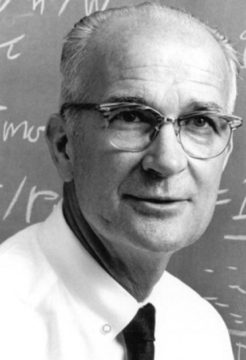
by David Kordahl Most people who know about William Shockley are likely to describe him as a eugenicist, though it’s a question of taste whether they present this aspect of his character before or after they call him the father of the transistor. The first full-length Shockley biography, Broken Genius: The Rise and Fall of…
Which Scientific Bets Should Be Declined?
by David Kordahl Imagine, if you will, that I own a reliably programmable qubit, a device that, when prepared in some standard and uncontroversial way, has a 50/50 probability of having one of two outcomes, A or B. Now imagine also that I have become convinced of my own telekinetic powers. Suppose that the qubit…
Philip Anderson’s Emergence as Himself
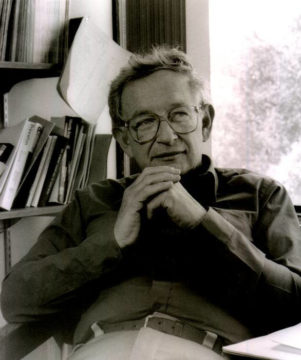
by David Kordahl The physicist Philip W. Anderson, winner of the Nobel Prize in 1977, has lingered in the broader scientific imagination for two main reasons—reasons, depending on your vantage, that cast him either as a hero, or as a villain. The heroic Anderson is the author of “More Is Different,” the 1972 essay that…
Scavenging Science: On John Horgan and Tao Lin
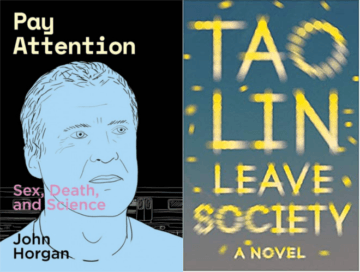
by David Kordahl From the moment we’re born into bright hospital lights until that last day when we’re topped off with embalming fluid, it’s hard to escape the human world. By the “human world,” here, I mean the world that we have built for ourselves, a world where, whether or not you know the specific…
Meat and Pets: A Double Feature
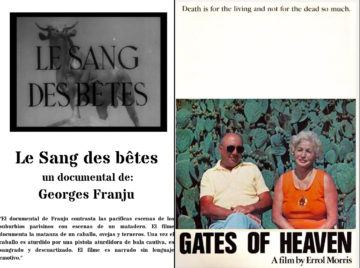
by David Kordahl Blood of the Beasts (Le sang des bêtes) Georges Franju is perhaps best remembered for Eyes Without a Face (Les yeux sans visage, 1960), an oddly poetic entry in the body horror canon, but Franju’s most memorable film may be his first, Blood of the Beasts (Le sang des bêtes, 1949). The…
The Movie that Watches You
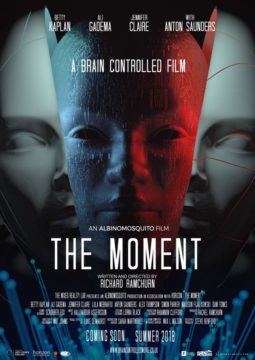
by David Kordahl The evidence that mass media can cause physiological responses in humans is so evident in our everyday experience that it’s easy to ignore. Subliminal muzak makes our fingers tap lightly on our grocery carts. Billboards with sexy models flush our cheeks during our daily commutes. But not all such stimuli are subtle.…
Guessing With Physics
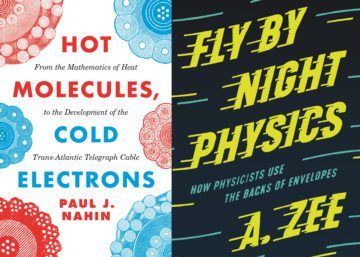
by David Kordahl James Clerk Maxwell, whose theory of electromagnetism occupies the same physics pedestal as Newton’s theory of gravity, was by all accounts a good-humored and generous man, and a fairly confusing lecturer. Here is a story about Maxwell (admitted to be apocryphal in the math notes that recount it) that suggests something of…
The Slightly Wrong Physics of Spinning Muons
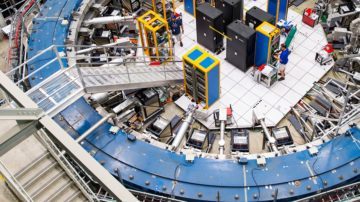
by David Kordahl If you follow science news, there’s a good chance that you’ve recently heard about Muon g-2 (pronounced “mew-awhn gee minus two”), an experiment whose preliminary results were announced to media fanfare and general excitement. The experiment’s most recent iteration is going on at Fermilab, the physics facility outside Batavia, Illinois, but it…
The Limits of Conspiracy Debunking
by David Kordahl This is a post about conspiracy theories—yes, another one, after a year’s worth—but let’s start by remembering a benign old theory from a little over one year ago, back when ex-vice-president Joe Biden had won just one primary, down in South Carolina, where he had been aided by the endorsement of representative…
Glassholes Revisited
Science and “The Phenomenon”
The World and Its Mask
by David Kordahl Last month I worked on a modern sort of archaeological dig, going through the equipment in a college physics lab to see what sorts of devices were on hand. It reminded me of being a little kid, when I would tiptoe around my dad’s religious paraphernalia (he was a Lutheran pastor), not…
Easy to Defend, Hard to Believe
by David Kordahl When I was seventeen years old, I took my first college science course, a summer class in astronomy for non-majors. The professor narrated his wild claims in an amused deadpan, calmly showing us how to reconstruct the life cycle of stars, and how to estimate the age of the universe. This course…
Tesla at the Movies
by David Kordahl Many of the best historical movies featuring “hard” scientists have used social problems, rather than than scientific controversies, to propel their action.1 Two recently released films that address the legacy of Nikola Tesla reverse this trend. The Current War, a plummy costume drama whose planned 2017 distribution was delayed by the Harvey…
Things Hang Together, Things Fall Apart
by David Kordahl Paul Halpern’s new book, Synchronicity: The Epic Quest to Understand the Quantum Nature of Cause and Effect, takes its time to get there, but its best parts discuss the intersection of two puzzles for 20th century rationalists: psychoanalysis, and quantum mechanics. This intersection is dramatized by the correspondence of Carl Jung, Freud’s…
Atoms for Aliens?
by David Kordahl Physicists, as a tribe, are overwhelmingly likely to believe that smart extraterrestrials exist, and are also overwhelmingly likely to believe that they haven’t visited Earth. I’m considered a bit of a kook by my physicist friends because I harbor genuine confusion on this point. I want to believe, but I also want…