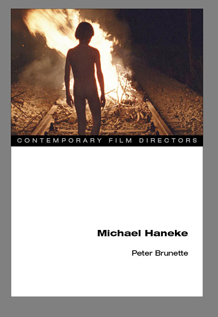
Peter Brunette was the Reynolds Professor of Film Studies and director of the Film Studies program at Wake Forest University. The author of books on such beloved filmmakers as Michelangelo Antonioni, Wong Kar-Wai and Roberto Rossellini, Brunette’s last book was on Austrian cinematic provocateur Michael Haneke. The latest published entry in the University of Illinois Press’ “Contemporary Film Directors” series, Michael Haneke examines in depth the art of and the ideas behind the auteur’s theatrical releases, from late-1980s and early-1990s works such as The Seventh Continent and Benny’s Video through his newest and best-known pictures Caché and The White Ribbon. Colin Marshall originally conducted this conversation on the public radio show and podcast The Marketplace of Ideas. [MP3] [iTunes link]
That’s a very great question. Every book I’ve ever written has come from a desire to understand an idea, more than anything else. People are always disappointed when they ask me biographical questions about a director I’ve written on, because I never know anything about their biography. I’m just fascinated by certain ideas that come up in their films and want to think about them more.
Are you fascinated about whatever ideas a certain filmmaker might happen to have, how filmmakers are driven by ideas, or are you fascinated by certain ideas, and thus the filmmakers that happen to work with those ideas?
I think it’s the former rather than the latter, because it’s not so much what the idea is, it’s that there’s an idea that attracts me. My very first book was on Roberto Rossellini, the Italian director, and what I was largely concerned with there was the whole question of realism. What do we mean when we say that a film is realistic? Out of that grew this book. Of course, it also gave me the chance to do my research in Italy, which was a bit calculated on my part, but I really was wondering about that idea of realism. The same thing with Haneke: it’s more the question of violence, the media critique. I’d heard about him for years before I actually wrote about him.
Did you get any chances to go to France or Germany with the Haneke research?
I sort of was already there. I went to his press conference at Cannes last year. He’s actually Austrian, so I have spent some time in Vienna. He’s kind of a formidable figure. I had heard lots of things about how he scares people, so I stayed away from him. I wanted to stick to the films.
What are these stories you heard about him scaring people? You watch the movies and understand how the movies could scare people, but the man himself?
Apparently he can be a bit of a bear — maybe more than a bit — on the set. I’ve heard of various encounters with actors that he’s quite brutalized. The German version of Funny Games — he even talks about it in an interview that I translated for the book — the character played by Susanne Lothar is actually reduced to a quivering mass, a lump of humanity. He’s very proud of that; I think they did 20 takes of this one horrible torture scene. He got what he wanted. He’s just one of those guys who’s a very serious artist. You know, everything for art.
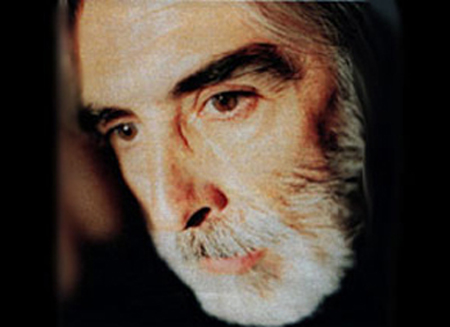
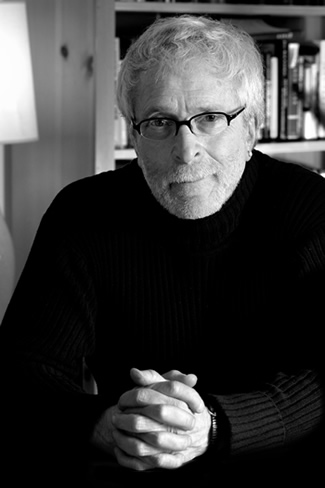
That’s absolutely right. He has such a forbidding appearance — I don’t know if you’ve seen pictures of him — but he’s got this white hair and white beard and piercing look. He just looks like a German philosopher who is going to crack his ruler over your knuckles if you don’t give the right answer. But I have heard these stories that, in fact, in real life he’s quite nice. It’s when he’s on the set, apparently, and when he’s doing his artist’s thing, he really has to have it exactly the way he wants it.

 Seph Rodney: I wanted to start off the conversation by asking both my guests how it is that we get the kind of literacy that we have to decode writing. It seems to me that it’s everywhere, that we take it for granted. It seems that there’s a kind of decoding that happens in reading, isn’t there?
 These three novels of yours form a loose trilogy. The obvious way I can tie them together is to say all of them take place, in full or in part, in Japan. But in your own mind, what holds these books together?