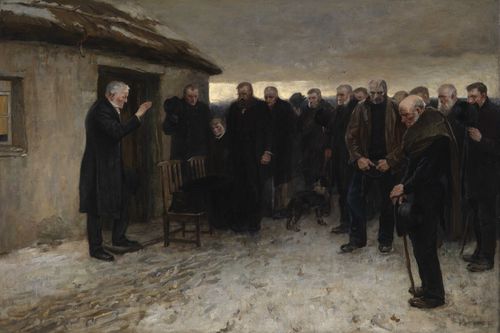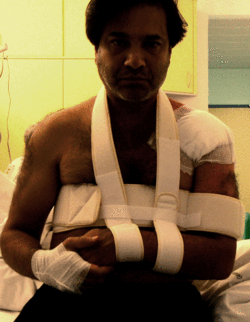
This generally isn’t how we envision our species a thousand years from now. More typical scenarios feature technological advancements, like flying cars and intergalactic travel. We might imagine that future humans will have eliminated disease and extended our lifespans substantially.
It’s debatable as to which of these scenarios is more likely. And of course, both could be far off the mark. But this much is clear: there’s trouble ahead for our species if we continue on our current path. The problems that future generations will face are largely predictable.
Our environment is becoming increasingly toxic, with carcinogens and teratogens, allergens, hormone distrupters, and pharmaceuticals accumulating steadily. Such pollutants also build up in the tissues of animals that we eat and depend upon.
Food shortages are anticipated. With the population increasing at alarming rates, there’ll be a lot more human mouths to feed. Heavier reliance on meat will worsen environmental problems, making clean drinking water harder to find. Non-animal food sources may also be much scarcer. If honey bees succumb to the threats they currently face, we’ll lose most of the foods that depend on bees for pollination.
Disease will be rife. Infectious disease will likely rise with the loss of biodiversity. Authors of a paper published last year in BioScience suggested that biodiversity loss “can increase the incidence and distribution of infectious diseases affecting humans.”1 Authors of a more recent paper appearing in Nature came to a similar conclusion, noting that, in many cases, biodiversity “seems to protect organisms, including humans, from transmission of infectious diseases.”2 Increased population size and proximity to one another will exacerbate the problem.
Cancer and environmental diseases will be widespread due in part to the greater toxicity of the physical environment and the foods we eat. Genetic disease is also expected to rise sharply. Michael Lynch, in a recent paper published in PNAS, suggested that the accumulation of deleterious mutuations will have a profound impact on members of industrialized societies within a few hundred years.3 He states: “Without a reduction in the germline transmission of deleterious mutations, the mean phenotypes of the residents of industrialized nations are likely to be rather different in just two or three centuries, with significant incapacitation at the morphological, physiological, and neurobiological levels.”