by Gautam Pemmaraju
I was once arrested, detained for a few hours, and then let off with a malevolent bubblegum pop song stuck in my head. The very first time I had the occasion to visit an after hours club in Bombay, in mid 1997, having ventured out but a few times with work colleagues, the place was raided by the very same cop who had asked us beforehand if we wished to enter. As the hundred odd people there were being let out one-by-one, under the watchful gaze of two male cops and the lone policewoman clad in a khaki sari, a small group of ten men, including yours truly, was detained and led to Vile Parle police station. At that hour, 3 AM, I was too bemused, bleary-eyed and somewhat tipsy to grasp the situation; it was only later I surmised that my appearance, a poor advocate of my peaceable nature, proved to be my undoing and, unsurprisingly, my turpitude. Consequently, I found myself amidst a bunch of pimps, social outcasts, suspect criminal types and baleful degenerates. After a few hours of erratic verbal abuse, nothing too harsh I must concede, a few slaps directed at a defiant detainee, an inqilaabi 1in my mind, we were corralled into the Sub-Inspector’s room to be personally questioned (and abused) by him for a bit, and thereupon lined-up outside the little courtyard-facing cubicle where the dastardly arresting officer was seated to note down our contact details. Abdul, the only other ‘media type’ in the group and a true Bombay chaava, a filmic fast-talking, smooth hustler, who had characteristically skipped ahead, emerged with a raffish smirk and ushered me in. I respectfully furnished the sparse details of my recent Bombay residency. As I exited the room, expectant friends in the courtyard watching on, the cop, a mere step behind, proceeded to sing the hook and chorus of the hit single by the Danish-Norwegian group Aqua, I’m A Barbie Girl,2 to me.
In many more ways than I can articulate here, Bombay/Mumbai is incantatory in tone and spirit. Its 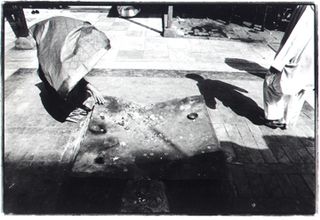 emanations, at once surreal, primordial and metronomic, cast many a curious spell on its residents. The perceptual city3, with its countless sensorial attributes, is richly textured, particularly to those who seek to ‘imagine’ it. I posed this proposition to a few people and several descriptions came forth – transient, multiple interlinked realities, portal, hypnotic city, fast-paced, dark clouds, drum, percussive, bubbling cauldron, organic entity, fickle friend, tempestuous lover, etc. One friend said she and the city conversed. Another described it as a city of ‘practical magic’ wherein its residents conduct and receive discrete, accumulative acts of magic – from its many temples, churches, mosques, dargahs, to its cricket pitches, empty mills4 (no longer one might add), quarter-system bars, financial markets, race track, gambling joints, and entertainment industry. The promise of lucre is invoked alongside cautionary chants – mayanagari, the illusory city, is to then be negotiated by propitiating the appropriate ‘gods’ and the consequential fortune if any, it is advised, is to be put to good use. Mumbadevi, the patron goddess of the city (and its original residents, the koli fisherfolk) and mythical tamer of the marauding demon Mumbaraka, steadfastly keeps her divine glance upon the city – the money made here must remain here, it is often proverbially chanted. At a recent book launch, when one of the panelists declared to the audience that ‘Bombay smells of sex and money’, it begged the protest of other formidable claimants: what about the smell of rotting fish and public defecation?
The incantations, inward and voiced, speculative and substantive, imagined and real, visual, aural and olfactory alike, constitute a literary construct of the city: the very city itself as an incantation. The city as a chant.
A fabulously imagined example of this construct, irradiated with sharp original thought, slick irony and deft technique is Kuru-Kuru Svaha, Hindi writer/journalist/screenwriter, Manohar Shyam Joshi’s uttaradhunik, post-modernist masterpiece5.
The idea is held within the book’s very title – a common concluding phrase to many Vedic mantras, particularly used in Tantrik ritual, and often found in certain forms of spells known as Vashikaran Mantra which are cast in order to wrest control over a person, lovers and enemies alike.
Read more »