“In the dime stores and bus stations,
People talk of situations,
Read books, repeat quotations,
Draw conclusions on the wall”
~ Bob Dylan
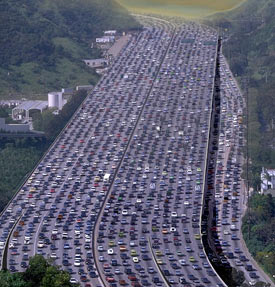
Within this context, mobility must rank as a problem par excellence. Commentators have described slums as “cities that have failed to solve their mobility problem”. The free and rapid flow of people and goods is essential to the dynamic nature of any urban setting; and while the developed world looks on China’s growth with a mixture of awe and trepidation (and hope that they will keep buying our debt), it is also true that the media greets reports of things like a 10-day traffic jam with a certain amount of Schadenfreude. Amateurs! (On the other hand, the fact that there were no incidents of road rage reported during this traffic jam may have something to teach us about the virtues of a certain national temperament. Once, we too had a sense of humour about this.)
At any rate, the design problem is simple: How do you get people to use public transport more effectively?