by Quinn O'Neill

The practice proved lethal for the baboons, who met their demise when a TB outbreak contaminated the food. Those who frequented the garbage site happened to be the most aggressive and least socially affiliated in their troop. The more socially-oriented and peaceful members were spared, and a curious change occured in the dynamics of the troop, with the remaining baboons subsequently enjoying a persistent peaceful culture with relatively little agression and more grooming.
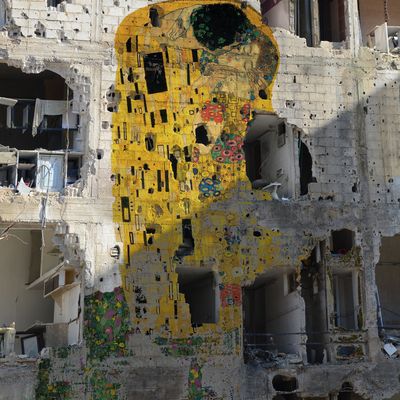
But that was a long time ago and much had changed. Faced with climate change, human pollution, and habitat loss, the baboon's numbers had dwindled dramatically and few places remained on the planet that could attract human tourists with their wild and natural beauty. Our own “alphas”, for too many decades, had put their own immediate interests above everything else, including collective human well being, animal welfare, and environmental sustainability. Our tar ponds and nuclear waste sites were now too widespread to be hidden from our view and the few remaining old trees, still beautiful were too wise to be enjoyed. “There used to be more of us,” you could almost hear them saying. “We were surrounded by life once.”
Over the years, lots of people had objected to what was taking place even as they watched it unfold. Credible authorities like James Hansen, head of the NASA Goddard institute for Space Studies, and Canadian geneticist and journalist David Suzuki warned of the need to radically reduce CO2 emissions and make environmental issues a priority. Had they been part of the tiny percentage that wielded awesomely concentrated wealth and power, perhaps they could have done something to stop it sooner.