by Grace Boey
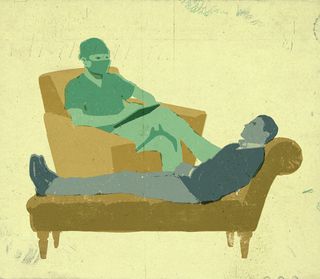
Yet, overly brain-based approaches to mental disorder face large amounts of backlash. For one, studies like the ones above are far from conclusive. Also, history has given us good reason to be suspicious of brain-based psychiatric theories and treatments (lobotomy, anyone?). Psychoactive drugs alone are often inadequate for treating mental illness, and most patients respond best to a combination of medication and psychotherapy.
Perhaps the biggest setback to neurobiological views of psychiatry is the following intuition: that we aren’t just our brains. A person can’t simply be reduced or equated to her brain, and to do so would dehumanize the patient. Viewing clinical psychiatry as a brain-fixing exercise ignores the fact that patients are people with feelings, stories and personal problems that have brought them to the doctor’s office in the first place. We can't just pump patients full of drugs, and then tell them to go home. The importance of this seems to be confirmed in the superior efficacy, in so many cases, of psychotherapy over drugs.
So, what are we supposed to do with all this neuropsychiatric research? It hardly seems that we should just ignore it. At the same time, we want to recognize that a patient can’t – and shouldn’t – be treated as just a brain. Lots of lip service is paid to how neuroscience and psychology are supposed to “work together hand in hand”, yet tugging intuitions on mental illness make it hard to articulate just why or how this harmony is supposed to occur. The current patchwork, “whatever works best” approach to psychiatric treatment betrays a widespread lack of grounding principles for the concept of mental disorder. As Thomas Insel, director of the National Institute of Mental Health (NIMH) puts it, “Patients with mental disorders deserve better.”