“For the last twenty years neither matter
nor space nor time has been what it was.”
~ Paul Valéry, 1931
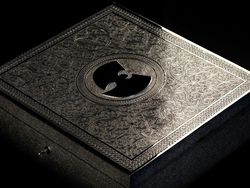
Earlier this spring, we received a candidate answer from the venerable hip hop outfit Wu-Tang Clan. The Wu-Tang have been secretly recording a new double album for several years, an event that would commonly be greeted with much rejoicing by their legions of fans. However, the zinger is that only one copy of the album will be made, destined to be sold to the highest bidder. Even more interesting is the fact that, prior to the auction, the record will tour “festivals, museums, exhibition spaces and galleries for the public as a one off [sic] experience.” (Imagine the stringency of the security that will be required to keep this particular cat in its bag; I am already anticipating the Twittersphere lighting up in outrage as museum staff shine flashlights into people's ear canals, conduct full body cavity searches, and generally out-TSA the TSA.)
Of course, such acts of conceptual brazenness are usually (and usually regrettably) accompanied by a manifesto, and Wu-Tang does not disappoint…