by Eric Byrd


by Eric Byrd
by Josh Yarden
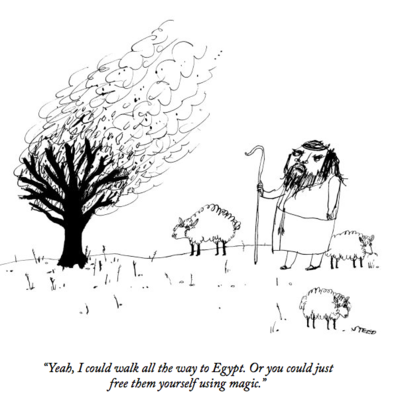
The shepherd in the cartoon gets it: You want to free the slaves? Why waste time appearing in flaming bushes, casting ten plagues and creating high drama. Just free the slaves. The Moses in the Bible, however, finds himself in an existential crisis: Why me? How? Who will listen to me? What should I say when I myself doubt I am capable of achieving my mission? The hero is perplexed… like everyone else who ever desired to change the world, yet also realizes that the challenge may be too great.
You don't have to be a prophet or the inspired leader of a nation to ask yourself, ‘Why me? Who will listen to what I have to say?' We all ask these questions in the face of the injustices we see. Regardless of what you believe about the origin and the meaning of the Bible, grappling with oppressors and oppression is a matter for humans to deal with. The biblical narrative reinforces this idea in multiple ways, from the Garden of Eden to the River Jordan. Humans have to make it on their own, enduring the hardships of everything from childbirth to cultivating the land in order to provide food for themselves to famine, slavery and battles to be free. That's life.
by Scott F. Aikin and Robert B. Talisse
A minute in the Public Affairs section of any bookstore confirms this: Conservatives should talk to liberals “only if they must” because liberalism is a “mental disorder.” Liberals dismiss their Conservative opponents, since they are “lying liars” who use their “noise machine” to promote irrationality.
Both views betray a commitment to the Simple Truth Thesis, the claim that Big Questions always admit of a simple, obvious, and easily-stated solution. The Simple Truth Thesis encourages us to hold that a given truth is so simple and so obvious that only the ignorant, wicked, or benighted could possibly deny it. As our popular political commentary accepts the Simple Truth Thesis, there is a great deal of inflammatory rhetoric and righteous indignation, but in fact very little public debate over the issues that matter most. Consequently, the Big Questions over which we are divided remain unexamined, and our reasons for adopting our different answers are never brought to bear in public discussion.
This brings us back to our original observation – there seems to be so much debate. Yet what passes for public debate is in fact no debate at all. No surprise, really. Debate or discussion concerning a Big Question can be worthwhile only when there is more than one reasonable position regarding the question; and this is precisely what the Simple Truth Thesis denies.
by Jonathan Kujawa
Something we all learn very early on is that things needs to be round to roll. My nieces, Abi and Sydney, are barely a year old and they already know that pyramids and cubes are terrible for rolling along the floor. The ones with more faces do better, but even a twenty sided die bumps along as you roll it across a table. Everybody knows wheels need to be round. The transportation engineers had that one figured out ages ago.
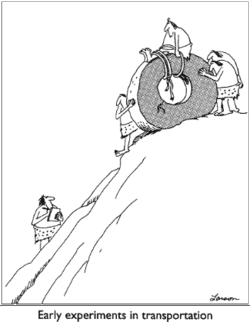
The square wheel is the archetype of an idea so obviously wrong headed that it can be rejected out of hand. After all, thousands of years of engineering have only been a refinement of Ug and Zog's original design. Even if you are open minded about the possibilities, you only need watch the Mythbusters put the idea to the test. The result is so molar shattering that surely no more needs to be said.
Like philosophers, artists, and poets, mathematicians aren't bothered with things like “practicality” and “the real world”. They are handy to have around if you want someone to challenge your assumptions and think outside the box [1]. In the 1950s it occurred to Gerson Robison that there are actually two shapes in play here: the wheel and the road it rolls on. If you allow yourself to adjust the shape of the road's surface, then maybe, just maybe, you can put hills and dips into the surface which exactly complement the shape of your wheel.
In 1952 Robison posed the question in the puzzle section of the American Mathematical Monthly. Writing about it later he said [2]:
Some years ago, while picking up my son's toy blocks, I became intrigued with the possibility of finding a cylindrical surface upon which a plank would roll in neutral equilibrium…. The requirement of neutral equilibrium means, first, that the center of gravity of the roller must travel in a horizontal path and, second, it must remain directly above the point above the point of contact of the two curves in all positions. In addition, the roller must actually roll into each position.
That is, center of the wheel must travel only horizontally as it rolls along so that the passengers have a smooth ride, the center must remain straight above the point of contact with the surface, and the wheel must actually, you know, roll. Robison explains that for a curve which gives a portion of the wheel's shape, you can actually calculate corresponding complementary shape for the road. It is a nice problem which turns out to only need a bit of calculus.
by Dwight Furrow
This is what it is to go aright, or to be led by another into the mystery of Love: one goes always upwards for the sake of this Beauty starting out from beautiful things and using them like rising stairs…. (211 c-d, Plato's Symposium)
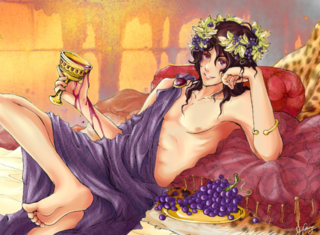
The spiritual dimension of wine has a long history. Dionysus, the Greek god of wine, was said to inhabit the soul with the power of ecstasy—the Ancient Greek word ekstasis meant standing outside the self via madness or artistic expression, and wine was thought to encourage that transformation . The Romans called the same God Bacchus with similar associations. The Judeo/Christian world tames the ecstasy yet still acknowledges the virtues of wine. Judaism has long included wine in its rituals for which it incorporates a specific blessing, and of course, for Christians, wine represents the blood of Christ and gets a number of mentions in the Bible. Other alcoholic beverages have existed for as long or longer than wine, but none have its spiritual connotations.
Today, wine is just one among many alcoholic beverages consumed in great quantities. Yet it sustains its sacramental role—as status symbol, fashion statement, a sign of class, refinement, or sophistication, a source of intellectual delight, the object of a quest for a peak experience, or the focal point of social life—all contemporary renditions of “spiritual” some more debased than others.
by Jalees Rehman
We live in an era of exhaustion and fatigue, caused by an incessant compulsion to perform. This is one of the central tenets of the book “Müdigkeitsgesellschaft” (translatable as “The Fatigue Society” or “The Tiredness Society“) by the German philosopher Byung-Chul Han. Han is a professor at the Berlin Universität der Künste (University of the Arts) and one of the most widely read contemporary philosophers in Germany. He was born in Seoul where he studied metallurgy before he moved to Germany in the 1980s to pursue a career in philosophy. His doctoral thesis and some of his initial work in the 1990s focused on Heidegger but during the past decade, Han has written about broad range of topics regarding contemporary culture and society. “Müdigkeitsgesellschaft” was first published in 2010 and helped him attain a bit of a rock-star status in Germany despite his desire to avoid too much public attention – unlike some of his celebrity philosopher colleagues.
The book starts out with two biomedical metaphors to describe the 20th century and the emerging 21st century. For Han, the 20th century was an “immunological” era. He uses this expression because infections with viruses and bacteria which provoked immune responses were among the leading causes of disease and death and because the emergence of vaccinations and antibiotics helped conquer these threats. He then extends the “immunological” metaphor to political and societal events. Just like the immune system recognizes bacteria and viruses as “foreign” that needs to be eliminated to protect the “self”, the World Wars and the Cold War were also characterized by a clear delineation of “Us” versus “Them”. The 21stcentury, on the other hand, is a “neuronal” era characterized by neuropsychiatric diseases such as depression, attention deficit hyperactivity disorder (ADHD), burnout syndrome and borderline personality disorder. Unlike the diseases in the immunological era, where there was a clear distinction between the foreign enemy microbes that needed to be eliminated and the self, these “neuronal” diseases make it difficult to assign an enemy status. Who are the “enemies” in burnout syndrome or depression? Our environment? Our employers? Our own life decisions and choices? Are we at war with ourselves in these “neuronal” conditions? According to Han, this biomedical shift in diseases is mirrored by a political shift in a globalized world where it becomes increasingly difficult to define the “self” and the “foreign”. We may try to assign a “good guy” and “bad guy” status to navigate our 21st century but we also realize that we are so interconnected that these 20th century approaches are no longer applicable.
by Brooks Riley
by Madhu Kaza
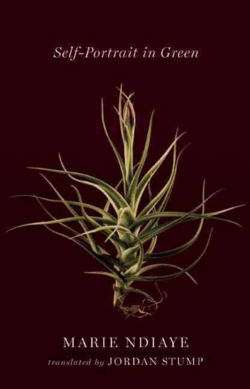
Here are a few books that I loved this year:
Marie NDiaye, Self-Portrait in Green (English Translation: 2014, Jordan Stump)
Marie NDiaye is a boss writer; she does what she wants. Apparently she had agreed to write a memoir. It's
thrilling to see how she shattered genre expectations to create a strange, surreal and devastating portrait of women in this book.
In the opening pages the narrator sees a mysterious ghost-like woman in green by a banana tree from her car. She is dropping off her children at school. The children are described as docile. The narrator writes of their bodies: “a golden dust floats above their heads. Their foreheads are curved and serene, their napes still pale . . . my children's arms & legs are bare, because the air is warm, intoxicating.” It's all kind of eerie as if this were the beginning of a horror narrative.
The women in green figures proliferate and the book proceeds through confusion, misrecognition, transmogrification. Early on the narrator writes, “That's when I run into Cristina, but as soon as I see her I'm not sure it's her rather than Marie-Gabrielle or Alison… If this woman really is Cristina, I remember that she's my friend.” Cristina may also turn out to be a woman in green, not a phantasm exactly but not an ordinary woman (or conventional realist character) either. Self-Portrait in Green is full of playful, intriguing passages like this one.
I didn't know precisely what to make of the book when I finished it. I didn't know what the various women in green added up to. But I did know that I had read a beautifully written, strange and visionary work that I would need to read again.
by Shadab Zeest Hashmi
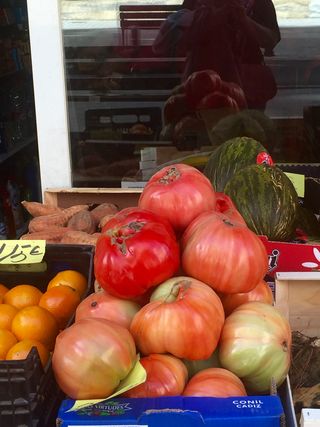
Inside, the tour guide says no cameras please. I glance at the drawings, photographs, furniture, piano. Where is duende hiding?
Upstairs, the floor tiles are an imitation of the tiles of the Alhambra palace.
by Bruce K. Adler
A long distinguished political theorist, Professor Wolin died in October. His obituary, printed in the New York Times, notes that starting in the 1960s he “galvanized the profession by gathering key political philosophers, beginning with the Greeks, in a grand debate on democracy and examining their ideas not as historical artifacts, but as a way to criticize current political structures.” I can further attest – being fortunate indeed to have had him as a teacher and adviser – that his lectures were not only an academic pleasure, but demonstrated the power of an ever-reflecting, ever-curious mind. He was a “Plato” who drove his students to marvel at and then ponder political order.
by Maarten Boudry
I want to argue in favor of the motion that religion constitutes a stumbling block to integration. By this I mean: integration in our modern, secular, liberal, democratic order. I will distinguish two types of reasons: one concerns some fundamental features of religion as a cultural phenomenon. The other reason has to do with the vagaries of history and sheer coincidence.
But first religion itself. Let me start with the most general characterization of religion. Religions are belief systems, bound up with certain practices and rituals, which proclaim some supernatural truths. In the case of revealed religions these truths are described in a number of holy books, which are infallible and should not be questioned. In my book Illusions for the Advanced I described the evolution of religious belief systems and wondered whether religions can play a useful role in our society. In the end I arrive at the conclusion that religions are byproducts of our brains, which serve no useful function for humans or for society. If they have a purpose at all, it is mainly to spread and to sustain themselves. Based on this evolutionary perspective, I think I can develop an argument for why religions are, almost by definition, opposed to integration or assimilation. In the course of history, people have worshipped countless gods, which now lie in the graveyard, as H.L. Mencken once put it, because no one is afraid of them any longer, and no one is left to pray to them. You can see this process as a form of natural selection, but in a cultural sense. Gods survive as long as the human imagination keeps them alive. Some are exiled, rejected or forgotten. Others perish along with their faithful, when the latter are conquered by other groups. Still others wither away in contact with other gods and other cultures.
And that brings me to the main point. The religions that were too malleable, too easily accommodating to changing circumstances, too prone to compromise, have disappeared in the folds of history. Numerous gods have failed, precisely because their supporters too easily blended in with other cultures. The religions that have endured long enough to still be around, are the religions that managed to forge close-knit groups that actively resisted assimilation, and didn't tolerate any questioning or doubt. Religious doctrines, at least culturally successful ones, are not open to critical scrutiny, but must be accepted on blind faith. By its very nature, religion creates a dichotomy between those who live in the ‘Truth', and the outsiders who are deprived of it. In other words, religion is the mother lode of Us-vs-Them thinking. Blind faith is divisive, whereas doubt and critical thinking unites and bridges our differences.
Bright Rose
A Version after Iqbal
You cannot loosen the heart's knot,
perhaps you have no heart,
no share in the turmoil
of this garden, where I yearn
but gather no roses.
Of what use to me is wisdom?
Once out of the garden,
you are at peace. I am anxious,
scorched as I search.
Even *Jamshid's empty cup
foretold the future: may wine
always satisfy my mouth,
that open circle in the mirror.
* The mythical Persian king Jamshid saw the reflection of all events in a wine cup.
By Rafiq Kathwari whose collection, In Another Country, is available here.
by Tom Jacobs
We may be in the Universe as dogs and cats are in our libraries, seeing the books and hearing the conversation, but having no inkling of the meaning of it all.
—William James (1908)

This question has haunted my mind in some way or other for many years, and although the writer was interested in a vaguely conservative way about whether we should be reading dangerous thinkers of resistance and rebellion like Foucault or the Marquis de Sade (or, less topically, whether Prometheus should have stolen that fire, or Adam and Eve have eaten that apple), I found that his opening line got me interested not so much in what we maybe would be better off not knowing, like how to build an atomic bomb, but rather in considering how it comes to pass that we come to know the sorts of things and animals and ideas that exist at the very edges of conceptual understanding. This would be the space between the “known unknowns” and the “unknown unknowns.”
Clearly there are things that we don't understand just because we don't have a vocabulary or language to understand them. The universe itself might be one of them. As Richard Rorty so compellingly claimed, sounding not unlike Fox Mulder: “The world is out there, but descriptions of it are not.” This is not a simple idea at all, and while I don't want to suggest that we don't know what we are talking about just because we have to use language (or music or art or whatever) to describe the world in some meaningful way, what I'm interested in is how we regard those things that make us aware, even if only in the most inchoate of ways, that our representations of things are fundamentally inadequate and maybe even misleading.
I am utterly fascinated by the notion that there are some things that can't be seen because we don't have the language or means or the technology to render them visible and coherent. One of Thomas Kuhn's most compelling claims in “The Historical Structure of Scientific Discovery” has to do with what he calls the “violation of expectation”—the moment when an anomaly asserts itself and is perceived in however muddled a manner. Kuhn's discussion of this moment of violation reverberates in all kinds of ways, and although he is interested in how we understand what it means to “discover” something, it makes me wonder about how many things in this world escape our attention because we are in some sense looking at things wrongly.
by Carol A. Westbrook
If you are an avid reader like I am, then you may be a book addict. You have a huge collection of books, which you have been accumulating since high school. As the collection grows, you require more bookshelf space. Each move means a bigger apartment, one with more wall space for books. You are considering moving again to accommodate even more bookshelves. And so it continues. Am I right?
Your books are now stacked two and three deep, and there is no more room for new books. You give a few books away, or try unsuccessfully to limit yourself to eBooks. But you can't stop yourself; you need the feel of the new book in your hand. Gridlock. Something's gotta give.
I was at that point. It was time to get rid of some of these books. But I couldn't just throw them into the trash or donate anonymously to Goodwill. I had to make sure these old friends–who followed me faithfully for decades–would go to a good home.
I've got it! I'll invite my friends to a holiday open house and a “Big Book Giveaway.”
My plan was simple. First, sort through my books and determine which ones I could part with, and then start a database that would help me remember those that are gone, good companions all. This Excel spreadsheet would help me recollect title and authors that I really enjoyed, so I could recommend them to friends or gift them. The science fiction collection would be spared–it has a place of its own. Not so for the other fiction that I enjoyed but won't read again. Then tackle the non-fiction, saving those that I use for reference or were important to my education, or shaped my worldview. These are the books that defined me, as it were.
by Brooks Riley
by Sebastian Normandin
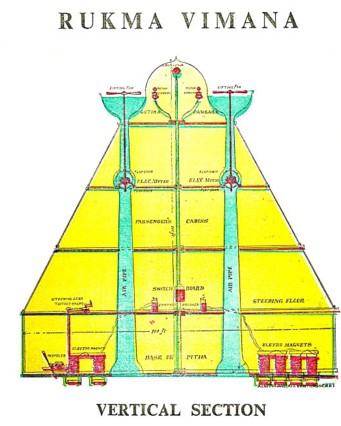
Their paper made a rather extraordinary claim. Citing evidence from an early 20th century text — the Vaimanika Shastra — the two men argued that the airplane was invented in the Vedic Age (c. 1500-500 BCE). In further interviews, Mr. Bodas claimed these flying vehicles — vimana — were huge and could fly to other planets. Unlike modern airplanes, the vehicles didn't just fly forward but were capable of making immediate course corrections and could suddenly fly left, right or backwards.
The vimana is a fascinating idea. Mentioned in the great Indian epics — the Mahabharata and the Ramayana — it translates as “spacecraft” or “aircraft”. The Sanskrit word “vi-mana” can be literally translated as “measuring out” or “traversing” or “having been measured out”. The vimana is also an architectural term for a tower above the inner sanctum (the sanctum sanctorum or Garbhagriha) of a Hindu temple. These two meanings are not necessarily unrelated, and there is a symbolic connection between the vimana as vehicle and as architectural structure. When a god sits in the chariot — the vimana as vessel or spacecraft — it is analogous to the architectural form, the tower. Symbolically the vimana as tower sits in a “heavenly” liminal space between the earthly temple and the realm of the gods. It is this “space”, whether vessel or that which lies between, that allows transportation between the heavens and earth.
by Thomas R. Wells
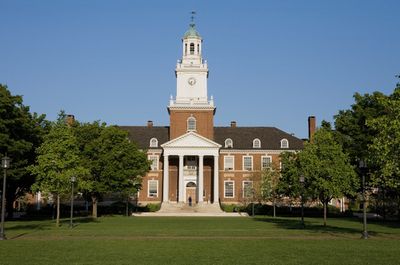
The diagnosis is correct but not the solution. The university cannot be saved.
I. The problem: The pathology of prestige
Universities have become too big to succeed and too big to challenge. They funded their expansion by promising all things to all stakeholders – jobs for parents, economic growth for governments, a podium for activists, an education for students. They said we had to trust them because, like doctors, they were the best judges of the wisdom they were selling. Well we did trust them and now the university has become gatekeeper to all sorts of essential parts of modern life, from intellectual credibility to middle-class jobs with dignity to scientific facts.
But they haven't actually kept their promises. They hardly even try. The leftist critique that universities have been taken over by the logic of the market is laughable. Paying customers, whether students, parents, or government, are an afterthought. Of course the money has to come from somewhere, but universities have always found ways to escape the discipline of the market. They invest a lot in marketing but not in connecting their education to the skills valued by the labour market. They have strenuously resisted providing students with the independent standardised information about teaching quality and employability that they need to make rational choices about where and what to study. The degrees they offer, even the ones with practical seeming titles, are stuffed with irrelevant courses about theory that mainly serve to provide jobs for academics rather than practical skills for students (and much of the actual teaching work is then outsourced to grad students anyway). One is often more likely to get a real education in ideas by joining the student debating society, and real work skills by leaving for a 6-month internship.
by Paul Braterman
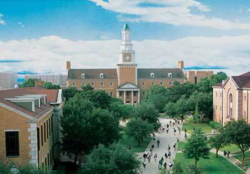
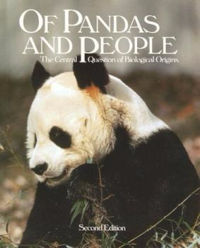
Kitzmiller v Dover Area School District, in which judgment was pronounced on 20th December 2005, is the court case that established that Intelligent Design is not science, but a form of religiously motivated creationism, and as such may not be taught in publicly funded schools in the US. This is a shortened version of what I told the students at Texas Academy of Mathematics and Science, University of North Texas's early admissions programme, whom I was privileged to be teaching at the time of the trial. I have omitted my discussion of the embarrassing Intelligent Design pseudotext, Of Pandas and People, and the even more embarrassing statement that the Dover School Board instructed teachers to read, for reasons of space and because I have discussed them here before. I have tried to avoid rewriting in the light of what I have learnt since, but insert some comments for clarity, and links where relevant.
This is a rather unusual presentation. It is the only presentation that I have ever given in response to a specific request from the [then] President of the United States, who has given as his opinion that Intelligent Design should be discussed in schools. It is the only presentation in which you will see me, a chemistry professor, practicing philosophy and even biblical exegisis; and I should warn you that I am practicing without a license. It is the only presentation I have ever given with the expectation that a number of people in the audience will be actively hostile to what I intend to say, because the point of view that I stand for is often misrepresented in this society as being hostile to religion.
But what is really extraordinary about this presentation is, that it is necessary at all. Having been a hundred years in the making, the central notions of evolutionary biology erupted into public awareness a century and a half ago, and, over the following 50 years, the major religious groups of the industrialised world came to terms with these ideas. The creationist challenge to what has been, for over a century, the central theoretical framework of biology, is a recent development, and, very specifically, a 20th-century American phenomenon. Very recently, creationism has changed its name to Intelligent Design Theory, but this is a purely cosmetic change.
I expect that this talk will please no one. I will, as you might expect, argue against Intelligent Design arguments. Indeed, I will go much further, claiming that such arguments are part of a particular kind of mindset, which I will call literalism (although some call it fundamentalism), and that the rise of this mindset represents a most serious threat to knowledge.
by Emrys Westacott
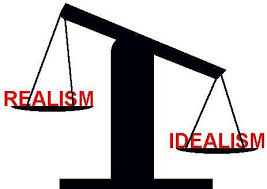
Without question, the violence threatened and perpetrated by organizations like ISIS and al Qaeda has to be addressed directly. Appropriate surveillance, improved security procedures, and sometimes military measures are all in order. But we should challenge the idea that those who support large-scale offensive military actions or draconian domestic security measures are the hard-heads, the realists, the pragmatists, while those who tend to be skeptical about the likely efficacy of such actions are weak, soft, unrealistic, and naïve. If anything, the opposite is true.
Let's face it, the track record of the hard-headed hawks is not exactly inspiring. After 9/11, a US military campaign in Afghanistan ousted the Taliban (who had provided a supportive platform for Al Qaeda). This was certainly applauded by most Afghanis. But fourteen years on, around 150,000 people have been killed,[1] about $700 billion dollars have been spent,[2] and Afghanistan was ranked a year ago by Transparency International as the fourth most corrupt country in the world.[3]
The cost of the US led invasion of Iraq in 2003 and its aftermath has been even greater: over 224,000 deaths (according to the Iraq Body Count Project),[4] $815 billion dollars spent, and Iraq is ranked by Transparency International as the sixth most corrupt country in the world.
Moreover, the dollars and death stats just cited seriously understate the real costs. In addition to all the deaths there are hundreds of thousands of people who are crippled, blinded, deafened, maimed, disfigured, or traumatized, not to speak of millions who are widowed, orphaned, or suffer inconsolable grief at the deaths of their children, siblings, family and friends. Millions have lost or been forced to leave their homes.
by Charlie Huenemann
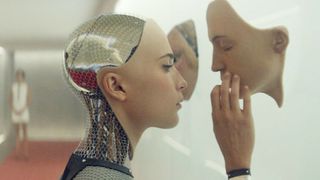
Other virtual diversions exist for us, of course. One can find meaningful examinations of human experience, sensible and judicious overviews of economic tensions, intelligent and respectful discussions of critical issues, wonderfully rich book reviews, and so on. But one has to seek out such treasures deliberately – they seldom pop up of their own accord out of the collective net consciousness – and one must have the time, patience, and discipline to attend to them. This is a bit like trying to read Moby Dick in a strip club. And, cyborg nature being what it is, not many of us will end up spending much time with brother Ishmael.
Aristotle, a human being from twenty-five centuries ago, did his best to put together a sensible account of what makes human beings happy. By his own estimate, we are social beings who like to enjoy one another’s company, usually with some nice food and drink, some music, and a conversation that stimulates the mind. We like to exercise, and to apply our best ideas to laws and social policies. Through drama and art, we love to explore vicariously the troubles we can get into, and discover for ourselves how we would feel in other people’s tragic circumstances. We are, as one might say, multidimensional beings. The trick then, according to Aristotle, is to manage this multidimensionality with reason and experience. We need to monitor our cultural intake with the fastidiousness of a Weight Watcher, judging for ourselves how much is too much, how much too little, and when more attention needs to be directed here or there.