by Michael Liss

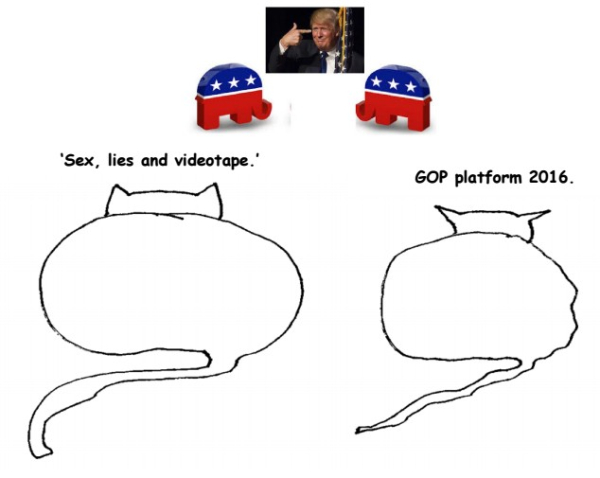
Sixteen. That was the percentage of respondents in a snap CNN post-second debate poll who said that they had heard about Donald Trump's “sex tape” and that it made them more likely to vote for him. 16 Percent. One in six voters surveyed, likely one in three (or more) of Trump supporters. Here's another number–Eighty-Three. In a WSJ/NBC News Poll, again, taken after the release of the tape, 83 percent of Republicans believe that the party should back Trump through the election.
Perhaps that is just circling the wagons–a later Washington Post/ABC News Poll showed the number of “mores” evaporating, but still had 83% of Trump voters saying it made no difference to them–and they were backed by a number of Evangelical leaders. A reasonable person might ask, why? Why would anyone with a girlfriend or a wife or a daughter or a mother (everyone has a mother) ignore the coarseness, to say nothing of any of the other controversial and even inflammatory things he's said and done? Their answer is that are with Trump, come hell or high water, and they aren't going to let any pointy-headed, liberal MSM pollster (or sanctimonious Establishment Republican) tell them otherwise. Trump is their guy, and there is nothing further to discuss.
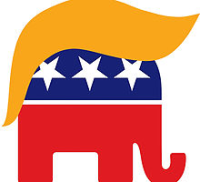
That odor you are detecting is from the dumpster outside RNC Headquarters. It already had a distinct bouquet, but now is accompanied by occasional puffs of smoke. It's not the only dumpster in town—there is one near virtually every conservative think tank in America. What you are witnessing, in real time, is possibly the final death blow for Ronald Reagan's Republican Party, and Ronald Reagan's Conservative Movement. When this election cycle is over, win or lose, there will still be a Republican Party, and there will still be a Conservative Movement, but Donald Trump may very well have vandalized the two into unrecognizability.




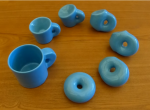 Maybe you've heard by now about last week's Nobel Prize in Physics, awarded to three physicists for their work on topological phase transitions. But if you didn't already know what a topological phase transition was, chances are you still don't. When a friend of mine read a few popular articles on the discovery, I asked him if he felt enlightened. “No, it felt like the authors were just free-associating: first they said ‘topological phase transitions,' then they said ‘topology,' and then ‘bagels.'” I sympathize with my friend, but also with anyone trying to explain this year's prize. It's true: you can't explain topological phase transitions without mentioning the underlying mathematics, a field called topology. And when you mention topology, you're tempted to talk about bagels. In fact, not long after the Nobel announcement, a Nobel committee member was waiving bagels and cinnamon buns on screen.