by Emrys Westacott
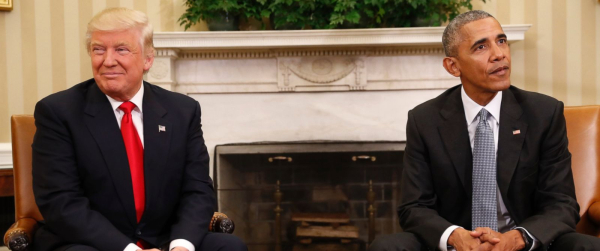
 It is hard at present to think about anything other than the recent election of Donald Trump to the US presidency. This is a cataclysmic and potentially catastrophic event for both America and the world. Severe narcissism and immense power are a volatile combination that usually ends badly. And with the Republicans controlling all branches of government, the hard right are in an unprecedentedly strong position to implement much of their agenda, from scrapping efforts to combat climate change to passing massive tax cuts for the wealthy
Already, much ink has been spilled on what Hilary Clinton, the Democrats, the liberal elite, the media, the intelligentsia, and anyone else who opposed Trump, got wrong. But the first lesson to be drawn from the election is that history is radically contingent.
Reading post mortems on the election reminded me of listening to soccer pundits explaining the result of a close game. In the game itself, the losing team may have hit the post twice, had a goal disallowed for an incorrect offside call, and been denied a clear penalty; the winning team perhaps scored once following an untypical defensive slip. Yet the pundits will explain the result as due to the losing team's inability to cope with their opponent's midfield diamond, along with their failure to spread the play wide. Their explanations are invariably blamings. In truth, though, the result could easily have been, and four times out of five would have been, different; in which case the talk would have been all about the ineffectiveness of the midfield diamond….etc.
Exactly the same sort of thing can be seen in political punditry. The contest between Clinton and Trump was extremely close. Clinton won the popular vote–with counting still going on she has a lead of close to 1.5 million votes–but Trump won the electoral college: which means, given the peculiar and outmoded system, that Trump won. Explanations are legion. Clinton was a hopelessly flawed candidate. The Democrats took their base for granted. The Democrats ignored the plight of the working class. The coastal elites are out of touch with the heartland….etc.
But as Nate Silver and many others have pointed out, a small shift—one vote in a hundred or less—in three of the swing states and Clinton would have won. In that case, the hot political topic today would be the crisis in the Republican party, the gulf between its established leadership and the Trumpistas, the impossibility of a Republican winning the white house so long as the party continues to alienate minorities and millennials…. etc.
Given the dire outcome of the election for the Democrats and for liberal causes generally, it is natural and sensible for liberals to ask what went wrong. But it is important in doing so, to not exaggerate problematic factors, and to keep hold of what was right.
Three areas are especially subject to scrutiny: the candidate; the platform; and the strategy.
Read more »