by Dave Maier
And then there’s Wittgenstein, whose thought is particularly difficult to coordinate with anything else, due to his abnormally strong (and peculiar) philosophical personality, as well as the obscurity and multiple reasonably valid interpretations of his various mostly incomplete writings. We certainly don’t simply want to say: oh look, Wittgenstein is a pragmatist; but on the other hand it is difficult to see how his thought can be used for pragmatist ends outside the explicitly Wittgensteinian context. Most pragmatists don’t want to bother, and most Wittgensteinians tend to resent the effort.
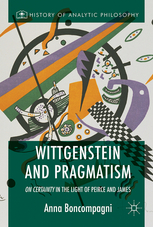
Richard Rorty is one famous exception; but his views on the matter are all over the place and we will have to leave that interpretive project for another time. Today I want to deal with one particular area of seeming coincidence: the apparent flirtation with pragmatist epistemology to be found in Wittgenstein’s final notebooks, published in book form as On Certainty. In fact if you go looking in the literature for pragmatism in Wittgenstein, this is most likely what you will find most of, from the entry on “Wittgenstein and Pragmatism” in the recently published Companion to Wittgenstein (ed. H-J. Glock and John Hyman; article authors Gregory Bakhurst and Cheryl Misak), to entire books, e.g. Wittgenstein and Pragmatism: On Certainty in the Light of Peirce and James by Anna Boncompagni. In fact both have been so recently published that I have only had a chance to glance at them, so my apologies to all authors in advance. In any case I only have a few quick remarks for now.