by Scott F. Aikin and Robert B. Talisse
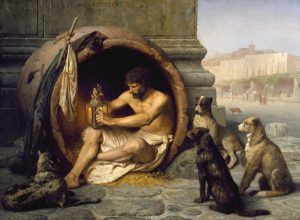
Diogenes of Sinope famously walked the streets of Athens searching for an anthropos. The tale is regularly rendered as him looking for an honest man, but this is too restrictive a translation. Rather, he was looking for a human, in the thick sense of the word. It is like a coach of a soccer team, challenging the squad of players, asking them if they are soccer players. In this regard, the thick sense of the term bears a normative weight, as a success term. And so, when one points to Lionel Messi and says, “Now, that’s a soccer player,” one is not merely saying that Messi plays the game. Rather, one is saying that he plays excellently, that he is exemplary. And so, when Diogenes, with his lit lamp in the daylight, asks people he meets if they are human beings, he is using the term in the thick sense. And given that his search seems to be ongoing, he implicates that everyone is failing to live up to the standard.
The standard that Diogenes — and with him, the ancient Cynic tradition — had in mind is not clear. However, one value at the center of this thick notion of humanity is not in question: that of autarkeia, roughly, independence, self-sufficiency, freedom. The genuine human is free; but, again, Diogenes finds no one fulfilling that standard. Instead, he finds people who are who have lost or given away their independence. Hence a famous Cynic paradox: only the practicing Cynic is free, only the Cynic is rich. How to make sense of these claims? Read more »
 I know you’ve heard this before. But it’s just too relevant to avoid, so, please, bear with me. It may, or may not, be a garbled version of something Bertrand Russell wrote in Why I am not a Christian, but it has become the equivalent of an urban legend in philosophy. It goes like this. Some famous philosopher or another, maybe Russell, maybe William James, is traveling in some non-Western country, probably India, because of the elephants, and they ask a local informant about their cosmology. The local says, “We believe that the world is a vast sphere resting on the back of four great elephants.”
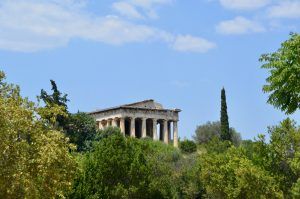 No one knows if it was really in the state prison, the ruins of which are visible today outside the ancient Agora of Athens, that Socrates was kept during the final days before his execution, so many times has the area been destroyed and reconstructed— walking past it sends a chill down my spine. Ancient Greece is visceral and vivid because it entered my imagination early in life; some of the most cherished tales of my childhood came from the crossovers of Hellenistic history and legend, such as the one in which Sikander (Alexander the Great) is accompanied by the Quranic Saint Khizr, in pursuit of “aab e hayat,” the elixir of immortality, or the one about the elephantry in the battle between Sikander and the Indian king Porus, or of the loss of Sikander’s beloved horse Bucephalus on a riverbank not far from Lahore, the city where I was born. I became familiar with ancient Greece through classical Urdu poetry and lore as well as through my study of English literature in Pakistan, but I would read Greek philosophers in depth many years later, as a student at Reed college; I would subsequently discover Greek influence on scholars in the golden age of Muslim civilization while working on a book on al-Andalus— the overlooked, key contribution of Arabic which served as a link between Greek and Latin, and its later offshoots that came to define the cultural and intellectual history of Europe.

 1. “…And I, who timidly hate life, fascinatedly fear death.” Fernando Pessoa, The Book of Disquiet.
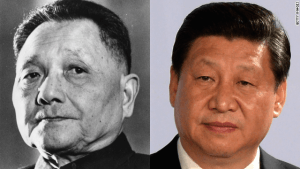 This is the 40th anniversary of the onset of economic ‘reform and opening-up’ (gaige kaifang) in China under the leadership of Deng Xiaoping, which eventually led to a dramatic transformation of its economy and global status. It is, however, remarkable that China’s current supreme leader, Xi Jinping, marked the anniversary in a speech in the Great Hall of People in Beijing mainly emphasizing the Party’s pervasive control. It is also remarkable that in recent years this leadership seems to have forsaken Deng’s earlier advice of tao guang yang hui (“keep a low profile”). In the flush of Chinese nationalist glory, Xi explicitly stated in the 19th Party Congress that China has now entered a “new era”, when its model “offers a new option for other countries and nations who want to speed up their development while preserving their independence”. Many people both in rich and poor countries seem to be already awe-struck by this model.
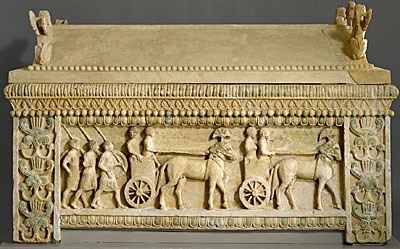

 I wrote the first draft of this post on my typewriter. Like much of my other writing, this piece began as handwritten notes and drafts typed on a nice little portable typewriter, which is a little younger than I am and which I expect to use for the rest of my life.

 The traveler comes to a divide. In front of him lies a forest. Behind him lies a deep ravine. He is sure about what he has seen but he isn’t sure what lies ahead. The mostly barren shreds of expectations or the glorious trappings of lands unknown, both are up for grabs in the great casino of life.
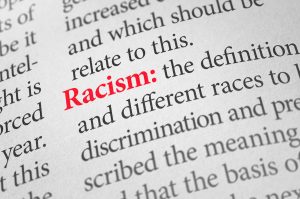 Although we know bias and racism exists in most societies, when put into coherent terms in the form of research the impact is stark and exposes just how much a part of life racism is for so many people. Booth and Mohdin’s (The Guardian 2018) article ‘Revealed: the stark evidence of everyday bias in Britain’ setting out the findings of a poll on the levels of negative experience, more often associated with racism, by Black, Asian and minority and ethnic groups in the United Kingdom(UK) does just that. Thus, for example, from amongst its many findings the survey revealed that 43% of those from a minority background had been overlooked for work promotion in the last five years in comparison with only 18% of white people who reported the same experience. Likewise, 38% of people from ethnic minorities said they had been wrongly suspected of shop lifting in the last five years, in comparison with 14% of white people. Significantly, 53% of people from a minority background believed they had been treated differently because of their hair, clothes and appearance, in comparison with 29% of white people. In the work-place also 57% of minorities said they felt they had to work harder to succeed in Britain because of their ethnicity, and 40% said they earned less.
 In the immortal words of Prince Rogers Nelson’s party gem from 1982: