
by Emily Ogden
Unfitness to pursue our research in the unfathomable waters. —Herman Melville, Moby-Dick
What are the forms of unknowing? Ambivalence. Diffidence. The open mind. The broken mind. The mind faced with the sacred. Deprivation of an education. Naiveté—or is it just youth? Objectivity. Credulity. Amateurism. Anti-intellectualism. Forgetting. Willful forgetting. Receipt of mercy, as when we say, it’s better if she doesn’t know.
Neither good nor bad, neither innocent nor strategic, unknowing in itself belongs neither to the right, nor to the left, nor even to the clueless, privileged middle. Yet forces conspire of late to make unknowing, both posture and reality, look like the exclusive territory of the reactionary guard. I do not think progressives should cede their claim to this common property of ours. For a little while, then—never mind how long; I’m not sure yet—this column will concern unknowing: when and why one might value it.
I am aware of how untimely such a project may seem, may even be. The Trump administration’s aggressive, racialized ignorance has reached literally world-destroying proportions. Seemingly the one kind of expertise toward which the US president does not maintain open hostility is criminal defense litigation, and that’s of necessity. Republican voters take pride in their know-nothingism—see “I’m a Deplorable” bumper stickers—and their critics agree, calling them uneducated, in denial about their white supremacist sympathies, or both.
While campaigns like #bluelivesmatter and climate-change denial weaponize obtuseness, the left assumes a defensive crouch and draws tight the mantle of its enlightenment. What other choice is there? To enter certain conversations—as for example about abortion or rape—unsure of what you think is often to be judged conservative. Only slightly less often, it is actually to be so. And thus knowingness becomes at times an affected signal, and at other times a reliable sign, of progressive politics.
But—but. Aren’t there forms of unknowing one might want to protect, even prize? Read more »
 When you consume a meal, do you eat cow or beef? Yes, these are the same, especially considering where they end up, but we tend to think of the cow as the beginning of this particular process, and the beef as the product. More of these pairings include calf/veal, swine or pig/pork, sheep/mutton, hen or chicken/poultry, deer/venison, snail/escargot.


 It could almost be a question on a very meta personality quiz: Do you prefer the Myers-Briggs typology or the Big Five personality traits? The Myers-Brigg Type Inventory is a popular tool that was developed outside of the scientific establishment by two women who did not have credentials in psychology. It’s qualitative rather than quantitative, and in the past decade or so, it’s been criticized as meaningless or unscientific. The Big Five taxonomy is widely accepted in academia and is the basis of much current personality research. It’s quantitative; in fact, it’s based on statistical analysis. Am I rejecting science if I continue to prefer the Myers-Briggs system as a key to understanding my own personality and those of others?
 It is difficult to remember a time over recent decades when a president of the United States (US) has created so much controversy and division within the US and challenged its credibility and standing in international relations as has the incumbent president, Donald Trump. Indeed, so bewildering to many is the election of a former reality TV star and dubious businessman without experience in government, to the high office of president of the US and ‘leader’ of the ‘free’ world, a plethora of literature to account for such a phenomenon has emerged. Similarly, commentaries on evaluations of Trump’s calibre and character, and just how far he is fit for such high office and powerful position in global politics, are plentiful. Jon Meacham’s The Soul of America: The Battle for Our Better Angels can be viewed as a contribution to the literature on those issues.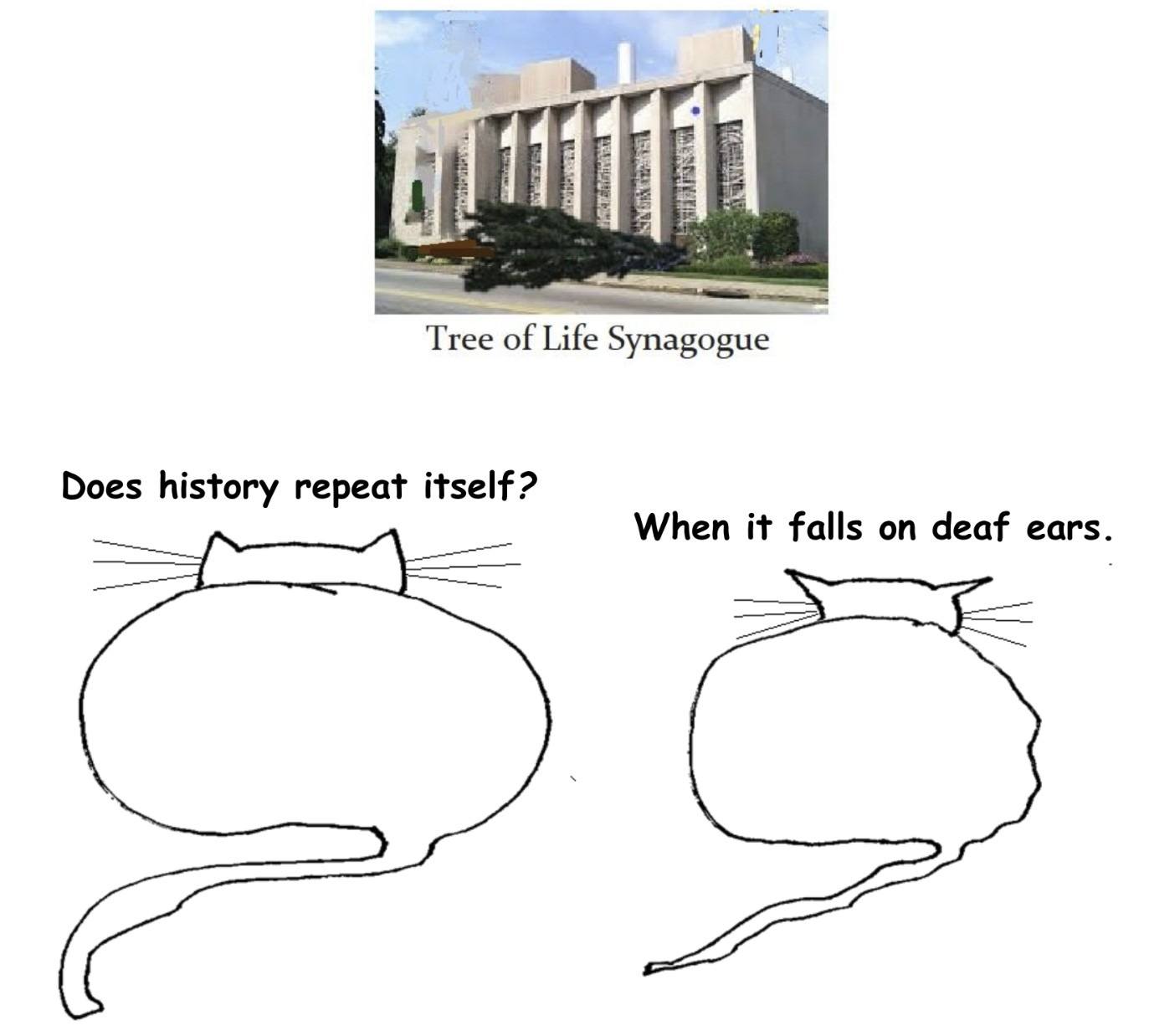

 Last fall, after a day spent hiking around the neighborhood, I ended up back on my porch with my buddy, Chef Mike. We were drinking beers and chatting about life.
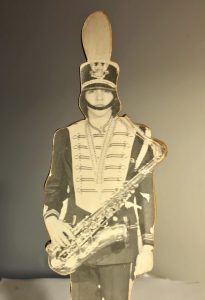 The William Penn High School Marching band was a juggernaut, the coolest team in school. Its director, Holman F James, strode the football field, unzipped windbreaker, cigarette dangling, the Greatest Generation’s bandmaster. A sterling musician, he played trumpet and piano, wrote or arranged all the music and choreographed our field shows. He was also a solider, avid outdoorsman and master craftsman, everything Hugh Hefner should have been.
 A bit of self indulgence – also a kind of preface to all the 3 Quarks Daily
 1. Bored, and with little to occupy their time, two cousins, Elsie, who was 16, and Frances, who was 10, decided to play around with photography. At a river near where they lived, they manipulated an image so that it looked as if they were interacting with little, magical winged creatures — fairies.
 Two weeks ago, Maniza Naqvi evocatively wrote here on the resonance of a mythological rape in the eventual confirmation of Brett Kavanaugh to the US Supreme Court (