
Andrea Scrima’s “The Ethnic Chinese Millionaire” at Manière Noire consists of a two-part, large-scale text installation, a small sculpture, and a news photo printed on the invitation card. These three elements interlock in an intricate manner, while the exhibition stands in relation to the novel A Lesser Day, which has recently come out in German translation [Wie viele Tage, Literaturverlag Droschl, 2018]. I spoke to the artist and author about the connections between literature and art, image and reproduction, description of image and text turned into space—in other words, about the multimodal signification processes of this complex work. The following conversation took place via email over a period of several weeks for the most part in August and September, 2018. –Myriam Naumann
Myriam Naumann: “Kent Avenue; how I hadn’t done anything I’d set out to do in New York, how I’d called off the exhibition and worked on the book instead…” In A Lesser Day, processes of emergence and coalescing, for instance of perception or materiality, are always present. At one point, the actual writing of a book becomes the subject matter of the text. How did A Lesser Day and its German translation come about?
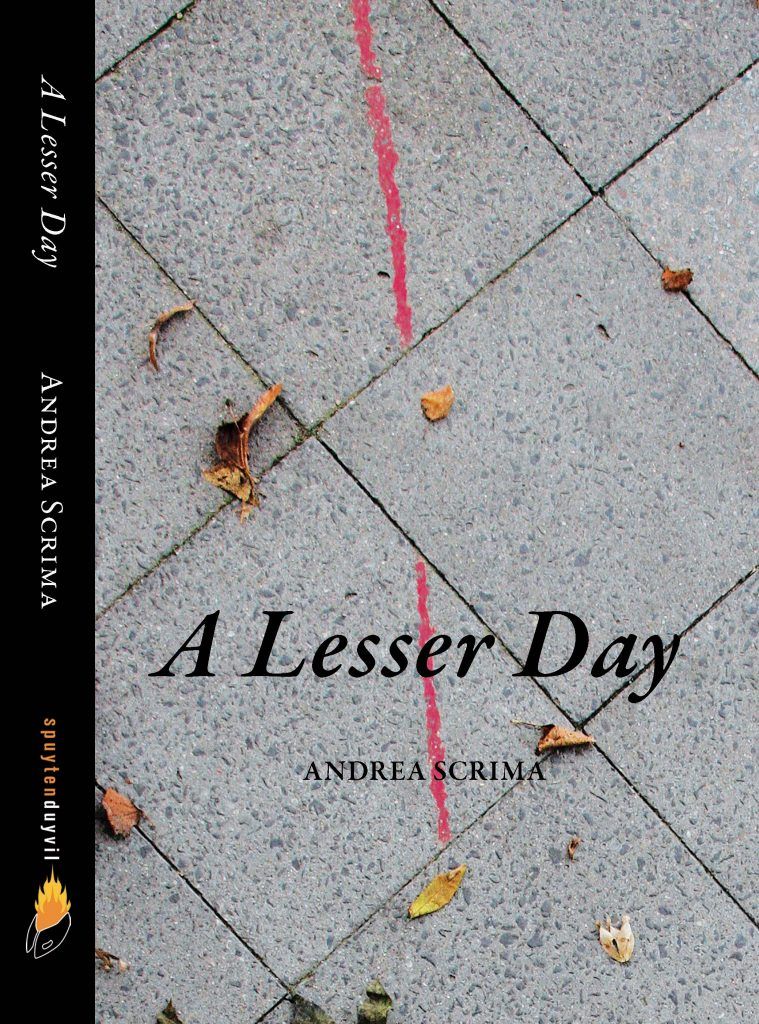 Andrea Scrima: As a visual artist, I worked in the area of text installation for many years, in other words, I filled entire rooms with lines of text that carried across walls and corners and wrapped around windows and doors. In the beginning, for the exhibitions Through the Bullethole (Bemis Center for Contemporary Arts, Omaha), I walk along a narrow path (American Academy in Rome) and it’s as though, you see, it’s as though I no longer knew… (Künstlerhaus Bethanien Berlin in cooperation with the Galerie Mittelstrasse, Potsdam), I painted the letters by hand, not in the form of handwriting, but in Times Italic. Over time, as the texts grew longer and the setup periods shorter, I began using adhesive letters, for instance at the Neuer Berliner Kunstverein, Kunsthaus Dresden, the museumsakademie berlin, and the Museum für Neue Kunst Freiburg. Many of the texts were site-specific, that is, written for existing spaces, and often in conjunction with objects or photographs. Sometimes it was important that a certain sentence end at a light switch on a wall, that the knob itself concluded the sentence, like a kind of period. I was interested in the architecture of a space and in choreographing the viewer’s movements within it: what happens when a wall of text is too long and the letters too pale to read the entire text block from the distance it would require to encompass it as a whole—what if the viewer had to stride up and down the wall? And if this back and forth, this pacing found its thematic equivalent in the text? Read more »
 “[T]here is in fact nothing that can alleviate that fatal flaw in Darwinism” says Professor Behe,
  rapture, claiming that “Michael Behe’s Darwin Devolves Topples Foundational Claim of Evolutionary Theory” and that “Anyone interested in knowing the truth about the design/evolution debate will find Darwin Devolves a must read.”
 I wonder whether Behe’s most vociferous supporters actually understand his position. Unlike them, he

 I was lugging several superheavy boxes of dishes up the concrete stairs from the sidewalk to the front door when a guy in a silver suit materialized in front of me. The first rule of moving is that when you pick something up, you don’t put it down until you have it where it goes. This is because picking it up and putting it down are half the battle. So, I tried to go around him.
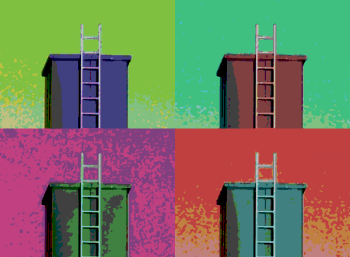 The Alps are much grander this morning. I like to think they tiptoed closer in the night, but it’s only an optical illusion created by a local high-pressure system called föhn, which magnifies them and everything else on the horizon. Sitting outside in the loggia, a spacious recessed balcony that resembles a box at the opera, I am audience to many forms of entertainment—weather theater, rainbow theater, sunrise theater, moonrise theater, but best of all, avian theater with its motley cast of bird species performing their life cycles like variations on a theme, in full view.
 When one makes an artwork, something flows from artist to audience. The thing flowing is actually several: concepts, ideas, aesthetic experiences, duration itself, beliefs, attitudes, and probably much more. Artworks work in a similar way to language, although it would be foolish to believe that artworks are language. Their similarities to language end at the transmission from one to another of the things flowing. That’s how language works as well. But for art, as with something like emotion, the flow is vague in how it is sent and received. It seems to me that the best linguistic analogy for what artworks do is located in assertion. Artworks assert a position. Of course it is entirely possible, and even the norm, that their version of assertion is cryptic to the point of being sometimes unintelligible. But assertions don’t need to be crystal clear. One can assert their dominance over another through a series of non-linguistic subtle bodily movements. Likewise, artworks can make assertions through their physical presence.
 Most people see understanding as a fundamental characteristic of intelligence. One of the main critiques directed at AI is that, well, computers may be able to “calculate” and “compute”, but they don’t really “understand”. What, then, is understanding? And is this critique of AI justified?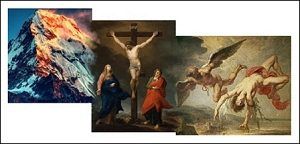
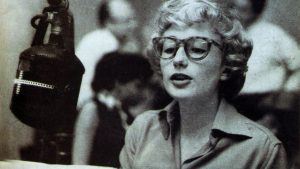 Blossom Dearie: incredibly, it was her legal name. The pianist and jazz singer was born Margrethe Blossom Dearie in 1924; all she had to do to get her stage name was to drop the Margrethe. The name perhaps overdetermines the voice. But you’ve got to hear the voice. Light and slim, with little to no vibrato, Dearie’s voice is ingenuous to such a degree that you begin to wonder whether it isn’t, in fact, the least ingenuous thing you have ever heard. It echoes with the four-square court—or was that the tomb? Imagine a sphinx posing her fatal riddle to Oedipus. Then ditch the immortal growl and try hearing, instead, a girl. That’s Dearie, singing her riddles of love and disaster. But unlike the sphinx, she wagers her own life, not other people’s. She knows the stakes, and still, that light, slim voice, with no vibrato, comes floating onto the air.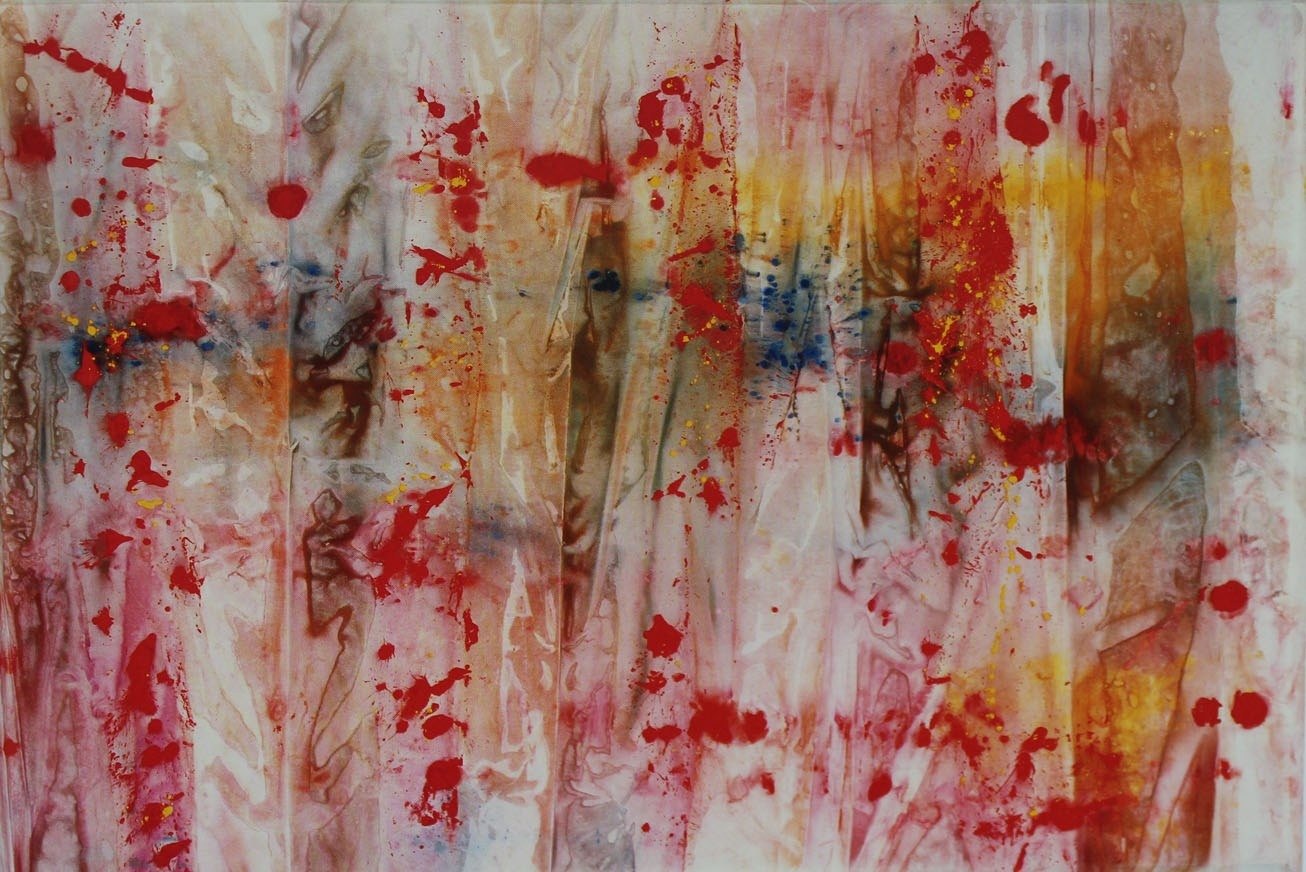
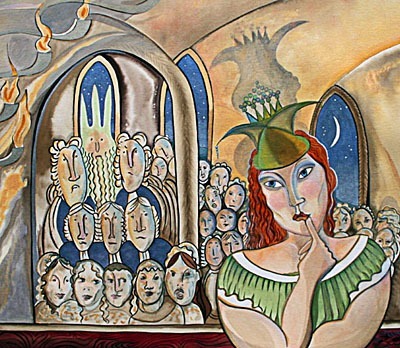

 I don’t know how much you know about Petrarch. My guess is that you know him as a poet, primarily for his sonnets. Maybe you associate him with early Italian humanism and its reinvigorated dedication to the wisdom of classical Antiquity. Or perhaps you think of him as someone who expressed transcendental truths about the soul and its searching and wandering nature.